Operating conditions in modern upstream extraction are brutal. Temperatures routinely exceed 400°F (204°C), while localized downhole pressures can surpass 20,000 psi. When you introduce elevated levels of hydrogen sulfide (H₂S), carbon dioxide (CO₂), and highly concentrated chlorides into the annulus, standard carbon steels and lower-grade stainless steels degrade rapidly. Proper nickel alloy selection for oil and gas is not just an operational preference; it is a fundamental engineering necessity to prevent catastrophic wellhead or downhole failures. Our team at 28Nickel has spent decades analyzing these metallurgical failure modes. A rigorous approach to material specification ensures long-term asset integrity and minimizes the unacceptable risks of unplanned well interventions.
Critical Variables in Nickel Alloy Selection for Oil and Gas
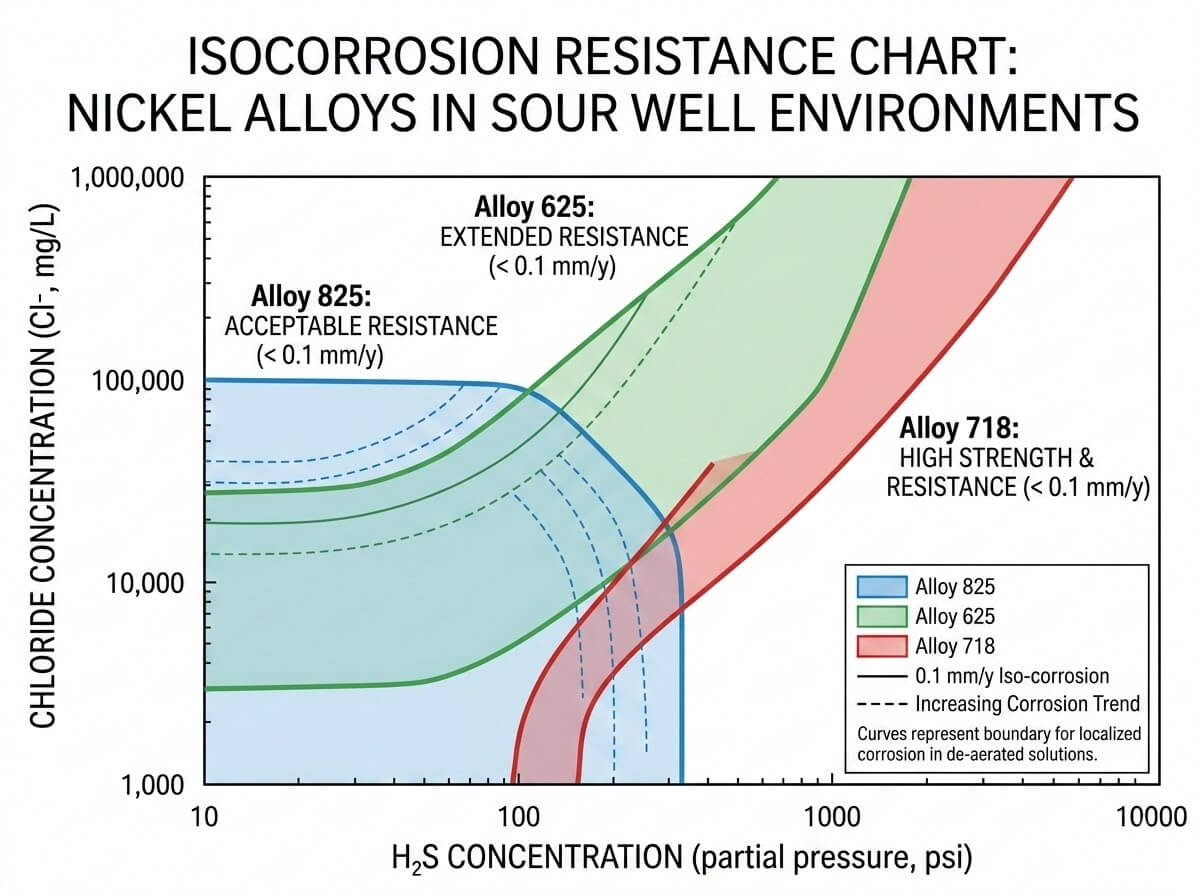
The primary driver behind evaluating high-performance materials involves mitigating specific, highly aggressive corrosion mechanisms. Sulfide Stress Cracking (SSC) and Chloride Stress Corrosion Cracking (CSCC) dictate the absolute boundary conditions for material viability. When we approach nickel alloy selection for oil and gas, we must strictly adhere to NACE MR0175 / ISO 15156 guidelines, but compliance alone does not guarantee long-term field performance under dynamic loads.
Solid solution strengthened alloys, such as UNS N08825 (Alloy 825) and UNS N06625 (Alloy 625), offer exceptional localized corrosion resistance due to their high molybdenum and chromium mass fractions. Alloy 825 provides a highly cost-effective baseline for moderately sour environments, relying on its approximately 42% nickel base to resist chloride-induced transgranular cracking. However, as the partial pressures of H₂S increase, the thermodynamic stability of the passive oxide layer requires the heavier alloying additions found in Alloy 625. To quantify these differences, engineers rigorously evaluate the Pitting Resistance Equivalent Number, mathematically expressed as , alongside fundamental mechanical baselines.
| Alloy Grade | UNS Designation | Nickel (Ni) % | Chromium (Cr) % | Molybdenum (Mo) % | Min. Yield Strength (ksi) | Primary Strengthening Mechanism |
| Alloy 825 | N08825 | 38.0 – 46.0 | 19.5 – 23.5 | 2.5 – 3.5 | 35 (Annealed) | Solid Solution |
| Alloy 625 | N06625 | 58.0 Min | 20.0 – 23.0 | 8.0 – 10.0 | 60 (Annealed) | Solid Solution |
| Alloy 718 | N07718 | 50.0 – 55.0 | 17.0 – 21.0 | 2.8 – 3.3 | 120 (Aged) | Precipitation Hardening |
| Alloy 925 | N09925 | 42.0 – 46.0 | 19.5 – 22.5 | 2.5 – 3.5 | 105 (Aged) | Precipitation Hardening |
Balancing Strength and Corrosion in Sour Service
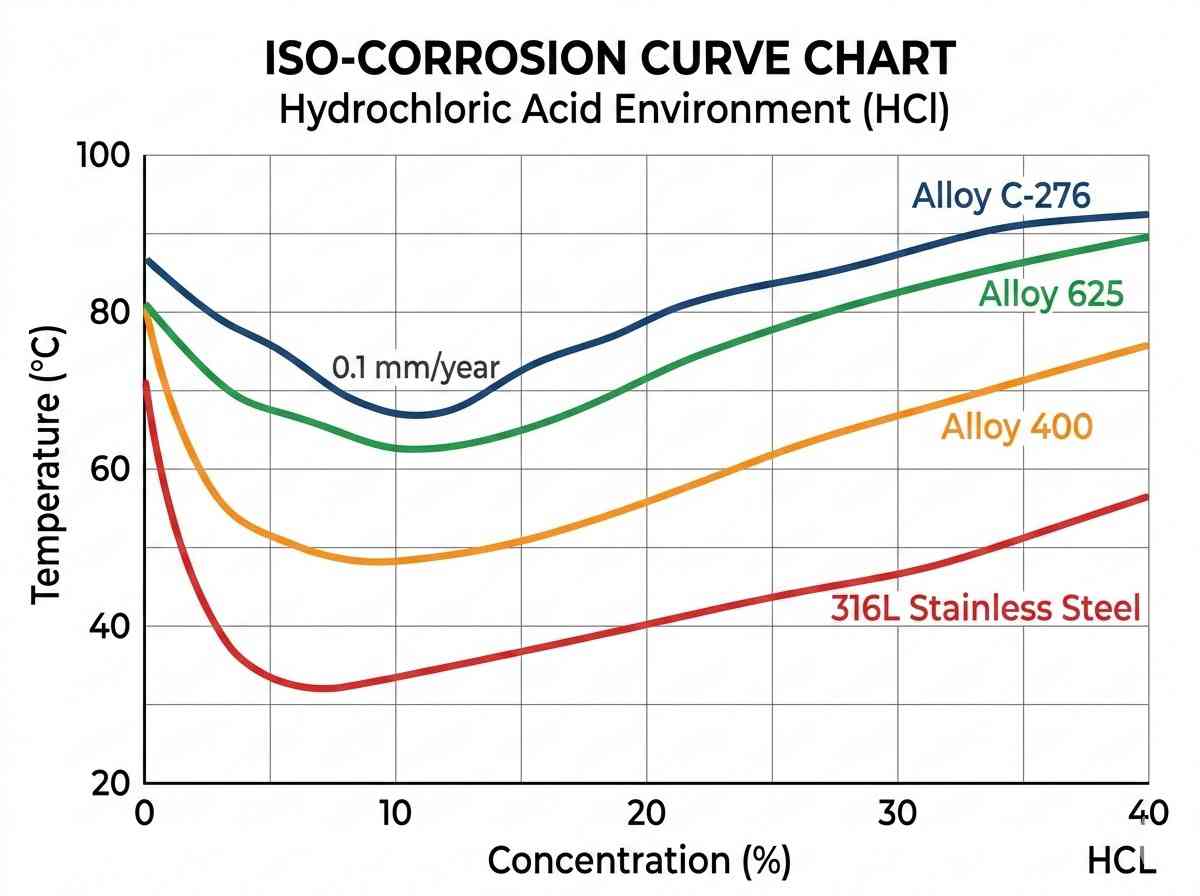
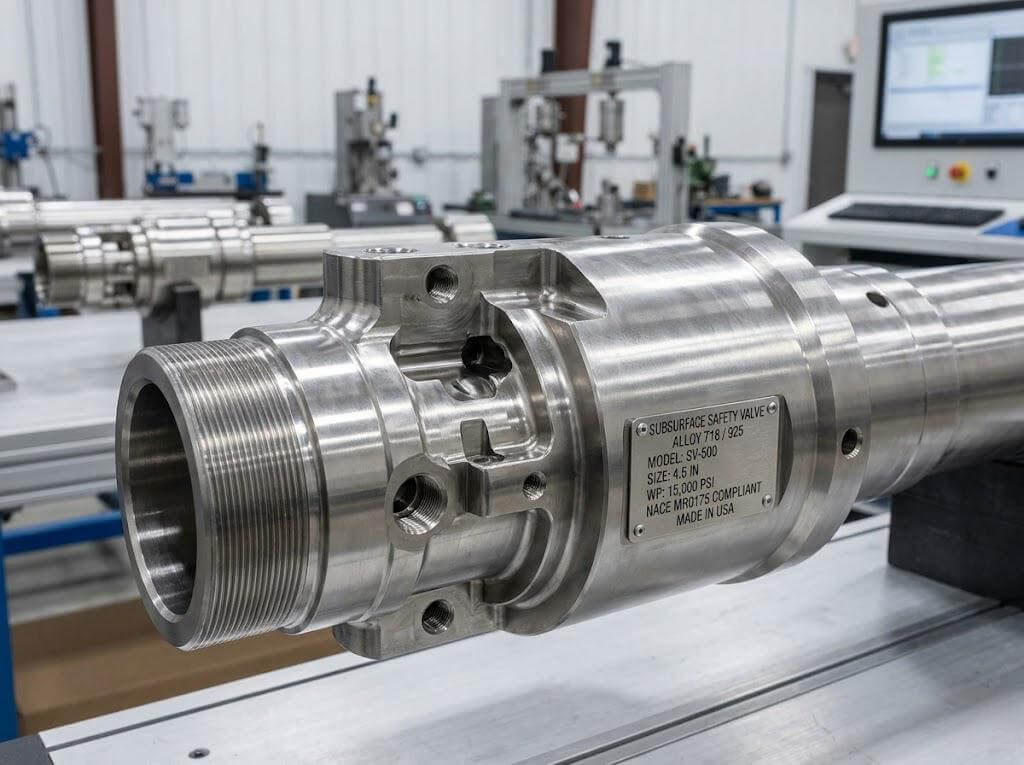
While corrosion resistance is paramount, downhole completions—like packers, subsurface safety valves, and mandrels—demand extreme load-bearing capabilities. This dual requirement heavily influences nickel alloy selection for oil and gas extraction systems. In High-Pressure High-Temperature (HPHT) environments, temperature gradients significantly alter the kinetics of corrosion. As temperatures rise above 300°F (149°C), the threshold for localized pitting in lower-tier alloys drops precipitously. Engineers must map the maximum anticipated operating temperatures against the specific halide concentrations in the formation fluid.
To meet massive axial loads without sacrificing corrosion resistance, precipitation-hardenable (PH) grades like Alloy 718 and Alloy 925 become vital. By leveraging careful heat treatments (solution annealing followed by aging), sub-microscopic precipitates like gamma prime () and gamma double prime () form within the austenitic matrix. Alloy 718 can reliably achieve minimum yield strengths exceeding 120 ksi.
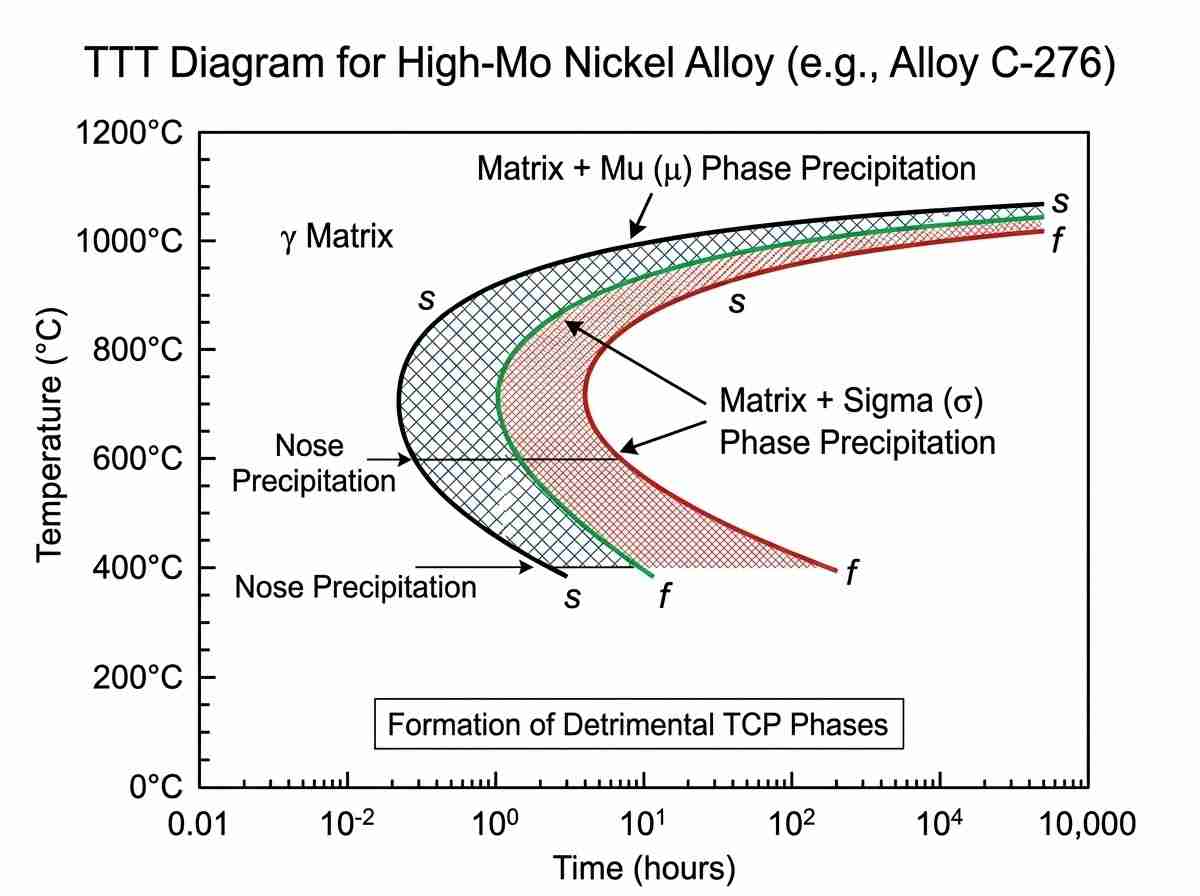
However, the precipitation hardening process introduces profound metallurgical complexities. Improper heat treatment parameters can lead to the formation of detrimental phases, such as the Laves phase or delta () phase at the grain boundaries. These microstructural anomalies act as initiation sites for localized galvanic corrosion or embrittlement in sour brines. Therefore, optimizing nickel alloy selection for oil and gas demands not just specifying a grade on a drawing, but rigorously defining the thermal processing history and microstructural acceptance criteria.
The margin for error in deepwater and sour well environments is absolute zero. Unplanned workovers resulting from material degradation cost millions of dollars and pose severe environmental hazards. Effective nickel alloy selection for oil and gas applications requires a deep dive into fluid chemistry, stress profiles, and precise metallurgical control. At 28Nickel, we understand the applied physics and metallurgy behind every component specification. If your engineering team is evaluating material options for an upcoming HPHT project, reach out to our technical team. Let’s discuss your specific wellbore chemistry and mechanical load requirements to engineer a reliable, long-lasting material solution.
Related Q&A
Q1: How does the partial pressure of hydrogen sulfide (H₂S) impact nickel alloy selection for oil and gas?
A: The partial pressure of H₂S dictates the severity of Sulfide Stress Cracking (SSC). NACE MR0175 establishes strict environmental limits for different alloys based on H₂S partial pressure, in-situ pH, and temperature. Higher H₂S concentrations typically necessitate a shift from standard solid solution alloys to highly alloyed or specialized precipitation-hardened grades with strict hardness controls (e.g., maximum 40 HRC for Alloy 718) to prevent hydrogen embrittlement.
Q2: Why is the Pitting Resistance Equivalent Number (PREN) insufficient alone for material specification?
A: While PREN provides a reliable baseline for predicting resistance to localized pitting and crevice corrosion based on chemical composition, it entirely ignores microstructural phase stability, mechanical loading requirements, and the material’s susceptibility to Environmentally Assisted Cracking (EAC) under tensile stress. A holistic metallurgical evaluation is mandatory.
Q3: Can Alloy 925 be used as a direct, high-strength substitute for Alloy 825 downhole?
A: Yes, Alloy 925 essentially mirrors the foundational corrosion resistance of Alloy 825 but adds critical levels of titanium and aluminum for precipitation hardening. This makes it an exceptional choice for wellhead components, hangers, and downhole tools where the chemical resistance of 825 is adequate, but higher yield strength (up to 110 ksi) is structurally required by the mechanical design.