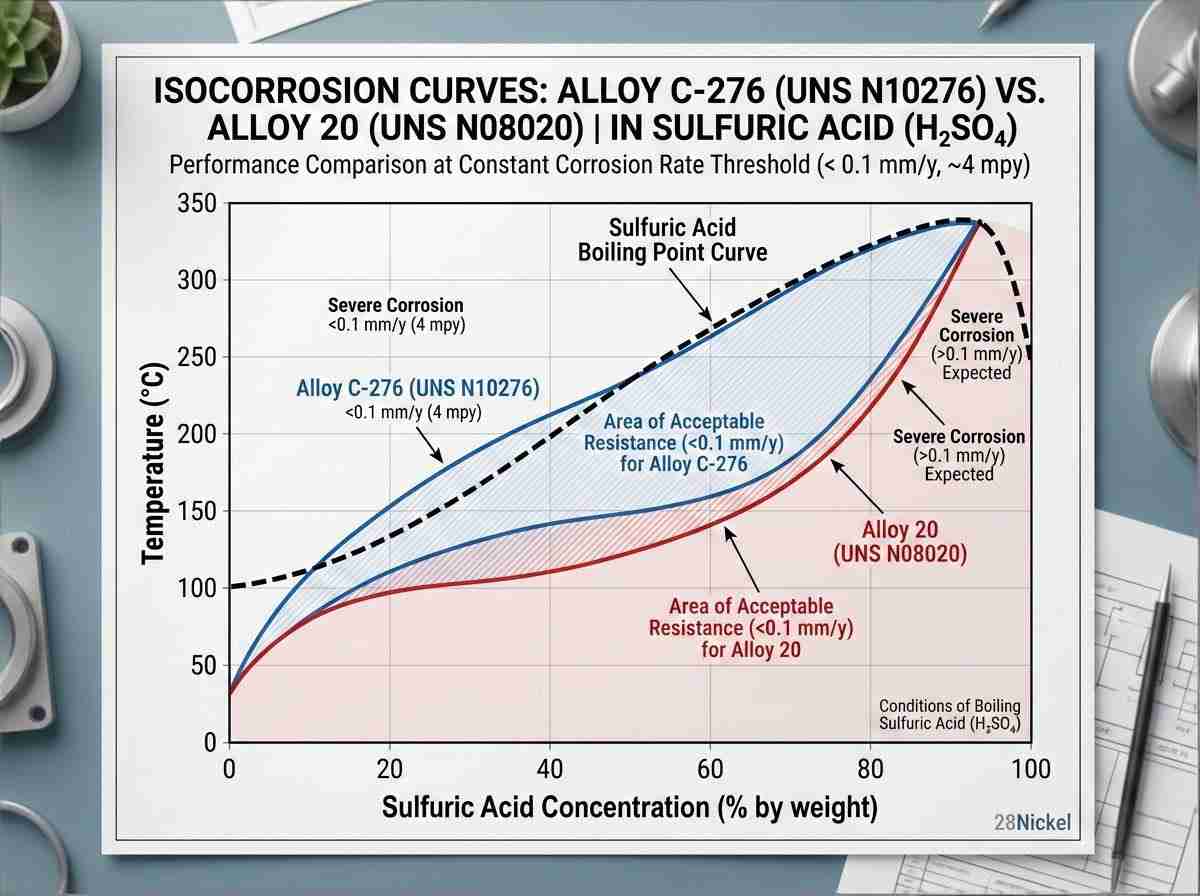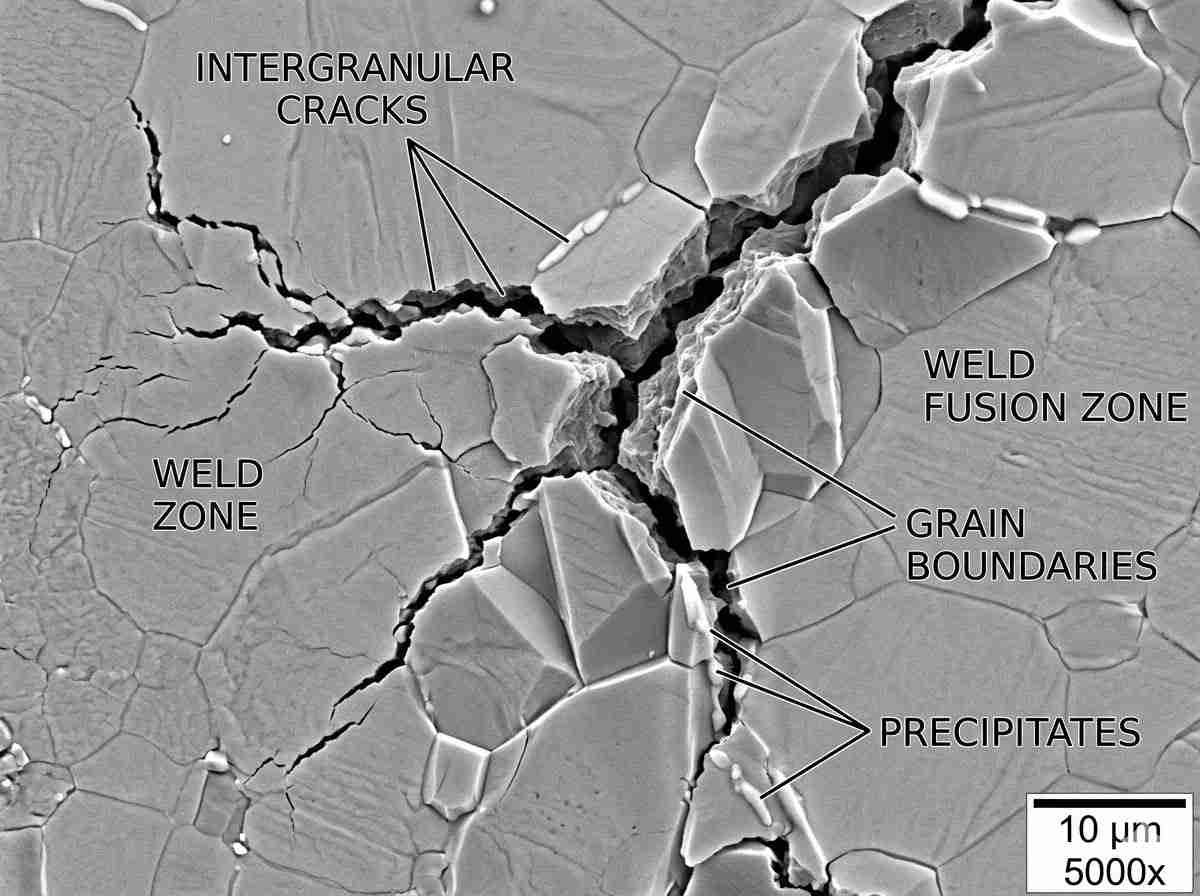
Material selection in aggressive corrosive environments is rarely straightforward. As engineers, we constantly balance lifecycle reliability against upfront capital expenditures. Nowhere is this metallurgical tension more evident than in the offshore, desalination, and chemical processing sectors. When designing critical piping systems exposed to hot chlorides or sour gas, the debate often comes down to one essential comparison: nickel alloy vs duplex stainless steel. Making the wrong call here does not just result in a minor maintenance headache; it inevitably leads to catastrophic chloride stress corrosion cracking (CSCC) and massive operational downtime.
The choice between these two metallurgical heavyweights requires a deep dive into their microstructural behavior under thermal and chemical stress. While both offer significant capability upgrades over standard 300-series austenitics like 316L, their performance envelopes diverge sharply at elevated temperatures and specific halide concentrations.
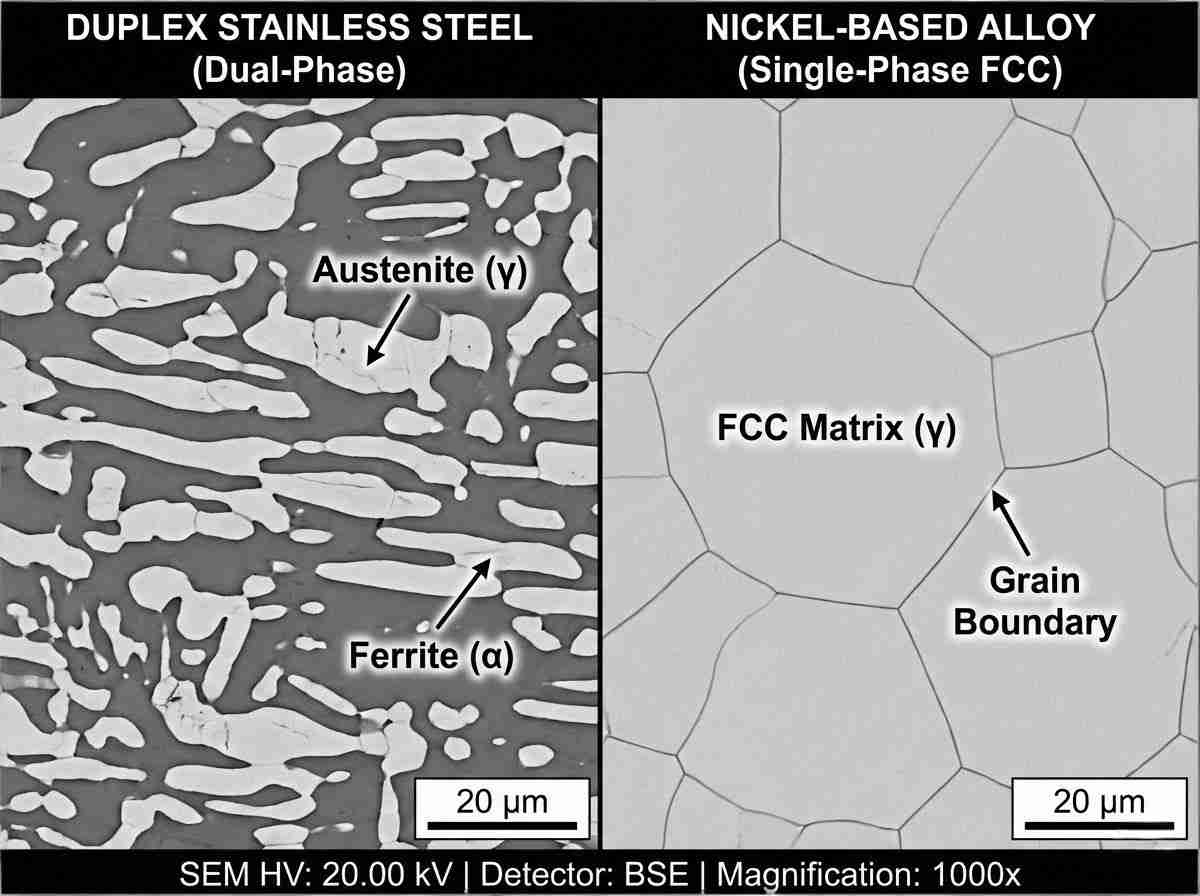
To properly assess nickel alloy vs duplex stainless steel, we must first examine their chemical compositions and the resulting Pitting Resistance Equivalent Number (PREN). Calculated using the formula , this metric provides a baseline for localized corrosion resistance. Duplex and super duplex stainless steels (such as 2205 and 2507) rely on a precisely balanced 50/50 mix of austenite and ferrite. The high chromium and nitrogen content gives duplex exceptional resistance to localized pitting at a much lower base cost than highly alloyed alternatives.
Conversely, nickel-based alloys (such as Alloy 825, 625, or C-276) rely on a massive nickel matrix—often exceeding 50% of the total mass. This fundamental elemental difference dictates their primary corrosion mechanisms. While evaluating nickel alloy vs duplex stainless steel, it becomes immediately apparent that the high nickel content provides near-immunity to CSCC in high-temperature environments, whereas the ferrite phase in duplex acts as its structural Achilles’ heel under similar stress.
| Material Grade | Metallurgical Type | Nominal Cr (%) | Nominal Ni (%) | Nominal Mo (%) | Typical PREN | Max Operating Temp (°C) |
| Alloy 2205 | Duplex Stainless | 22.0 | 5.5 | 3.0 | 35 | 250°C |
| Alloy 2507 | Super Duplex | 25.0 | 7.0 | 4.0 | 42.5 | 250°C |
| Alloy 825 | Nickel-Iron-Cr | 21.0 | 42.0 | 3.0 | 31 | 540°C |
| Alloy 625 | Nickel-Chromium | 21.5 | 61.0 | 9.0 | 50 | 980°C |
Yield strength is another critical vector when contrasting nickel alloy vs duplex stainless steel. Duplex grades famously offer roughly twice the yield strength of standard austenitic stainless steels and many solid-solution strengthened nickel alloys. This allows piping engineers to design vessels and components with significantly thinner wall thicknesses, saving massive weight and material costs on topside offshore platforms.
However, duplex stainless steel has a hard, unforgiving thermal ceiling. Continuous exposure to temperatures above 250°C to 300°C induces “475°C embrittlement”—the precipitation of deleterious alpha-prime and sigma phases. This radically reduces impact toughness and drastically compromises corrosion resistance. In high-temperature applications, the argument of nickel alloy vs duplex stainless steel tilts entirely toward the nickel spectrum. Solid solution nickel alloys maintain structural stability and phase integrity from cryogenic environments well into the 1000°C range without forming brittle intermetallic phases.
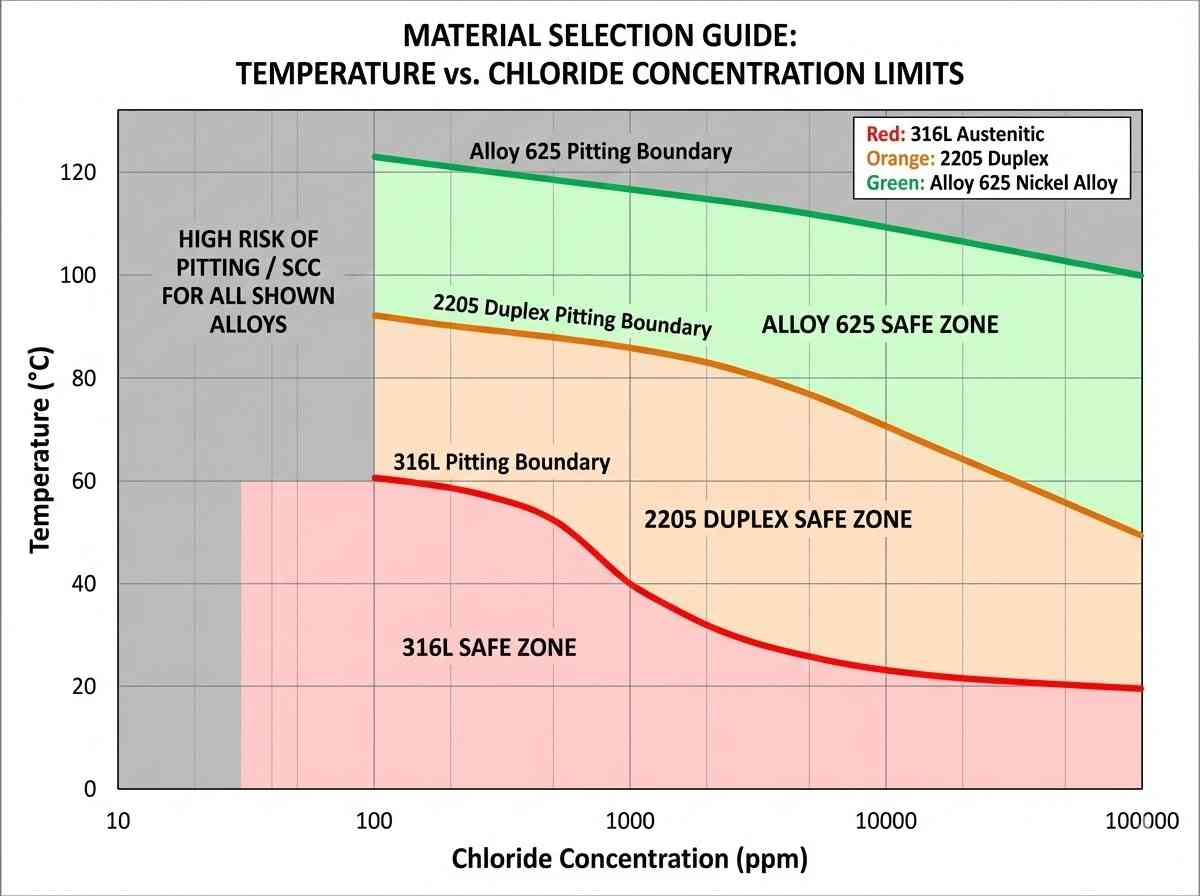
In the upstream oil and gas sector, the presence of hydrogen sulfide (H2S) alongside chlorides complicates material selection further. The NACE MR0175 / ISO 15156 standards place strict thermodynamic and environmental limits on both material classes. When weighing nickel alloy vs duplex stainless steel for sour service, duplex is highly restricted by temperature limits, the partial pressure of H2S, and environmental pH. While Super Duplex 2507 might survive mild sour conditions, as H2S partial pressures rise, the risk of sulfide stress cracking (SSC) escalates exponentially. In these severe applications, high-nickel alloys become the mandatory baseline for safe, compliant operation.
Ultimately, deciding between nickel alloy vs duplex stainless steel requires mapping exact operational parameters—temperature gradients, chloride ppm, pH levels, and tensile stress loads—against the rigorous metallurgical limits of each grade. There is no universal “better” material, only the mathematically and chemically correct choice for your specific environment. If your engineering team is grappling with complex corrosion parameters or requires highly specific material testing data to validate a critical design, expert metallurgical guidance is crucial. Reach out to the technical engineering team at 28Nickel to discuss your operational conditions and ensure your next piping or vessel design achieves maximum lifecycle integrity.
Related Q&A
Q1: How does temperature affect the choice between nickel alloy vs duplex stainless steel in high-chloride environments?
Temperature is the primary limiting factor for duplex stainless steels. Above 250°C, duplex steels experience microstructural degradation (sigma phase precipitation), leading to embrittlement and a sharp drop in corrosion resistance. Nickel alloys, conversely, retain their face-centered cubic phase stability and corrosion resistance at highly elevated temperatures, making them the required choice for high-heat, high-chloride environments.
Q2: Can super duplex stainless steel entirely replace Alloy 825 in offshore applications?
No. While Super Duplex 2507 has a higher PREN than Alloy 825 and offers superior yield strength (allowing for thinner pipe walls), it cannot replace Alloy 825 in environments exceeding 250°C or in severe sour gas environments with high H2S partial pressures. Alloy 825’s 42% nickel content provides far superior resistance to chloride stress corrosion cracking under elevated thermal conditions.
Q3: Why is the yield strength of duplex stainless steel generally higher than that of many nickel alloys?
The high yield strength of duplex stainless steel is a direct result of its dual-phase microstructure. The fine grain structure created by the roughly equal mix of austenite and ferrite phases creates internal barriers to dislocation movement under mechanical stress. Solid-solution strengthened nickel alloys (like Alloy 600 or 825) have a single-phase austenitic structure, which makes them inherently more ductile but gives them a lower baseline yield strength compared to duplex grades.