When selecting materials for critical industrial applications, the debate often centers on nickel alloy vs stainless steel. While both materials are staples in modern engineering, choosing the wrong one can lead to premature equipment failure or unnecessary overspending. At 28Nickel, we specialize in providing high-performance solutions, and understanding the nuances between these two metal families is essential for any procurement or engineering team.
Understanding the Chemical Foundation
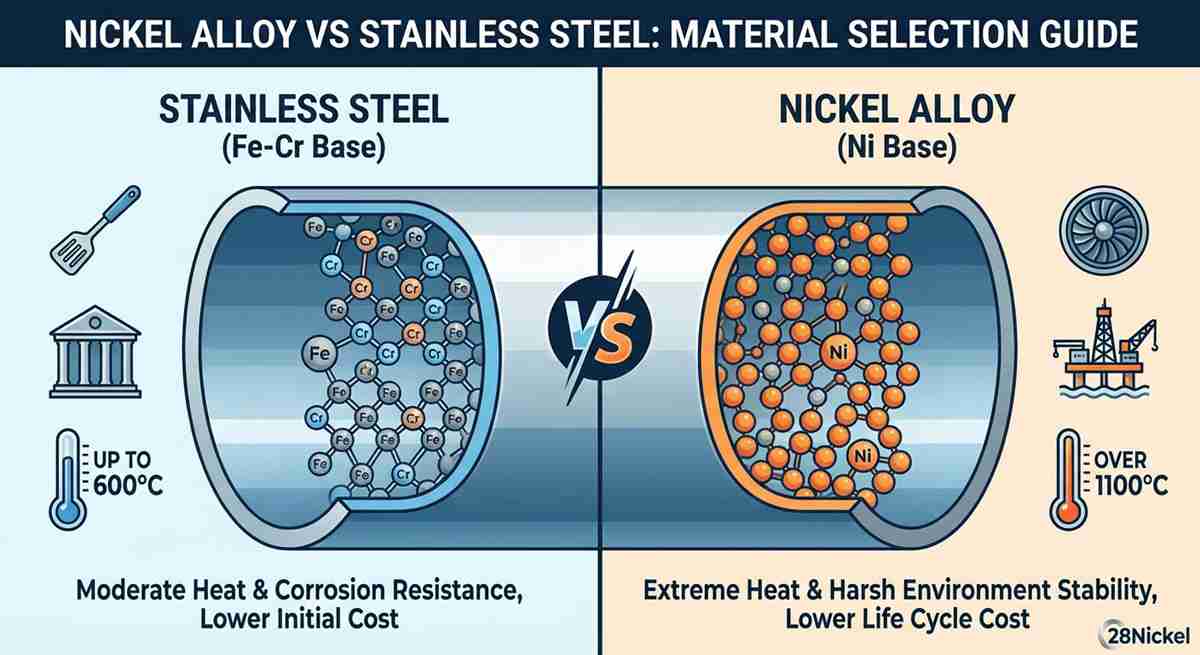
To appreciate the differences in nickel alloy vs stainless steel, we must first look at their chemistry. Stainless steel is primarily an iron-based alloy containing at least 10.5% chromium. This chromium creates a passive layer of oxide that prevents rust.
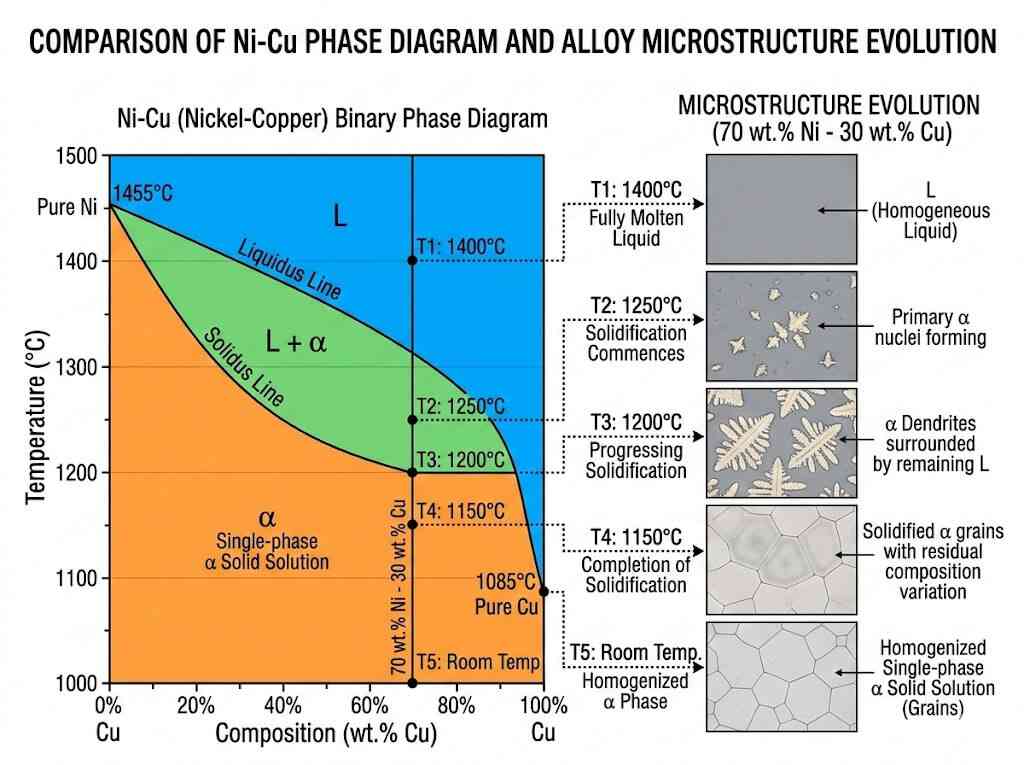
In contrast, a nickel alloy is defined by having nickel as the primary or significant alloying element. While stainless steel contains some nickel (like the 8% found in 304 grade), true nickel alloys are designed to withstand environments where iron-based metals simply cannot survive. This chemical distinction is the “DNA” that dictates how each material performs under pressure.
Temperature Resistance: The Heat Factor
One of the most significant battlegrounds for nickel alloy vs stainless steel is thermal stability. Standard stainless steels, such as 316L, perform admirably at ambient or moderately high temperatures. However, once temperatures exceed (), stainless steel begins to lose its mechanical strength and experiences accelerated oxidation.
Nickel alloys, particularly “superalloys” like Inconel or Hastelloy, are engineered for extreme heat. They maintain their crystalline structure and tensile strength even when approaching their melting points. If your project involves gas turbines, jet engines, or flare tips, the nickel alloy vs stainless steel comparison tilts heavily toward nickel due to its superior creep resistance.
Corrosion Resistance in Harsh Environments
Both materials offer corrosion resistance, but they operate on different levels. Stainless steel is excellent for architectural use, food processing, and general manufacturing where exposure to water or mild chemicals is expected.
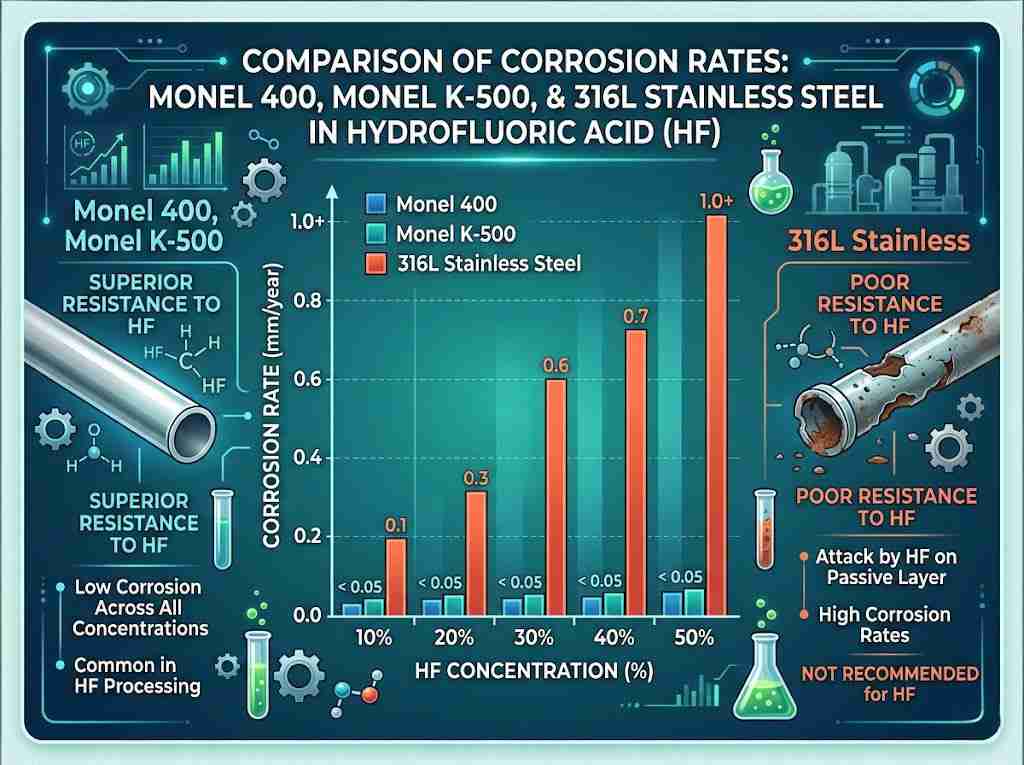
However, in “aggressive” environments—such as deep-sea oil drilling, chemical processing plants involving sulfuric acid, or pharmaceutical synthesis—the nickel alloy vs stainless steel choice becomes critical. Nickel alloys possess a unique ability to resist pitting, crevice corrosion, and stress corrosion cracking (SCC) in chloride-rich environments where even high-grade stainless steels might fail within months.
Comparative Technical Analysis
The following table summarizes the core differences to help you visualize the nickel alloy vs stainless steel trade-offs.
| Feature | Stainless Steel (e.g., 316) | Nickel Alloy (e.g., Inconel 625) |
| Primary Base | Iron (Fe) | Nickel (Ni) |
| Oxidation Resistance | Good (up to $870°C$) | Excellent (up to $1100°C+$) |
| Corrosion Resistance | Moderate to High | Exceptional (Acidic/Chloride) |
| Mechanical Strength | Drops at high heat | Remains stable at high heat |
| Cost | Budget-friendly | Premium pricing |
| Common Uses | Kitchenware, Construction | Aerospace, Nuclear, Oil & Gas |
Cost-Benefit Perspective
We often tell our clients at 28Nickel that the nickel alloy vs stainless steel decision shouldn’t just be about the initial purchase price. Nickel is a more expensive commodity than iron, making nickel alloys significantly pricier per kilogram.
However, one must consider the “Life Cycle Cost.” If a stainless steel pipe needs replacement every two years due to corrosion, but a nickel alloy pipe lasts for twenty years, the nickel alloy is actually the more economical choice. In high-stakes industries, the cost of downtime often far outweighs the cost of the raw material.
Fabrication and Weldability
In the workshop, the nickel alloy vs stainless steel comparison involves different handling techniques. Stainless steel is generally easier to machine and weld using standard equipment. Nickel alloys work-harden rapidly, meaning they become tougher as you machine them. This requires heavy-duty tools, slower speeds, and specific welding filler metals to prevent cracking.
Conclusion: Making the Right Choice
Choosing between nickel alloy vs stainless steel depends entirely on your specific operating environment. If you are dealing with moisture and mild detergents, stainless steel is your best friend. If you are venturing into the “extremes”—extreme heat, extreme acid, or extreme pressure—nickel alloys are the only viable path forward.
At 28Nickel, we pride ourselves on helping you navigate these technical waters to ensure your project’s longevity and safety.
Related Q&A
1. Is nickel alloy stronger than stainless steel?
In terms of ambient temperature yield strength, they can be comparable. However, at high temperatures (above ), nickel alloys are significantly stronger and more resistant to deformation (creep) than stainless steel.
2. Does nickel alloy rust like steel?
Nickel alloys are highly resistant to “rusting” (iron oxidation) because they contain little to no iron. They form a very stable protective layer that resists far more aggressive chemicals than the passive layer on stainless steel.
3. Why is nickel alloy more expensive than stainless steel?
The price difference in the nickel alloy vs stainless steel debate is due to raw material costs. Nickel is a rarer and more expensive element than the iron and chromium that make up the bulk of stainless steel.