Nickel-based alloys represent a pinnacle of metallurgical engineering, designed specifically to withstand environments where standard stainless steels and other metals would fail. These materials are characterized by their exceptional resistance to heat, oxidation, and corrosion. In high-temperature applications, nickel-based alloys maintain their mechanical strength and structural integrity, making them indispensable in the aerospace, chemical processing, and marine sectors. By combining nickel with elements like chromium, molybdenum, and iron, engineers can tailor the material’s properties to meet the most demanding industrial requirements.
Understanding the Strength of Nickel-Based Alloys
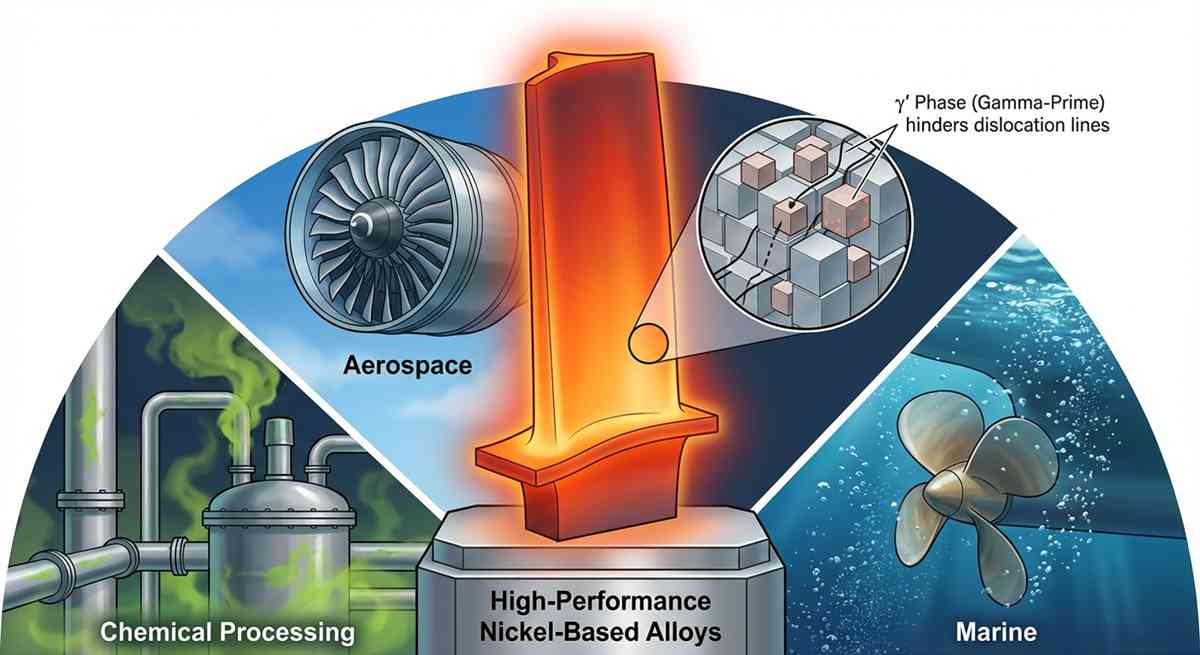
The superior performance of nickel-based alloys stems from their unique face-centered cubic (FCC) crystal structure. This structure is highly stable from cryogenic temperatures up to the melting point. One of the most critical strengthening mechanisms in these alloys is the precipitation of the gamma-prime () phase. This intermetallic phase, typically composed of , acts as a barrier to dislocation movement, which significantly increases the “creep resistance” of the material—its ability to resist deformation under long-term stress at high temperatures.
Common Classifications of Nickel-Based Alloys
To select the right material, it is essential to understand how different alloying elements change the behavior of nickel-based alloys. They are generally categorized based on their primary chemical composition and intended environment:
-
Nickel-Chromium Alloys: Renowned for their resistance to oxidation and high-temperature scaling (e.g., Inconel series).
-
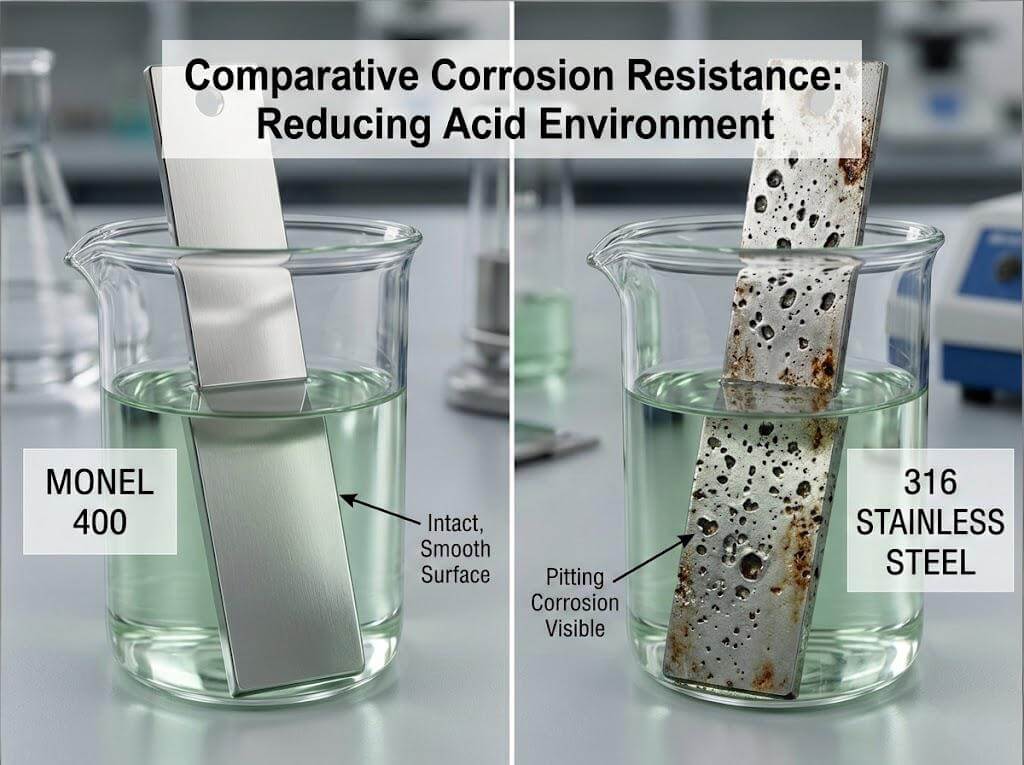
Nickel-Molybdenum Alloys: Specifically designed for resistance to reducing acids like hydrochloric and sulfuric acid (e.g., Hastelloy series).
-
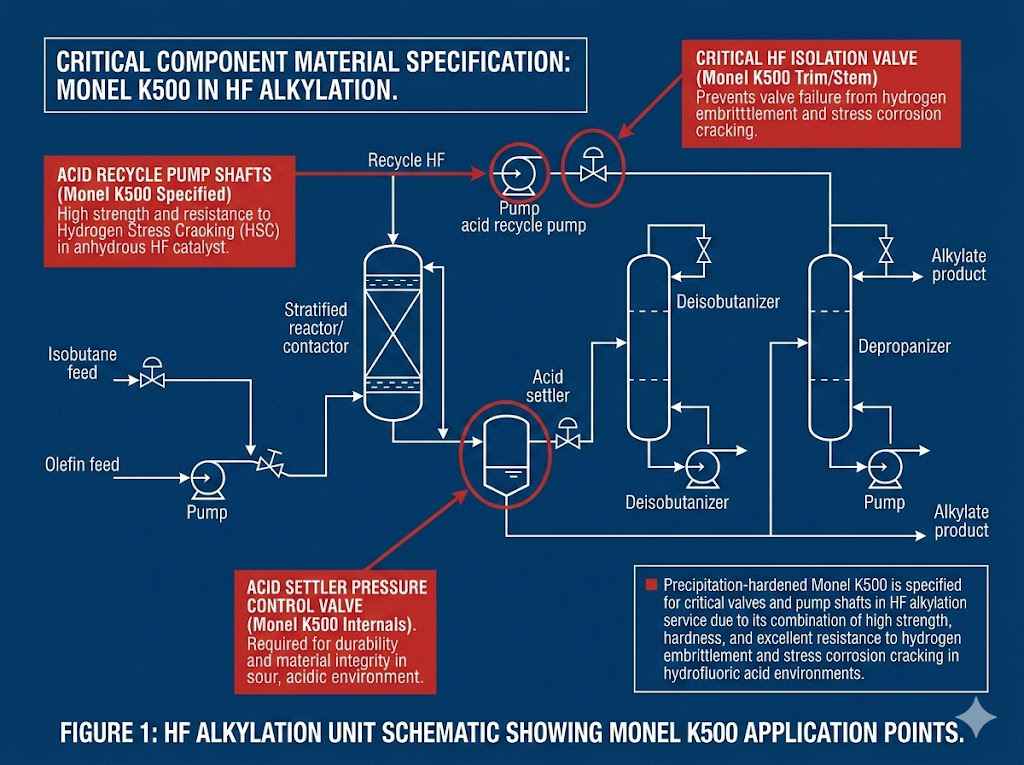
Nickel-Copper Alloys: Excellent for marine applications due to their resistance to seawater corrosion (e.g., Monel series).
Comparison of Popular Nickel-Based Alloys
| Alloy Grade | Primary Elements | Key Characteristic | Common Application |
| Inconel 625 | Ni, Cr, Mo, Nb | High strength & weldability | Aerospace & Marine piping |
| Hastelloy C-276 | Ni, Mo, Cr, W | Universal corrosion resistance | Chemical processing plants |
| Monel 400 | Ni, Cu | Resistance to sea water | Marine engineering & pumps |
| Incoloy 800 | Ni, Fe, Cr | High-temp oxidation resistance | Heat exchangers & furnace parts |
Industrial Applications for Nickel-Based Alloys
The adoption of nickel-based alloys is most prominent in the aerospace industry, particularly within the hot sections of gas turbine engines. Turbine blades, for instance, are often made from single-crystal nickel superalloys to prevent failure under extreme centrifugal forces and heat.
Beyond flight, the oil and gas industry relies heavily on nickel-based alloys for downhole components that face “sour” environments containing hydrogen sulfide (). Furthermore, the nuclear power sector utilizes these alloys in steam generator tubing because they can resist stress-corrosion cracking in high-purity water.
Future Trends in Nickel-Based Alloys Development
As industries push for higher efficiency through increased operating temperatures, the development of nickel-based alloys is shifting toward additive manufacturing (3D printing). Traditional casting often leads to grain boundary weaknesses; however, new laser-powder bed fusion techniques allow for the creation of complex geometries with optimized microstructures, further enhancing the lifespan of components made from nickel-based alloys.
Related Q&A
1. Why are nickel-based alloys preferred over stainless steel in extreme conditions?
While stainless steel is effective for general corrosion, nickel-based alloys offer significantly higher thermal stability and resistance to “creep” at temperatures exceeding 600°C, where steel would lose its structural integrity.
2. Can nickel-based alloys be welded easily?
Many grades, such as Inconel 625, are designed for excellent weldability. However, some high-strength superalloys are susceptible to “strain-age cracking,” requiring precise pre-heating and post-weld heat treatments.
3. What is the role of Chromium in these alloys?
Chromium is primarily added to nickel-based alloys to provide oxidation resistance. It forms a protective, passive layer of chromium oxide () on the surface, which prevents further environmental degradation.