











Nickel 200 sheet for caustic soda service is usually selected when the process team wants a material route with a long industrial track record in alkali exposure and with fewer corrosion surprises than many common alternatives. In caustic systems, especially when concentration, temperature, and operating discipline interact over long service periods, the wrong plate route can create problems that do not look dramatic at first but become expensive later. Local attack, contamination concerns, fabrication rework, and documentation disputes all tend to show up after plate has already been cut and welded into equipment. That is why engineers do not treat nickel 200 sheet for caustic soda service as a generic sheet order. They treat it as a process-material decision that must survive both corrosion logic and fabrication reality.
The material choice matters because sheet often becomes vessel internals, transfer parts, trays, covers, or other components where large surface area is directly exposed to the process. Once the sheet is formed or welded, replacing it is no longer a simple stock decision. A buyer therefore wants more than a familiar alloy name. The buyer wants nickel 200 sheet for caustic soda service that is correctly identified, correctly documented, and reasonably easy to defend if the project team later asks why this exact sheet route was released.
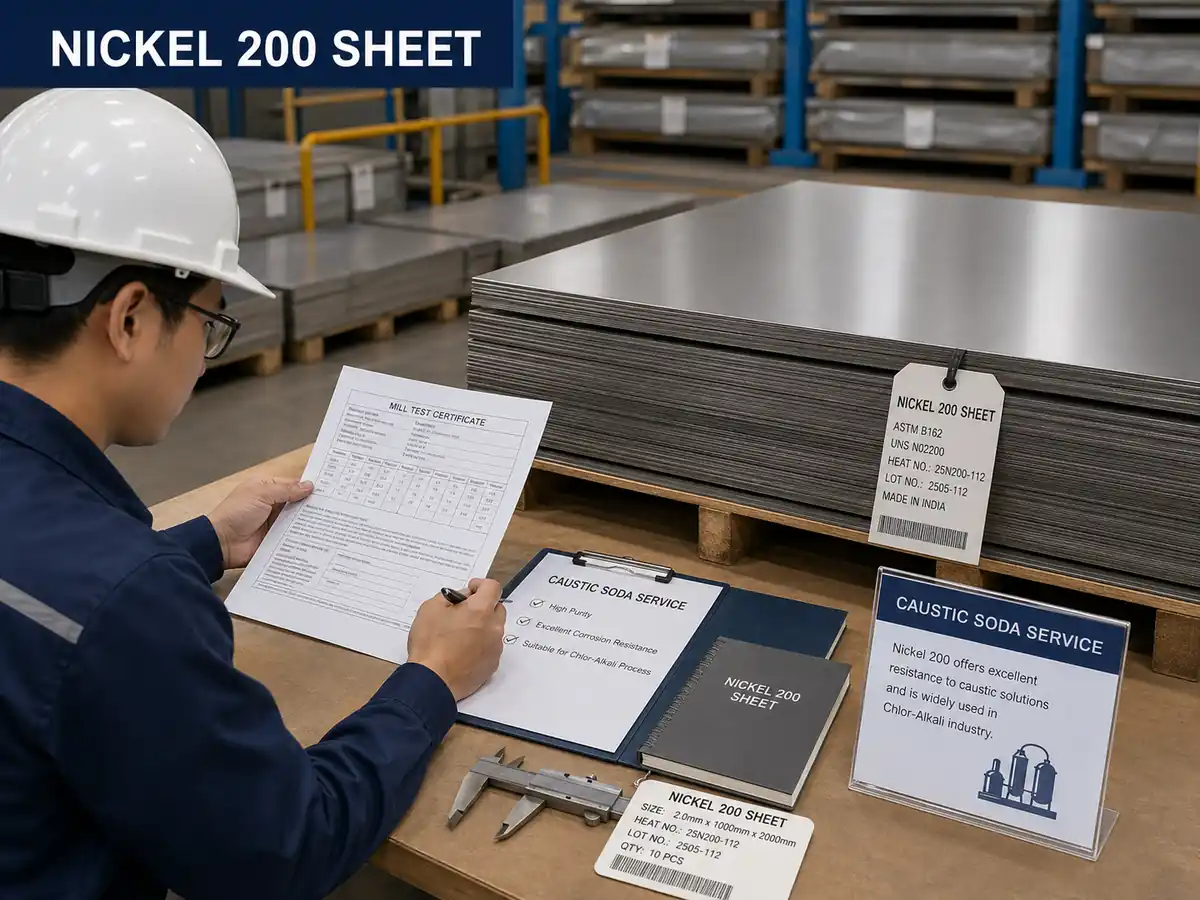
Why Nickel 200 Sheet for Caustic Soda Service Needs Careful Review
The first reason is service sensitivity. Nickel 200 sheet for caustic soda service is usually chosen because the buyer is trying to reduce corrosion uncertainty in alkaline process duty, not because the sheet is convenient to source. That means chemistry confidence and plate identity matter from the beginning. If the supplied sheet does not actually align with the expected pure-nickel route, the buyer may discover the problem only after forming, welding, or startup planning has already added cost.
The second reason is fabrication value. Sheet work accumulates value very quickly through cutting, rolling, punching, and welding. A project that releases nickel 200 sheet for caustic soda service without strong traceability is effectively deferring risk into the shop. For that reason, buyers should confirm product-form basis, mill documentation, heat-number visibility, and any practical fabrication notes before approving shipment. In process materials, the cheapest time to clear doubt is always before the plate becomes a finished part.
| Control point | Why it matters in caustic service | What buyers should verify |
| Chemistry identity | Pure-nickel route must be correctly supplied | Heat-specific MTCs and clear grade callout |
| Sheet traceability | Large sheet pieces are quickly subdivided | Marking continuity and cutting plan awareness |
| Fabrication readiness | Forming and welding add value immediately | Condition, thickness, and document clarity |
| Service discussion | Caustic behavior depends on real operating conditions | Concentration, temperature, and equipment use case |
How to Buy Nickel 200 Sheet More Safely
The safest way to buy nickel 200 sheet for caustic soda service is to define the process before comparing sheet offers. Buyers should tell the supplier whether the sheet will become liners, covers, trays, tanks, or other wet-caustic components, and whether temperature or concentration excursions are expected. Those details help confirm whether nickel 200 sheet for caustic soda service is the right route and what documentation level should accompany the order.
At 28Nickel, we usually advise customers to look beyond nominal availability. Ask how certificates are shared, how the sheet remains identifiable after cutting, and whether the supplier has handled similar alkali-service projects before. The better those answers are, the lower the risk that nickel 200 sheet for caustic soda service will create questions after fabrication has already started. In caustic work, process clarity and supply clarity should reinforce each other.
It is also useful to discuss what happens after the sheet reaches the fabricator. If the material will be nested into many smaller parts, relabeled, or distributed to multiple workstations, the buyer should ensure those steps are still compatible with the original certificate route. Nickel 200 sheet for caustic soda service often looks straightforward in inventory, but the real value of good supply control appears only once the sheet starts turning into equipment components.
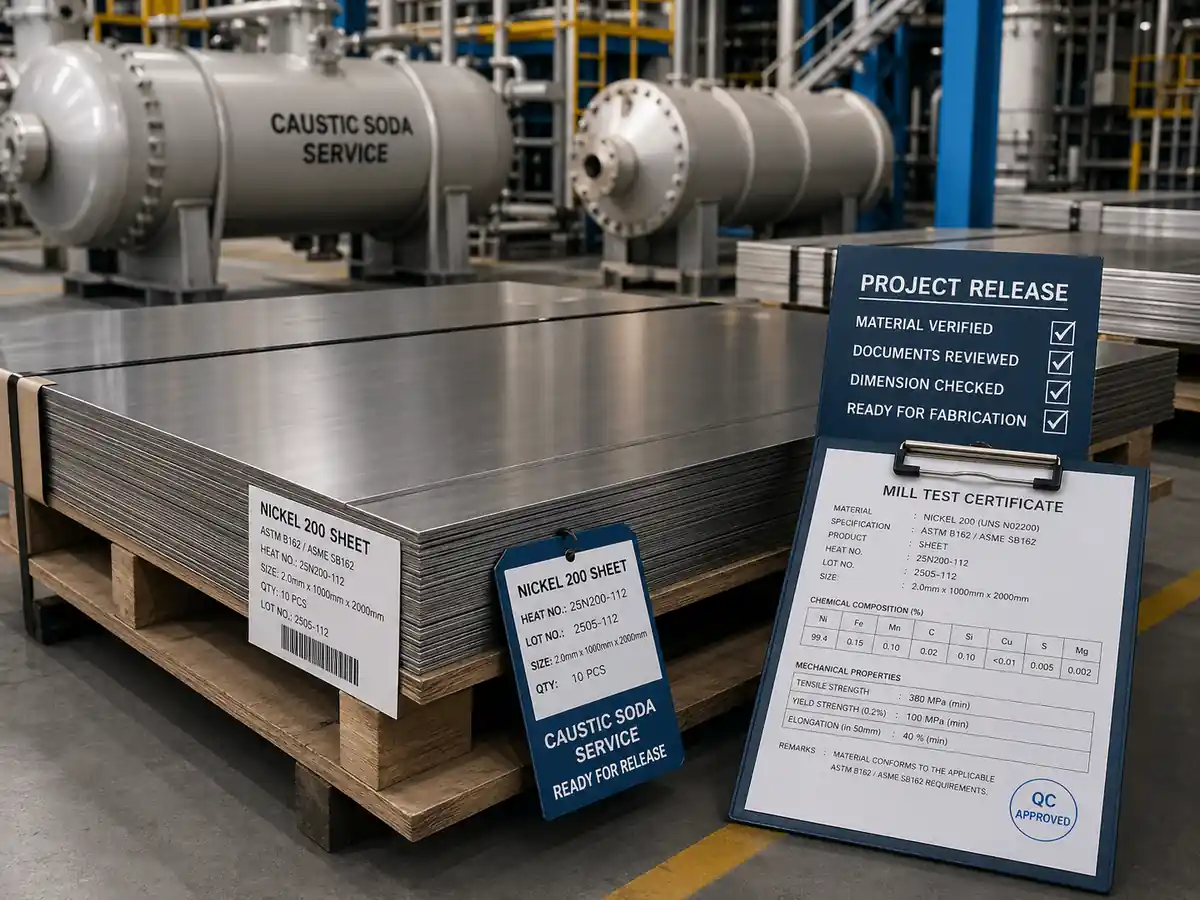
Conclusion
Caustic-service sheet is easiest to trust before it enters fabrication, not after. If you need help reviewing plate route, documents, or process-fit logic for an alkali-service order, 28Nickel can help confirm whether the proposed nickel 200 sheet for caustic soda service package is strong enough before release.
Related Q&A
Q: Why should buyers describe the real caustic service to the supplier?
Because nickel 200 sheet for caustic soda service should be judged against actual concentration, temperature, and equipment use, not only by alloy name.
Q: Why is traceability important on sheet orders?
Because large sheets are often cut into many pieces, and identity becomes much harder to reconstruct once fabrication starts.
Q: Can standard mill documents be enough?
Sometimes yes, but higher-risk jobs often benefit from earlier review of certificates and plate identity before forming and welding begin.