











Selecting a nickel 201 round bar supplier is not just a question of who has round stock available. Nickel 201 is usually purchased where buyers want a commercially pure nickel route with controlled chemistry and a cleaner fit for specific corrosive or thermal environments than many general alloys can provide. In round bar form, the material often becomes machined components, connectors, shafts, small structural pieces, or corrosion-service hardware where downstream value rises very quickly. That is why a buyer should treat the nickel 201 round bar supplier as part of the technical control chain rather than as a simple stockist.
The practical reason is straightforward. Round bar is cut, moved, repacked, and reassigned more often than many other product forms. Every handling step increases the chance that short lengths will lose their link to the original heat number. Once a bar has been machined into a finished piece, reconstructing that traceability can be frustrating and expensive. A disciplined nickel 201 round bar supplier reduces this risk by keeping certificates, markings, and job-specific packaging aligned from the start.
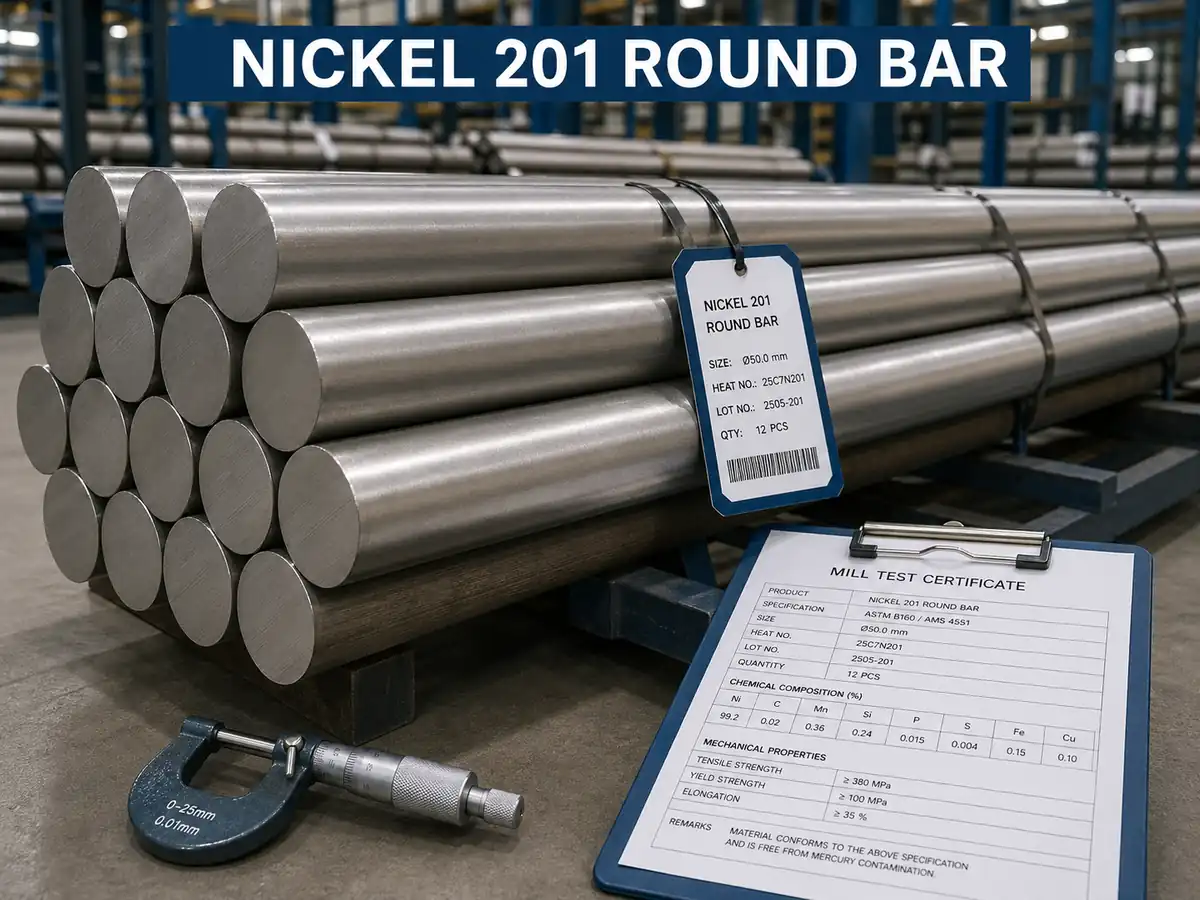
What Buyers Should Confirm on Nickel 201 Round Bar
The first checkpoint is product identity. A strong nickel 201 round bar supplier should be able to show heat-specific documentation, clarify the delivered condition, and distinguish the supplied pure-nickel route clearly enough that the buyer is not relying on assumptions. This matters because a material that looks commercially straightforward can still create serious downstream questions if grade callout, chemistry basis, or stock handling are poorly controlled.
The second checkpoint is cut-length discipline. Nickel 201 round bar supplier performance is often tested not on the full bar but on what happens after the bar is cut for the shop. Short pieces, remnants, and partial lots should remain traceable to the original heat. If the supplier cannot describe how that is preserved, the buyer should expect more confusion later. In machining-heavy work, the bar route is only as strong as its weakest identification step.
| Round-bar issue | Why it matters | What buyers should verify |
| Grade identity | Pure-nickel supply must be clearly documented | Heat-specific MTCs and clear product description |
| Condition control | Machining and use depend on delivered state | Stock details and practical technical clarification |
| Cut-length traceability | Short pieces lose identity quickly | Marking plan for remnants and split lots |
| Pre-shipment transparency | Late surprises become machining cost | Advance certificates and packing details |
How to Screen a Nickel 201 Round Bar Supplier
The fastest way to screen a nickel 201 round bar supplier is to ask questions that reveal process control. What standard applies? How are certificates shared? What happens when bars are cut into smaller pieces? Is mixed stock stored nearby? These questions often tell the buyer more than a broad statement about high quality ever will. A supplier that answers specifically usually has a better controlled route than one that relies on general confidence language.
At 28Nickel, we usually advise customers to evaluate the nickel 201 round bar supplier in terms of how much uncertainty it removes before machining starts. If the supplier makes stock identity, lot separation, and documentation easy to review, the shop can focus on manufacturing rather than material doubt. If those basics are weak, the buyer often ends up paying the difference through re-checking, delayed release, or avoidable traceability work after value has already been added.
Another useful question is whether the supplier can support staged deliveries without losing lot clarity. Many projects do not consume all round bar at once, and that creates opportunities for partial lots or remnants to be mixed if handling is careless. A capable nickel 201 round bar supplier should anticipate this and make sure the stock remains technically defendable even after it has been split into smaller job-specific quantities.
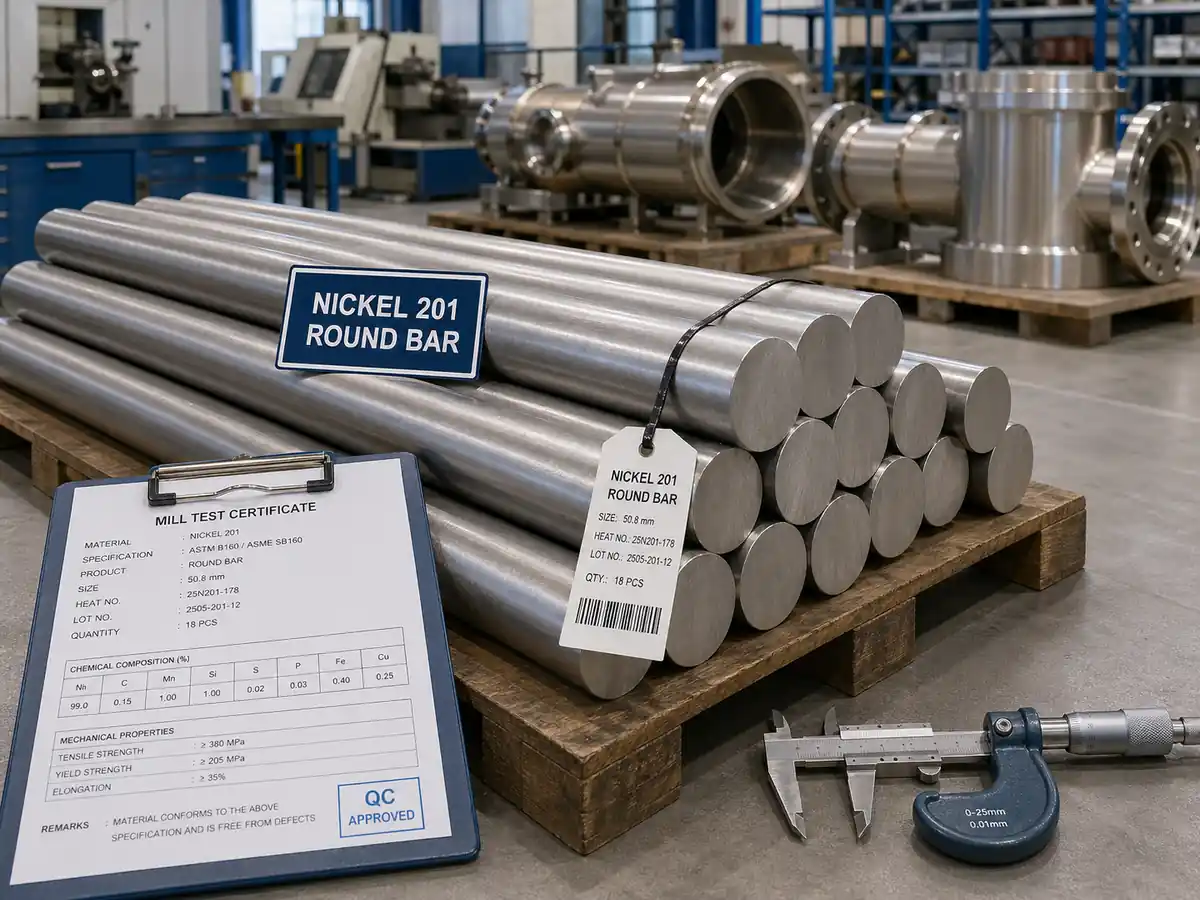
Conclusion
Pure-nickel bar becomes expensive only after it enters machining, approval, and schedule pressure. The earlier stock identity is made boring and obvious, the fewer surprises appear in the shop. On bar projects, simple discipline from the start usually protects far more value than late investigation ever can today. If you need help checking stock route, documents, or cut-length identity for a bar order, 28Nickel can help review whether the proposed nickel 201 round bar supplier is strong enough before release.
Related Q&A
Q: Why does cut-length traceability matter so much on round bar?
Because a nickel 201 round bar supplier often ships stock that will be divided into many smaller blanks, and identity can disappear quickly once cutting starts.
Q: Is basic certificate review enough?
Sometimes, but higher-risk jobs often benefit from earlier scrutiny of packing logic, heat separation, and stock handling.
Q: Should buyers ask about mixed-stock storage?
Yes. Where several similar materials are stored together, good segregation practice reduces the chance of costly confusion later.