











Nickel alloy forged blocks for valve bodies is usually purchased when the component is too critical for generic stock language. The material has to satisfy corrosion service, fabrication behavior, dimensional control, inspection evidence, and documentation release at the same time. A low price is not useful if the material cannot be defended during drawing review or incoming inspection.
In export work, the late problems are often predictable. The customer may receive the correct alloy but still reject the package because the heat number is unclear, the manufacturing route is not stated, or the inspection report does not match the physical marks. For 28Nickel, the purpose of supplying nickel alloy forged blocks for valve bodies is to make the engineer’s approval process easier, not merely to ship metal.
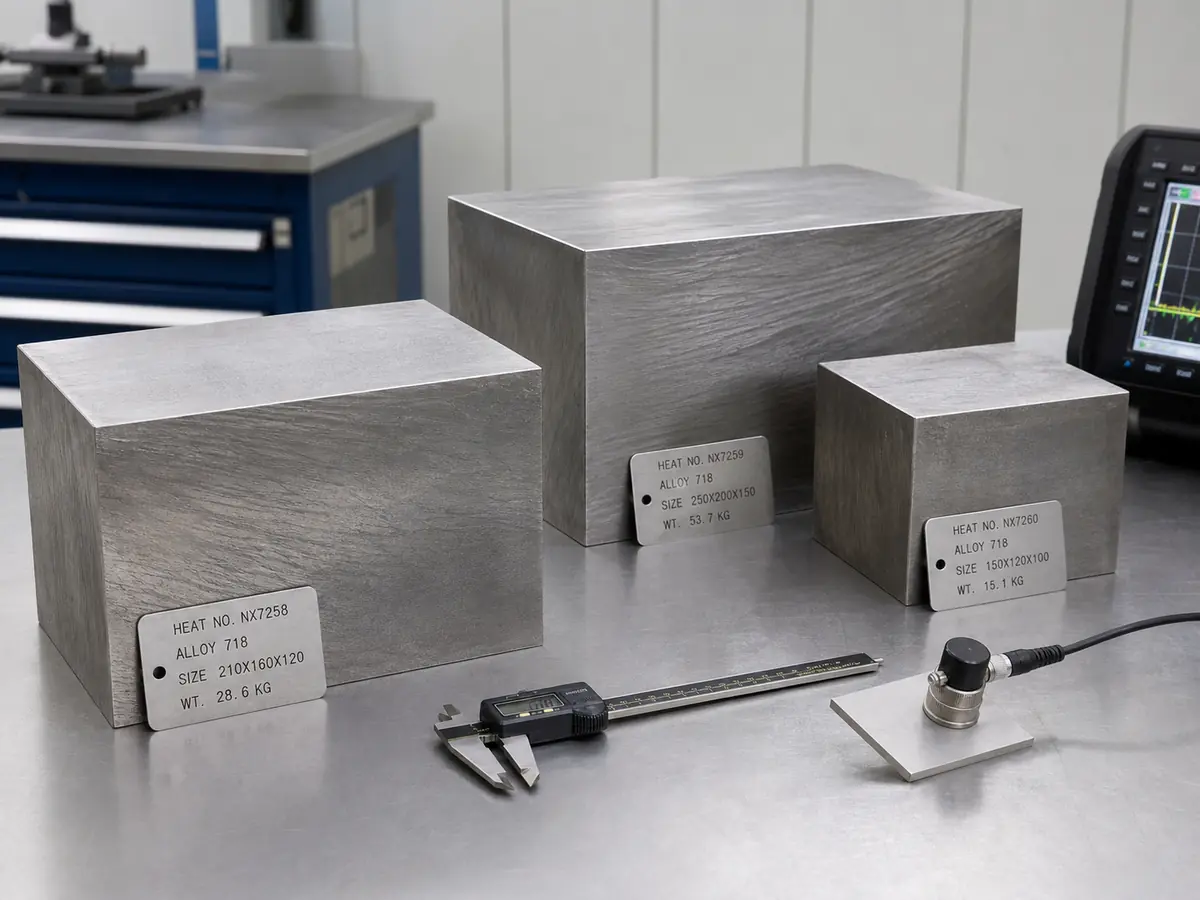
Specifying nickel alloy forged blocks for valve bodies
For valve bodies, the real question is not only whether Alloy 625, Alloy 825, C276, or Monel 400 is available in a rectangular size. The engineer must connect the block to the valve trim, seat design, pressure class, corrosion media, and machining allowance. Nickel alloy forged blocks for valve bodies should be specified with enough excess stock for rough machining, but not so much that the buyer pays for avoidable nickel weight. If sour gas, seawater, hydrofluoric acid traces, or chloride-bearing chemicals are involved, the material review should also check whether NACE, hardness limits, or additional corrosion testing apply.
Forging quality is the second layer of control. Upsetting, drawing, reduction ratio, working temperature, and solution annealing all influence internal soundness and grain structure. A block that is simply cut from large bar may not behave like a purpose-forged block in heavy valve machining. When the body cavity is opened, subsurface defects, segregation, or uneven grain flow can become expensive surprises. Nickel alloy forged blocks for valve bodies therefore deserve a defined forging route, heat treatment record, and ultrasonic testing scope before the purchase order is released.
Dimensional planning should include block length, width, thickness, squareness, surface condition, and saw-cut allowance. CNC shops usually prefer stable blocks with clean reference faces, because tool wear in nickel alloys is already high. Uneven scale, hard spots, or distorted stock can reduce machining productivity and create rework on sealing faces. For export orders, 28Nickel should also confirm whether blocks are packed individually, protected from carbon-steel contamination, and marked on surfaces that will remain visible during receiving inspection.
| Control point | Why it matters | What 28Nickel should verify |
| Forging route | Controls grain flow and internal soundness | Forging ratio, heat treatment record, and production route |
| UT acceptance | Finds internal discontinuities before expensive CNC work | UT standard, scan coverage, probe frequency, and report |
| Machining allowance | Prevents undersize stock and excess nickel cost | Cut size, tolerance, squareness, and allowance per face |
| Corrosion fit | Connects alloy choice to valve service media | Alloy grade, NACE need, hardness, and corrosion notes |
| Traceability | Keeps each block linked to certificate and heat | Heat number transfer, marking photos, MTC, and packing list |
Inspection Evidence for forged blocks
For nickel alloy forged blocks for valve bodies, inspection starts with identity control. The purchase order, drawing, alloy grade, heat number, production lot, and certificate must be compared before the material is cut, packed, or issued to fabrication. This sounds basic, but it is exactly where many nickel alloy disputes begin.
The release package should include the mill test certificate, chemical analysis, mechanical properties, heat treatment condition, UT report, dimensional report, and marking photos. For valve body work, I like to see the heat number transferred before and after cutting, because multiple blocks may be nested from one larger forging. Nickel alloy forged blocks for valve bodies are high-value inputs; a clean traceability chain protects both the machine shop and the end user.
A good supplier will also challenge vague drawings. If a customer only sends finished valve dimensions, the supplier should ask for rough-machining allowances and the preferred cutting plan. Nickel alloy forged blocks for valve bodies should be quoted with a realistic delivery condition: forged, heat treated, rough machined or saw cut, UT accepted, and packed for CNC handling. That level of detail prevents a cheap quotation from becoming a costly machining dispute.

Conclusion
The right nickel alloy forged blocks for valve bodies is defined by engineering evidence, not by a short material name. Buyers should review service chemistry, manufacturing route, dimensional tolerance, inspection scope, and document release as one package. When these details are aligned before production, 28Nickel can help reduce approval delay and give procurement teams a cleaner path to technical acceptance.
Related Q&A
Q1: Why use forged blocks instead of plate for valve bodies?
Forging can provide better internal integrity and controlled grain flow for heavy sections. Nickel alloy forged blocks for valve bodies are usually preferred when pressure boundary reliability and machining depth matter.
Q2: Should ultrasonic testing be mandatory?
For heavy nickel alloy valve blocks, UT is strongly recommended. It reduces the risk of discovering internal defects after hours of CNC machining have already been spent.
Q3: What should buyers confirm before ordering?
Confirm alloy grade, rough size, machining allowance, UT class, heat treatment condition, marking method, and whether the valve service requires NACE or additional corrosion review.