










Nickel alloy welding wire supplier is usually purchased when the component is too critical for generic stock language. The material has to satisfy corrosion service, fabrication behavior, dimensional control, inspection evidence, and documentation release at the same time. A low price is not useful if the material cannot be defended during drawing review or incoming inspection.
In export work, the late problems are often predictable. The customer may receive the correct alloy but still reject the package because the heat number is unclear, the manufacturing route is not stated, or the inspection report does not match the physical marks. For 28Nickel, the purpose of supplying nickel alloy welding wire supplier is to make the engineer’s approval process easier, not merely to ship metal.
Specifying nickel alloy welding wire supplier
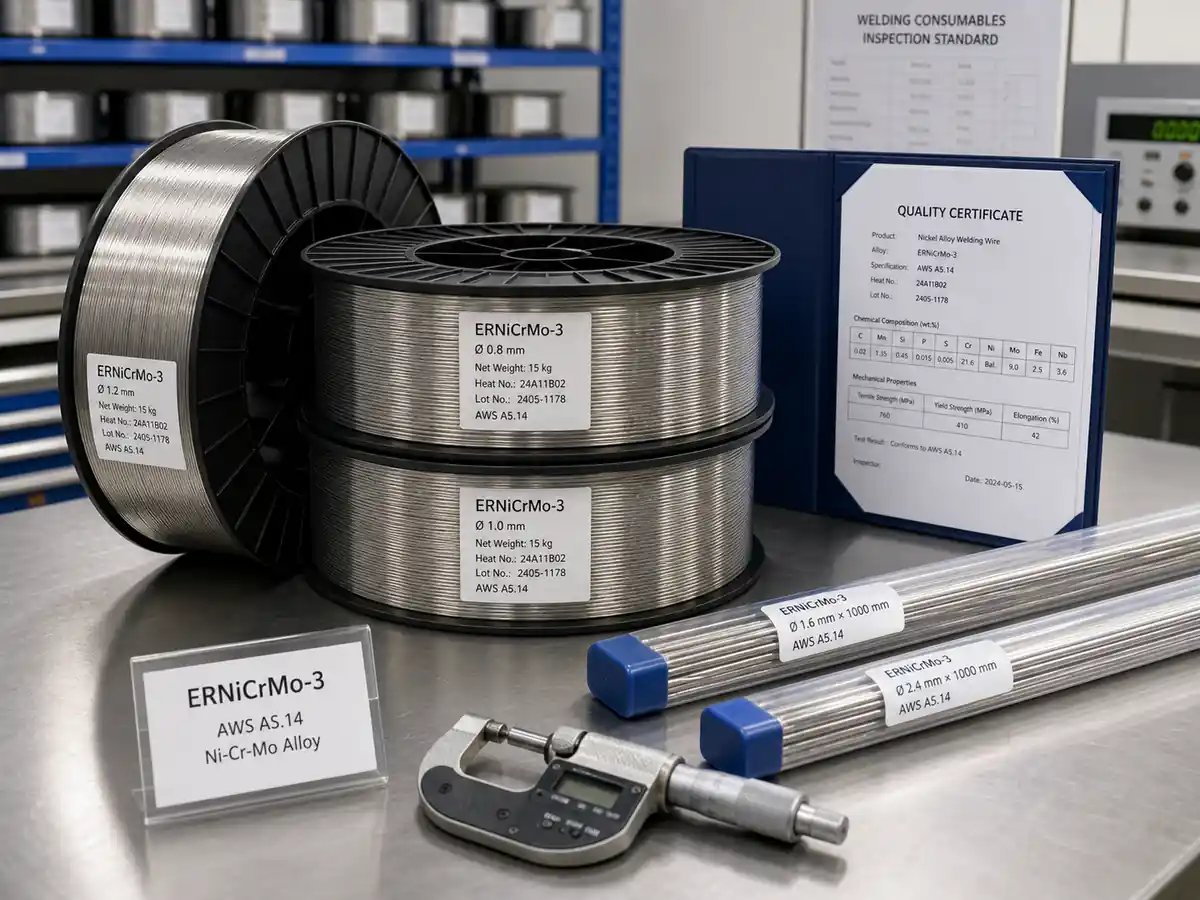
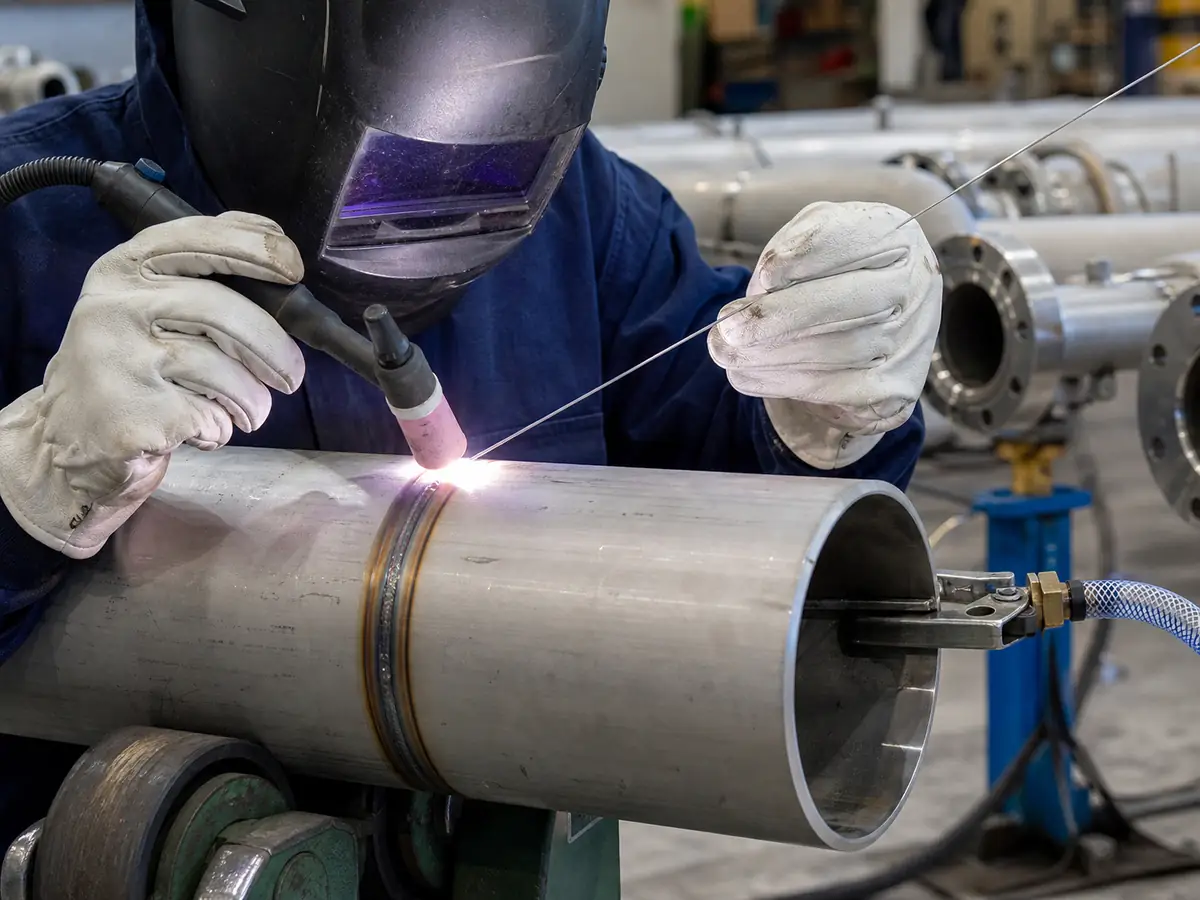
Filler selection should start from the base metal, not from a generic stock list. ERNiCrMo-3 may be used with Alloy 625 and dissimilar joints, ERNiCr-3 is common for Alloy 600 and some stainless-to-nickel transitions, and ERNiCu-7 fits Monel 400 families. A nickel alloy welding wire supplier should understand whether the procedure is GTAW, GMAW, SAW, or overlay, because diameter, cast, helix, surface cleanliness, and feeding behavior change the weld result even when chemistry looks correct.
Wire quality depends on melting route, drawing practice, surface finish, lubricant control, and spool winding. A wire with correct chemistry can still cause porosity or feeding instability if its surface is contaminated or if the cast is inconsistent. Nickel alloys are less forgiving than carbon steel fillers; small changes in cleanliness or handling may show up as arc wandering, inclusion lines, or inconsistent bead wetting. Nickel alloy welding wire supplier evaluation should therefore include both certificate review and practical weldability feedback.
Buyers should confirm wire diameter tolerance, spool weight, straight TIG rod length, packaging type, lot size, and storage requirements. Moisture, damaged spools, and mixed labels are ordinary warehouse issues, but in nickel alloy welding they become high-value quality risks. For export shipments, sealed packing and separated alloy lots are not cosmetic choices. They are part of the control plan that keeps a qualified welding procedure from being undermined by consumable confusion.
| Control point | Why it matters | What 28Nickel should verify |
| Filler classification | Connects wire chemistry to WPS and base metal | AWS/EN grade, lot number, and chemical analysis |
| Diameter and form | Controls arc stability and feed performance | Wire diameter, spool size, TIG rod length, cast and helix |
| Surface cleanliness | Reduces porosity, inclusions, and unstable feeding | Clean drawing finish, lubricant control, and sealed packaging |
| Lot control | Prevents mixing during procedure qualification and production | Lot tags, carton labels, packing list, and reserved quantity |
| Documentation | Allows pressure-equipment or owner review | MTC, conformity statement, inspection photos, and test lab details |
Inspection Evidence for welding wire
For nickel alloy welding wire supplier, inspection starts with identity control. The purchase order, drawing, alloy grade, heat number, production lot, and certificate must be compared before the material is cut, packed, or issued to fabrication. This sounds basic, but it is exactly where many nickel alloy disputes begin.
A release package for welding wire should include the filler classification, lot number, heat number if available, chemical analysis, dimensional checks, and packing photos. When the wire supports pressure equipment, shipbuilding, power, or chemical process piping, the buyer may also need AWS, ASME, EN, or project-specific references. A nickel alloy welding wire supplier should state clearly whether certificates are issued by the manufacturer, distributor, or an authorized test laboratory.
The practical supplier question is simple: can the same wire lot be identified from quotation to weld station? Nickel alloy welding wire supplier performance is proven when labels, certificates, cartons, spools, and customer receiving records all match. If the project includes procedure qualification, repair welding, or corrosion-critical overlay, ask for sample availability and lot reservation before the production schedule becomes tight.
Conclusion
The right nickel alloy welding wire supplier is defined by engineering evidence, not by a short material name. Buyers should review service chemistry, manufacturing route, dimensional tolerance, inspection scope, and document release as one package. When these details are aligned before production, 28Nickel can help reduce approval delay and give procurement teams a cleaner path to technical acceptance.
Related Q&A
Q1: How do I match nickel alloy wire to base metal?
Start with the qualified welding procedure and base alloy family. A nickel alloy welding wire supplier should confirm filler classification against corrosion service, strength, and dissimilar-metal requirements.
Q2: Why are cast and helix important?
They affect feeding, arc stability, and bead placement, especially in GMAW and automated overlay. Poor wire geometry can create welding instability even if chemistry is acceptable.
Q3: Should welding wire be purchased by lot?
Yes, for critical projects. Lot-controlled purchase and reserved stock help keep procedure qualification, production welding, and repair work on the same documented filler route.