











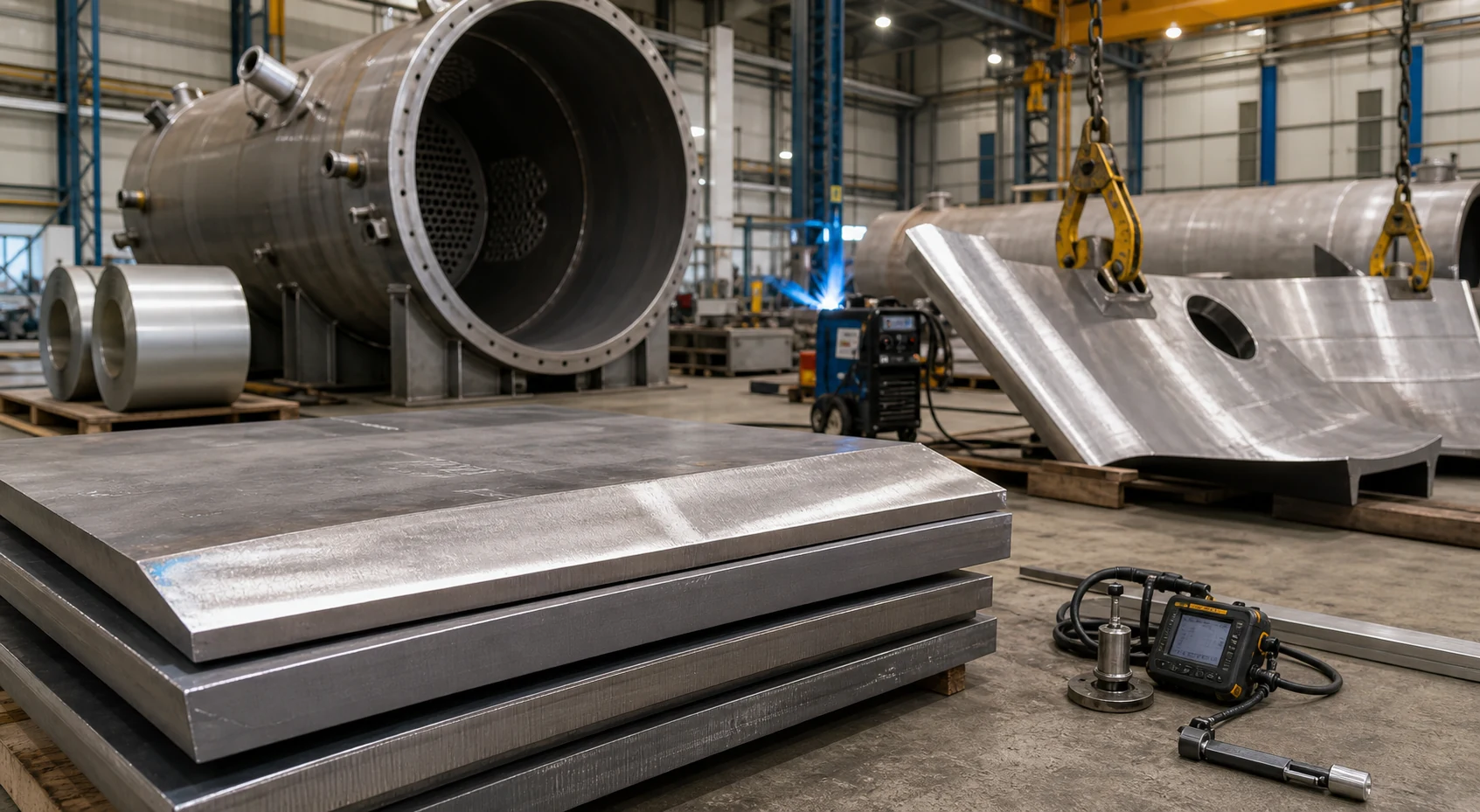
Hastelloy C276 plate for chemical reactors is specified when reactor shells, liners, baffles, nozzles, trays, or corrosion barriers must resist aggressive acids, chlorides, oxidizers, reducing media, and weld-related corrosion risks. In chemical processing, the cost of plate is only one part of the decision. The more expensive failure is choosing a plate that meets the drawing size but lacks the correct alloy chemistry, heat treatment, surface condition, inspection records, or traceability for a pressure or corrosion-critical reactor.
28Nickel supplies Hastelloy C-276 plate, sheet, cut plate, and related nickel alloy flat products for reactor fabrication, chemical tanks, scrubbers, heat exchangers, evaporators, and severe service process equipment. If your project names UNS N10276, ASTM B575, ASME SB575, or a reactor drawing with C276 plate, send thickness, width, length, quantity, cutting plan, certificate requirement, and destination so we can confirm the most suitable supply route.
Contact us for a free quote if your reactor project requires Hastelloy C276 plate with mill certificates, cutting support, inspection documents, and export packing.
Why Hastelloy C276 Is Used in Chemical Reactors
Hastelloy C-276, also written as Alloy C276 or UNS N10276, is a nickel-chromium-molybdenum alloy with tungsten and very low carbon. It is one of the most recognized corrosion-resistant nickel alloys for chemical process equipment because it combines resistance to pitting, crevice corrosion, chloride stress corrosion cracking, and many oxidizing and reducing acid environments.
Reactors create difficult material conditions. The vessel may see heat, pressure, catalysts, cleaning chemicals, chlorides, process upsets, stagnant zones, and weld heat-affected zones. A material that performs well in a clean coupon test may still fail near welds, gaskets, crevices, nozzles, or liquid-vapor interfaces. C276 is often selected because its chemistry and low carbon design help preserve corrosion resistance in welded structures and aggressive mixed-media service.
For a purchasing team, the key point is simple: buying C276 plate is not the same as buying ordinary stainless steel plate. The quote must control grade, standard, heat treatment, plate thickness, tolerance, surface, edge, flatness, traceability, and inspection. Missing details can cause rework after the plate reaches the fabricator.
Material Identity: UNS N10276, C276, and ASTM B575
The common material identity for C276 plate is UNS N10276. Plate, sheet, and strip are commonly ordered to ASTM B575 or ASME SB575, depending on the project. Some pressure equipment drawings may also call for ASME code references, purchaser specifications, or owner-specific inspection documents. Always follow the drawing and purchase specification first.
| Item | Common Reference | What Buyers Should Confirm |
|---|---|---|
| Alloy name | Hastelloy C-276 / Alloy C276 | Confirm that UNS N10276 is listed on the offer and certificate. |
| Flat product standard | ASTM B575 / ASME SB575 | Confirm plate, sheet, or strip form and the required edition if the project specifies one. |
| Product form | Plate, sheet, strip, cut plate, or machined blank | Confirm thickness, width, length, edge condition, and cutting allowance. |
| Condition | Solution annealed / mill annealed as required | Confirm surface condition, heat treatment, and any post-forming requirement. |
| Certificate | EN 10204 3.1, mill certificate, PMI, optional NDE | Confirm document scope before order release. |
| Application | Reactor, liner, baffle, nozzle, tray, or repair plate | Confirm whether pressure code, weld procedure, or corrosion review adds requirements. |
Chemical Composition and Corrosion Role
C276 plate is valued because the alloy chemistry gives it a broad corrosion-resistance profile. The table below summarizes major elements and their practical meaning. The controlling values are those in the applicable standard and mill certificate.
| Element | Typical Role in C276 | Why It Matters in Reactors |
|---|---|---|
| Nickel | Base element | Provides broad resistance to chloride stress corrosion cracking and many corrosive environments. |
| Molybdenum | High alloying addition | Improves resistance to reducing acids, pitting, and crevice corrosion. |
| Chromium | Oxidation and passivation support | Improves resistance to oxidizing chemicals and helps maintain protective surface behavior. |
| Tungsten | Additional corrosion-resistance support | Contributes to performance in severe mixed chemical environments. |
| Iron | Controlled alloying element | Part of the balanced composition and certificate review. |
| Carbon and silicon | Kept very low | Helps reduce carbide or intermetallic precipitation concerns in welded structures. |
When checking an MTC, make sure the certificate shows UNS N10276, heat number, chemistry, mechanical properties, heat treatment, standard, plate dimensions, and traceability. For reactor fabrication, one plate may be cut into multiple shell courses or internal parts. Maintaining heat number traceability through cutting and forming helps the fabricator avoid document gaps at final inspection.
Where C276 Plate Is Used Inside Reactor Systems
C276 plate can be used as solid plate, cut plate, corrosion-resistant liner, internal component material, or replacement plate depending on design. Some projects use solid C276 for small or extremely aggressive vessels. Others use C276 as a liner, cladding-related component, or localized corrosion barrier where the base structure is another material. The purchase specification should state exactly which role the plate will serve.
Reactor Shells and Heads
When C276 is used for shells or heads, plate thickness, forming direction, code design, and weld procedure become central. The fabricator may need plate wide enough to reduce seams, or a specific width/length to match rolling equipment. If plates will be hot or cold formed, confirm whether re-annealing, pickling, or surface restoration is required after forming.
Liners and Corrosion Barriers
For reactor liners, the plate may be thinner but surface condition and flatness become very important. Gaps, crevices, poor fit-up, or contaminated surfaces can reduce service life. Provide liner layout drawings, cut sizes, rolling radius, and welding plan when requesting material. This helps choose whether full-size plate, cut plate, or near-net blanks are more economical.
Baffles, Trays, Nozzles, and Internals
Reactor internals may see high turbulence, localized chemistry changes, or deposits. Baffles, spargers, trays, support grids, and nozzle reinforcement plates often need tight dimensional control after cutting and machining. For these parts, the RFQ should include hole patterns, machining allowance, tolerance, and whether waterjet, plasma, saw, or machining is acceptable.
Corrosion Conditions to Review Before Ordering
C276 has a strong reputation, but responsible material selection still starts with the actual process. A reactor can move through charging, reaction, heating, cooling, cleaning, and shutdown stages. The worst corrosion condition may not be the normal operating condition.
| Condition | Questions to Ask | Why It Affects Plate Selection |
|---|---|---|
| Acid type and concentration | Is the medium sulfuric, hydrochloric, phosphoric, acetic, mixed acid, or another chemistry? | Different acids attack alloys by different mechanisms. |
| Temperature | What are normal, maximum, cleaning, and upset temperatures? | Corrosion rate and localized corrosion risk can rise sharply with temperature. |
| Chlorides and halides | Are chlorides, fluorides, bromides, wet chlorine, or oxidizing salts present? | These can drive pitting, crevice corrosion, and stress corrosion cracking. |
| Oxidizing or reducing condition | Does the process contain ferric ions, dissolved oxygen, chlorine compounds, or reducing agents? | C276 is versatile, but chemical balance can change relative alloy performance. |
| Welds and crevices | Will there be lap joints, gasketed joints, deposits, or stagnant pockets? | Many failures start in crevice or weld-adjacent areas. |
| Cleaning cycle | What chemicals are used for CIP, passivation, pickling, or shutdown cleaning? | Cleaning chemistry may be more aggressive than the process fluid. |
For severe or uncertain service, ask the end user or corrosion engineer to approve the alloy and plate condition before purchase. If field experience is limited, laboratory corrosion testing or a review of plant history may be appropriate. A supplier can help with material availability and documentation, but final service suitability belongs to the project design authority.
Thickness, Size, and Cutting Options
Hastelloy C276 plate RFQs often range from thin liner plate to heavy reactor plate. Common inquiries include 3 mm to 50 mm thickness, with thicker plate reviewed by production route and availability. Width and length depend on stock, mill capability, cutting plan, and transport limits. For reactor shells, using larger plates may reduce weld seams but can increase freight and handling cost.
Cutting should be planned before quote approval. If the fabricator only needs rectangular blanks, saw cutting or waterjet cutting may be sufficient. If the parts include curved outlines, nozzle openings, bolt patterns, or internal shapes, the cutting method and tolerance should be specified. Some processes leave heat-affected edges that may need machining or grinding before reactor fabrication.
Data Needed for Plate Quotation
- Grade: Hastelloy C276 / Alloy C276 / UNS N10276
- Standard: ASTM B575, ASME SB575, or project specification
- Thickness, width, length, and quantity
- Required plate condition and surface finish
- Cutting plan, part drawings, nesting preference, and cutting tolerance
- Certificate scope, PMI, UT, third-party inspection, and special marking
- Delivery term, destination, packing requirement, and required arrival date
Heat Treatment, Welding, and Fabrication Notes
C276 is ductile and weldable, but it is not handled like mild steel. Fabrication practice should protect corrosion resistance and avoid contamination. Haynes data notes that the alloy is solution annealed at about 1121°C (2050°F), with water quenching generally advised, and that cold-worked parts may require re-annealing for optimum corrosion performance after significant forming. The actual heat treatment plan should follow the applicable standard, fabricator procedure, and owner specification.
For reactor fabrication, welding consumables are usually selected to match the alloy family and code requirement. Weld procedures should be qualified by the fabricator. Surfaces should be protected from carbon steel contamination, embedded iron, and improper grinding media. After welding or forming, cleaning and pickling practices should be compatible with C276 and the final service environment.
If the plate will be rolled into a shell course, ask the fabricator whether rolling direction, extra length, edge machining, and flattening allowance are needed. A plate that is exactly the final drawing size may be too small after trimming or weld preparation. This is especially important for imported material where replacement time is expensive.
Inspection and Documentation for Reactor Plate
Reactor plate is usually document-heavy. Even when the end user does not ask for every possible test, the material should arrive with enough traceability to satisfy fabrication and final inspection. For regulated pressure equipment, incomplete documents can delay the whole vessel.
- Mill test certificate showing UNS N10276 and applicable ASTM/ASME standard
- Heat number traceability for each plate or cut part
- Chemical composition and mechanical properties
- Heat treatment condition and plate dimensions
- PMI report when required by project specification
- UT report for thicker plate or pressure-critical plate when required
- Dimensional report, flatness check, or surface inspection report when needed
- Third-party inspection release note if the buyer requires TPI
- Marking map for cut plates if multiple parts come from one parent plate
When ordering cut plate, define how markings should be transferred. Some customers require hard stamping, paint marking, tags, or a cutting map. For thin liners, hard stamping may be unacceptable because it can damage the surface. In that case, non-damaging identification and clear packing lists are better.
How C276 Compares With 316L, 904L, Alloy 625, and C22
C276 is often considered when stainless steels cannot survive the process chemistry or when the owner has already experienced localized corrosion. The comparison below helps purchasing teams understand why the alloy may be specified and when alternatives may be reviewed.
| Material | Typical Strength | When C276 May Be Chosen Instead |
|---|---|---|
| 316L stainless steel | Cost-effective and widely available for moderate service | When chlorides, acids, or weld/crevice conditions exceed 316L’s corrosion margin. |
| 904L stainless steel | Improved acid and chloride resistance over 316L | When mixed acids, higher temperature, or chloride severity require a nickel-molybdenum alloy. |
| Alloy 825 | Strong option for sulfuric and phosphoric acid service | When the reactor sees broader severe mixed chemistry or stronger localized corrosion risk. |
| Alloy 625 | Excellent chloride and seawater-related service, good strength | When C276’s molybdenum-tungsten chemistry is preferred for severe chemical processing. |
| Hastelloy C22 | Excellent resistance in many oxidizing chloride environments | When the project specification, field experience, or cost balance favors C276. |
The best alloy is not always the highest alloy. It is the alloy that fits the chemistry, fabrication plan, inspection rules, availability, and lifecycle cost. If a reactor has known failures, provide photos, failure location, process chemistry, and operating history. Those details can be more useful than a generic alloy comparison chart.
Price Factors for Hastelloy C276 Plate
C276 plate pricing is affected by alloy content, especially nickel and molybdenum, but the purchase price also depends on thickness, plate size, cutting, certification, and logistics. A simple per-kilogram price may be misleading when the project needs exact plate sizes, edge machining, UT testing, or third-party inspection.
- Thickness and size: Heavier plate has higher material cost and may require a different mill route.
- Stock versus production: Available stock can reduce lead time, while special sizes may need mill production.
- Cutting and machining: Near-net blanks, holes, bevels, and edge preparation add processing cost.
- Inspection: PMI, UT, TPI, and special reports add cost but can prevent downstream rejection.
- Surface and flatness: Reactor liners and precision internals may need tighter control than general plate.
- Freight: Long or heavy plates require suitable packing, lifting points, and transport planning.
For budget planning, send both the ideal plate size and acceptable alternatives. Sometimes a slightly different stock size can reduce cost and lead time if the fabricator can adjust the nesting plan. For high-value reactors, however, do not sacrifice traceability or corrosion-related requirements just to reduce the initial plate price.
Packing, Handling, and Export Delivery
C276 plate should be packed to protect the surface, edges, and identification marks. Heavy plates are commonly shipped on wooden pallets or in export cases with separation between plates. Thin sheet or liner plate may need stronger flat support to prevent bending. Cut parts should be bundled by drawing number, heat number, and item number.
For international shipment, provide destination, Incoterms, preferred port, unloading constraints, and any wooden packing treatment requirement. If the plate is needed for a shutdown or fabrication slot, state the deadline at inquiry stage. The material may be available, but inspection booking, cutting, packing, and export documents still take time.
RFQ Checklist for Hastelloy C276 Reactor Plate
A complete RFQ helps the supplier quote the right plate the first time. Use the checklist below when preparing a purchase request.
- Material: Hastelloy C276 / Alloy C276 / UNS N10276
- Standard: ASTM B575, ASME SB575, or project-specific requirement
- Product form: plate, sheet, strip, cut plate, machined blank, or liner part
- Thickness, width, length, quantity, and allowed tolerance
- Surface condition, edge condition, flatness, and marking requirement
- Cutting drawings, nesting plan, holes, bevels, machining allowance, and part numbers
- Inspection: MTC 3.1, PMI, UT, surface inspection, dimensional report, or TPI
- Reactor service: media, concentration, temperature, pressure, cleaning chemicals, chlorides, and upset conditions if available
- Delivery: destination, Incoterms, required arrival date, packing, and partial shipment preference
Frequently Asked Questions
Is Hastelloy C276 suitable for chemical reactors?
C276 is widely used in chemical process equipment because it resists many acids, chlorides, pitting, crevice corrosion, and chloride stress corrosion cracking. Suitability still depends on the actual reactor chemistry, temperature, pressure, cleaning cycle, and fabrication details. For critical service, final material approval should come from the project engineer or corrosion specialist.
What standard is used for C276 plate?
Hastelloy C276 plate, sheet, and strip are commonly ordered to ASTM B575 or ASME SB575. Pressure vessel or reactor projects may add owner specifications, inspection plans, or ASME code-related requirements. The RFQ should state the required standard exactly.
Can C276 plate be welded for reactor fabrication?
Yes, C276 is known for good weldability among corrosion-resistant nickel alloys. Welding should follow qualified procedures and suitable consumables. Surface cleaning and contamination control are important because reactor service often depends on the corrosion resistance of welds and heat-affected zones.
Do I need solution annealed plate?
C276 flat products are typically supplied in an annealed condition according to the relevant standard and mill practice. If the plate will be heavily cold formed, the project may require re-annealing for optimum corrosion performance. Confirm this with the fabricator and design specification before ordering.
Can C276 plate be cut to reactor drawings?
Yes, cut plate and drawing-based blanks can be supplied when drawings include dimensions, tolerances, holes, bevels, material standard, and marking requirements. The cutting method should be chosen according to tolerance, edge quality, thickness, and final fabrication plan.
How do I reduce C276 plate cost without increasing risk?
Share the nesting plan, acceptable alternative plate sizes, and target delivery date early. Using available stock sizes, combining cut parts from one parent plate, and defining inspection scope clearly can reduce waste and delay. Do not remove chemistry, traceability, or corrosion-related requirements just to lower the first quote.
What documents should come with reactor plate?
At minimum, request a mill test certificate with heat number, chemistry, mechanical properties, standard, heat treatment condition, and dimensions. For reactor projects, PMI, UT, dimensional reports, third-party inspection, and marking maps may also be required.
Verifiable Sources
Request a Quote
For Hastelloy C276 plate for chemical reactors, send the grade, standard, thickness, size, quantity, cut drawing, inspection scope, destination, and required delivery date. 28Nickel can review plate availability, cutting options, certificates, export packing, and shipment timing so your reactor fabrication team receives material that matches the technical requirement and schedule.