









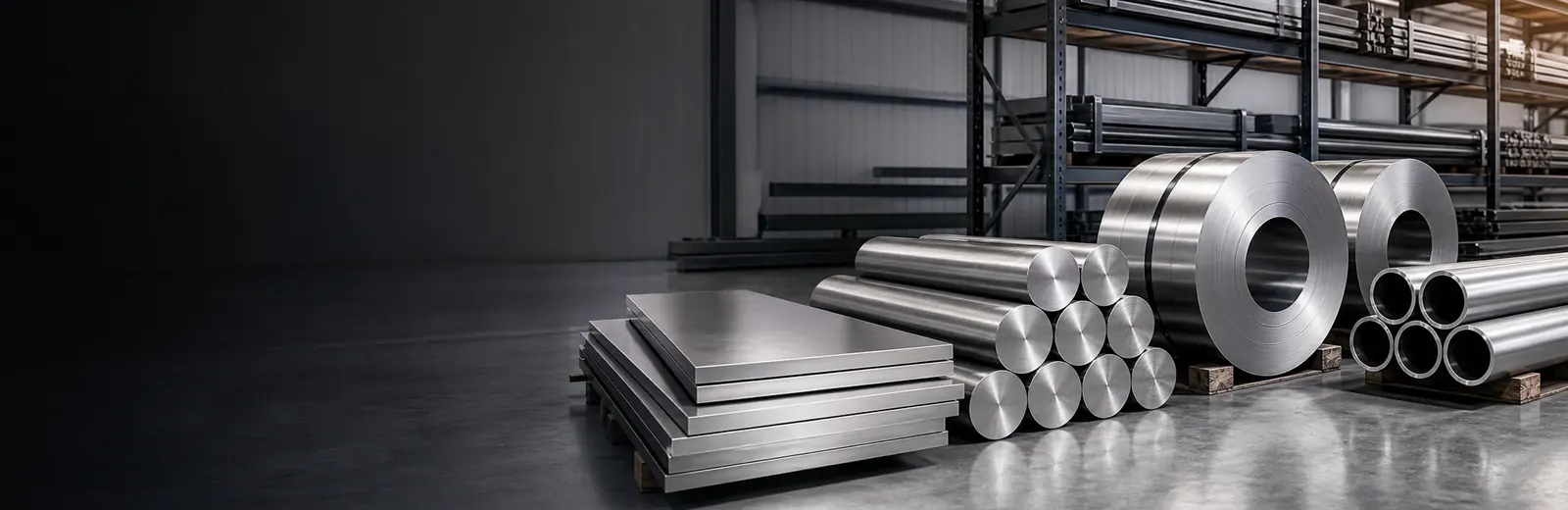
A la hora de evaluar a un proveedor de aleaciones de níquel con certificado de ensayo de fábrica, no se valora tanto la rapidez con la que se envía un PDF por correo electrónico, sino más bien si toda la cadena de pruebas que respalda ese PDF puede superar una auditoría. En la adquisición de aleaciones de níquel, el paquete de documentación suele ser lo primero que ve el comprador y lo último que revisa el propietario antes de dar su aprobación. Si el certificado es impreciso, incoherente o no se corresponde con los números de lote entregados, incluso un material físicamente correcto puede resultar comercialmente inutilizable. Por eso, la selección de un proveedor de aleaciones de níquel con certificado de ensayo de fábrica no es una mera formalidad administrativa. Se trata de un paso de selección técnica que afecta directamente a la puesta en marcha del proyecto.
Esto es especialmente cierto en el sector de la exportación. Muchos comerciantes pueden remitir un certificado genérico, pero no todos los proveedores pueden demostrar de dónde procede el material, qué fábrica emitió los datos, cómo se relacionan los números de paquete con los números de lote, o si los valores indicados corresponden realmente a la forma del producto entregado. Un proveedor serio de aleaciones de níquel que presente un certificado de ensayo de fábrica debería ser capaz de explicar esas relaciones antes de que el cargamento salga del almacén. Si esa explicación solo se produce después de que el cliente plantee sus dudas, el proveedor de aleaciones de níquel con certificado de ensayo de fábrica ya va con retraso.
Cómo verificar el certificado de ensayo de fábrica de un proveedor de aleaciones de níquel
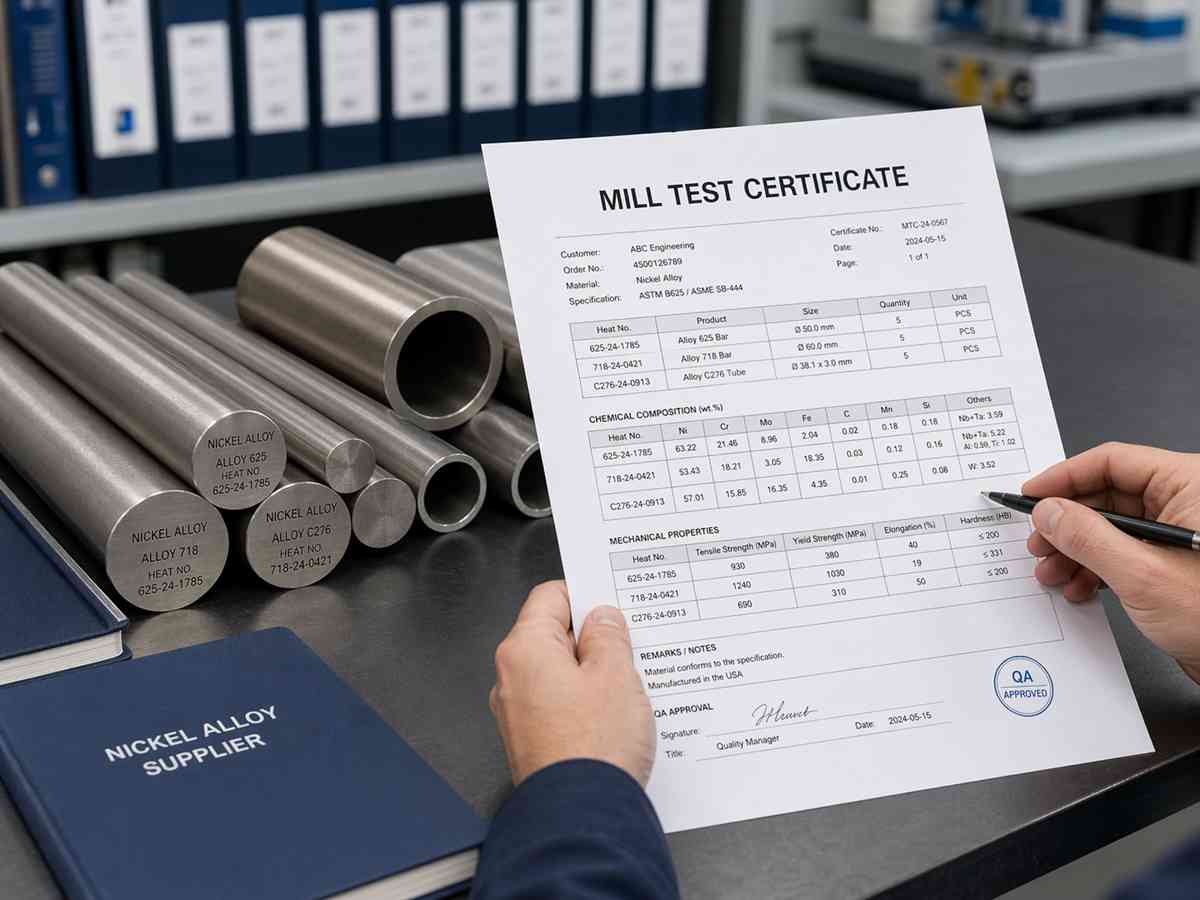
La primera comprobación es la coherencia técnica. El proveedor de aleaciones de níquel debe presentar un certificado de ensayo de fábrica que coincida con el grado, la norma, la forma del producto, las dimensiones y las condiciones de tratamiento térmico solicitados. En el caso de las aleaciones de níquel, estos detalles son importantes porque los productos como barras, tubos, placas y piezas forjadas pueden regirse por diferentes normas y requisitos de ensayo, incluso cuando comparten un nombre de aleación similar. El certificado debe indicar claramente la fábrica o el fabricante, el número de lote, la cantidad, la composición química, los valores mecánicos y la especificación del material aplicable. Si el pedido hace referencia a números UNS, designaciones W.Nr., grados ASTM o ASME, el documento debe corresponder correctamente a ellos, en lugar de dejar que los compradores tengan que adivinarlo.
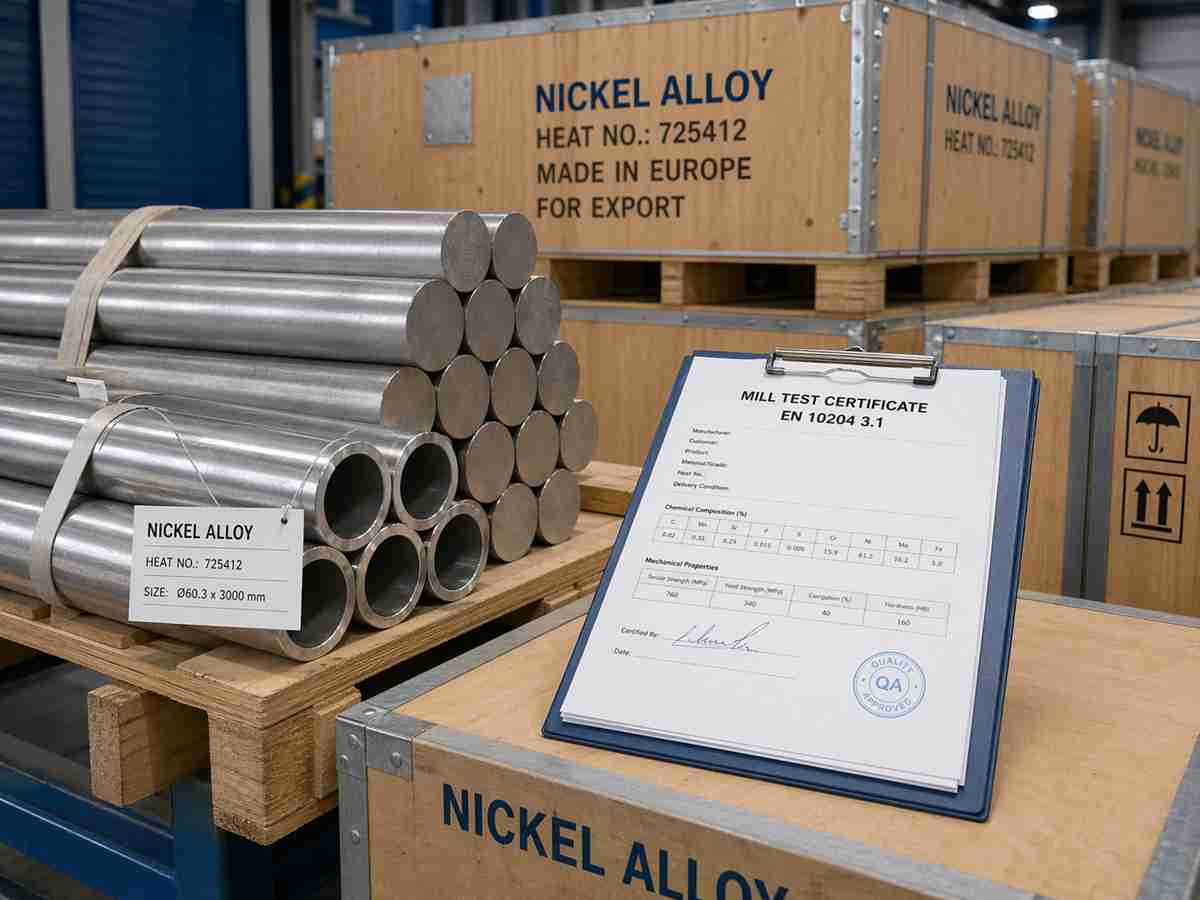
La segunda comprobación se refiere a la trazabilidad, no solo al formato del certificado. Un proveedor competente de aleaciones de níquel con certificados de ensayo de fábrica suele poder proporcionar fotografías de etiquetas de fardos, marcas en cajas o piezas estampadas que vinculan el producto físico con el certificado. Entre las señales de alerta se incluyen la reutilización de un mismo certificado para tamaños no relacionados, valores químicos que parecen idénticos en cada lote, la ausencia de condiciones de tratamiento térmico o hojas de cálculo editables presentadas como pruebas de fábrica. En el caso de pedidos críticos, el comprador debe solicitar el conjunto de documentos antes del envío y compararlo con los datos de embalaje mientras aún haya tiempo para aislar un posible problema. Los buenos proveedores no tienen ningún inconveniente con esa revisión, ya que su documentación refleja el flujo real de material.
| Partida de auditoría | Por qué es importante | Qué hay que pedirle al proveedor |
| Continuidad de los números de serie | Confirma la correspondencia entre el certificado y el material | Etiquetas del paquete, fotos, lista de contenido, marcas selladas |
| Correspondencia de especificaciones | Evita que haya discrepancias entre la calidad solicitada y la entregada | Certificado en el que figuren las referencias ASTM/ASME/UNS o W.Nr. |
| Forma y dimensiones del producto | Los datos sobre barras, tubos, chapas y tuberías no se pueden mezclar sin más | Certificado que se ajusta al formato y al rango de tamaños enviados |
| Datos químicos y mecánicos | Muestra datos reales que demuestran el rendimiento específico de cada lote | MTC legible con valores medidos, no valores de catálogo |
| Firma autorizada y origen de la emisión | Separa los datos de las fábricas de los resúmenes elaborados por los operadores | Certificado original de fábrica o copia certificada y trazable |
Lo que un proveedor serio de aleaciones de níquel debería facilitar antes del envío
Los mejores proveedores no esperan a que los clientes tengan que perseguir los documentos una vez que la mercancía está en el mar. Un proveedor profesional de aleaciones de níquel con certificado de ensayo de fábrica suele facilitar borradores de los certificados con antelación, confirmar cómo se mantiene la trazabilidad tras el corte o el reempaquetado, y explicar si se incluye alguna inspección de terceros, análisis de metalografía (PMI) o registro de embalaje especial. Este enfoque es importante porque el material de aleación de níquel se suele adquirir para proyectos que cuentan con controles de aprobación por parte del propietario, comprobaciones de la documentación de soldadura o revisiones aduaneras de exportación. Un problema con la documentación que se detecte tras el envío no es simplemente un inconveniente. Puede inmovilizar una carga de gran valor en el peor momento posible.
Por ese motivo, los compradores deben valorar la capacidad de respuesta y la transparencia con la misma seriedad que el precio. Hay que preguntar si el proveedor puede facilitar una revisión lote por lote, aclarar si el certificado lo emite la fábrica o lo resume el distribuidor, y explicar cómo se documentan los envíos parciales. En 28Nickel, solemos aconsejar a los clientes que consideren al proveedor de aleaciones de níquel con certificado de ensayo de fábrica como parte de la cadena de apoyo técnico, y no solo como un canal logístico. Cuando un proveedor de aleaciones de níquel con certificado de ensayo de fábrica es capaz de explicar con claridad las especificaciones, los niveles de inspección y los plazos de documentación, suele haber menos sorpresas una vez emitida la orden de compra.
Conclusión
Un precio bajo no puede compensar una trazabilidad deficiente. Cuando un proveedor de aleaciones de níquel con certificado de ensayo de fábrica se muestra reacio a mostrar los datos reales de fábrica, el comprador debe dar por hecho que la revisión resultará cada vez más complicada más adelante. Si necesita ayuda para examinar la documentación de los certificados antes de confirmar el pedido, 28Nickel puede revisar la trayectoria del material, el conjunto de documentos y los puntos de riesgo que más fácilmente se pasan por alto en las exportaciones de aleaciones de níquel.
Preguntas y respuestas relacionadas
P: ¿Puede un comerciante expedir su propio certificado en lugar del certificado de la fábrica?
Un comerciante puede emitir una declaración resumida o de reventa, pero esto no debe sustituir al certificado original de la fábrica cuando la trazabilidad técnica sea importante. Para trabajos críticos, el comprador debe seguir solicitando los datos reales de los ensayos de fábrica correspondientes al lote entregado.
P: ¿Qué deben hacer los compradores si el certificado y las marcas físicas no coinciden?
Aísla el material de inmediato y detén su distribución. Esa discrepancia rompe la cadena de trazabilidad. A continuación, el proveedor deberá explicar la discrepancia aportando pruebas de cada ciclo de calentamiento antes de que comience la fabricación.