





Se una saldatura Nickel 200 sembra accettabile all’esterno ma non supera la prova di flessione alla radice, presenta perdite in servizio con sostanze caustiche o risulta positiva al controllo PT con indicazioni sparse, il problema raramente è “solo una questione di tecnica del saldatore”. In pratica, un Lista di controllo della qualità della procedura di saldatura Nickel 200 non riguarda tanto le pratiche burocratiche quanto il controllo delle variabili alle quali il nichel puro è particolarmente sensibile: contaminazione superficiale, stato di ossidazione, scelta del materiale di apporto, purezza del gas e forma del cordone di saldatura. Il Nickel 200 è un nichel lavorato commercialmente puro con una buona saldabilità, ma è anche vulnerabile all’infragilimento da zolfo e a contaminanti a basso punto di fusione come piombo, stagno, zinco e bismuto se la pulizia dell’ambiente di lavoro è trascurata.
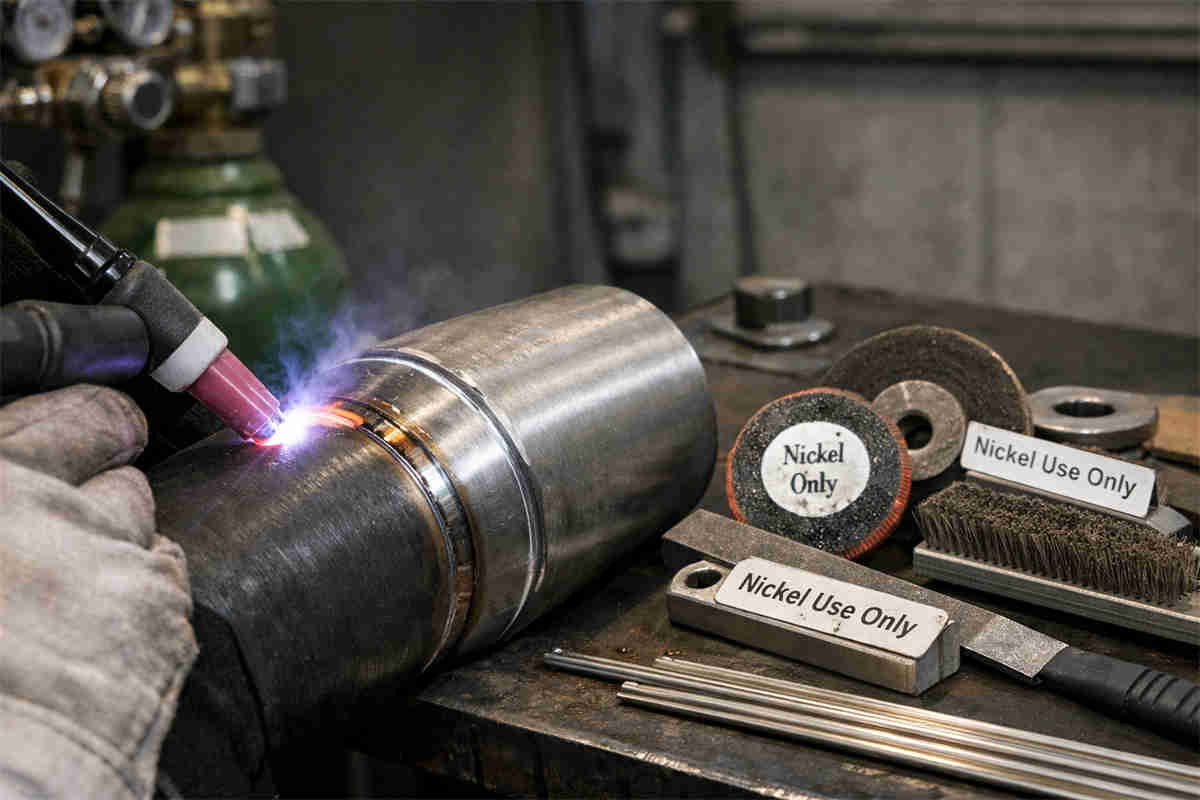
Molte officine sottovalutano quest’ultimo punto. Il nichel puro non perdona stracci sporchi, dischi abrasivi misti o l’uso “approssimativo” del gas di protezione, come invece a volte sembra accadere nei normali lavori sull’acciaio inossidabile. Le linee guida di Special Metals illustrano addirittura l’infragilimento da zolfo nel Nickel 200 causato da una scarsa disciplina nella pulizia, mettendo a confronto un giunto pulito con solvente e un panno pulito rispetto a uno pulito con un panno sporco. Ecco perché un professionista serio Lista di controllo della qualità della procedura di saldatura Nickel 200 Prima dell'innesco dell'arco: l'identificazione del materiale, la temperatura di esercizio, la preparazione del giunto, la separazione degli utensili e il controllo della contaminazione devono essere già stati completati.
Dal punto di vista metallurgico, c’è un altro aspetto che molti acquirenti e persino alcuni produttori tendono a trascurare: avete davvero bisogno del Nickel 200, oppure la temperatura di esercizio vi induce a optare per il Nickel 201? Il Nickel 201 è preferibile al di sopra dei 600°F (315°C) poiché il suo minor tenore di carbonio resiste alla grafitizzazione e all’infragilimento intergranulare a temperature elevate. Se il disegno tecnico indica il Nickel 200 ma l’apparecchiatura sarà soggetta a un’esposizione prolungata ad ambienti alcalini caldi o in prossimità del forno, la lista di controllo dovrebbe imporre questa discussione prima dell’inizio della produzione, non dopo un ciclo di riparazione mediante saldatura.
Perché è importante una lista di controllo della qualità per la procedura di saldatura Nickel 200
Lo scopo di un Lista di controllo della qualità della procedura di saldatura Nickel 200 non è quello di duplicare il WPS, bensì di verificare che il WPS venga eseguito in condizioni in cui il nichel puro possa effettivamente produrre una saldatura valida. L’ossido di nichel ne è un classico esempio. Il nichel 200 fonde a circa 2615-2635°F, mentre l’ossido di nichel fonde a temperature molto più elevate; se l’ossido rimane nella scanalatura, il metallo di base può fondersi mentre l’ossido rimane solido, causando una mancanza di fusione. Per questo motivo, l’area di giunzione deve essere pulita mediante molatura, sabbiatura, lavorazione meccanica o decapaggio. La sola spazzolatura con spazzola metallica non è sufficiente quando l’ossido è ben depositato; infatti, le linee guida avvertono esplicitamente che la spazzolatura può semplicemente lucidare l’ossido e nasconderlo alla vista.
La scelta del processo segue la stessa logica. Il GTAW è solitamente la prima scelta per le sezioni più sottili di Nickel 200, poiché consente un controllo preciso dell’apporto termico e della composizione chimica del bagno di fusione; per il GTAW si raccomanda la corrente continua con elettrodo negativo. Per il GMAW si utilizza la corrente continua a polarità inversa, e l’argon o le miscele di argon-elio sono lo standard; le aggiunte di ossigeno o anidride carbonica dovrebbero essere evitate poiché possono ossidare la superficie del cordone e causare porosità nelle saldature di nichel puro. Per i materiali sottili e le lavorazioni in stile autogeno, l’elio può migliorare la velocità e ridurre la porosità, ma aumenta anche l’energia dell’arco e può rendere meno stabili gli avviamenti a bassa corrente.
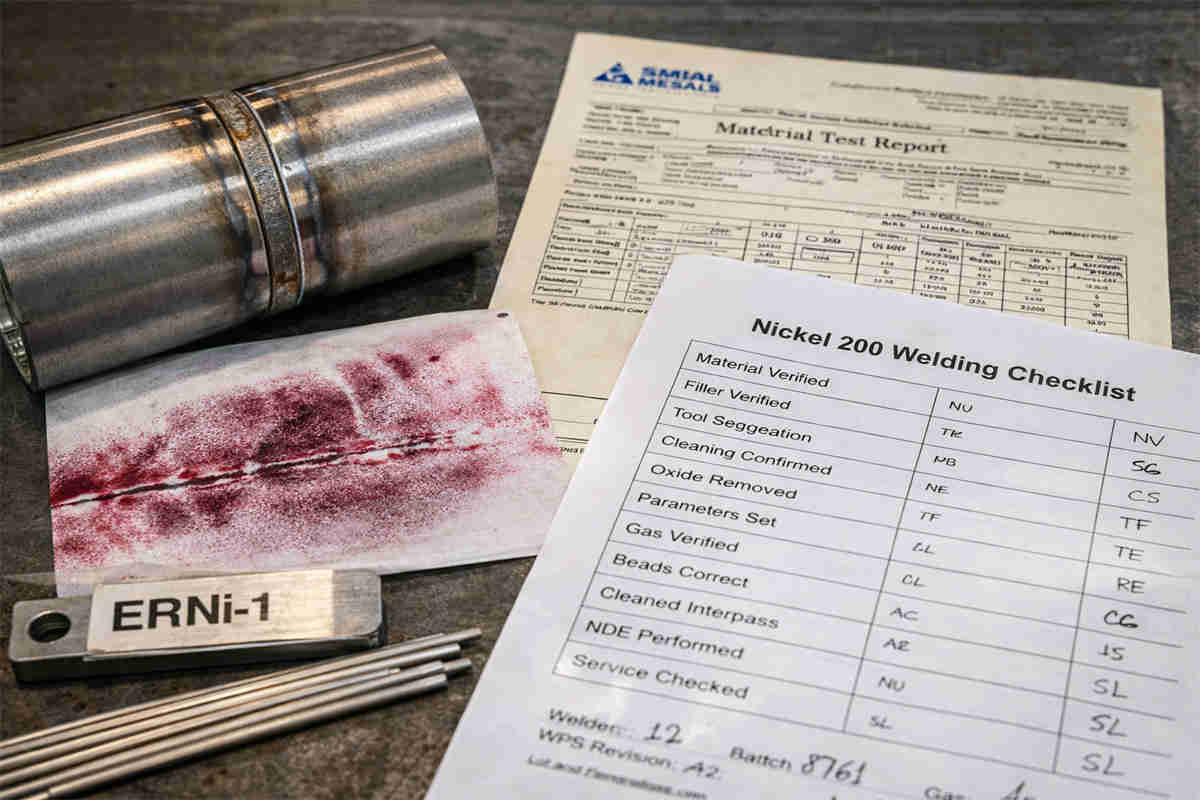
Anche la scelta del metallo d'apporto deve essere ponderata. Per il nichel 200/201, i materiali di apporto delle classi ERNi-1 ed ENi-1 rappresentano le scelte standard; i dati forniti dal produttore per Techalloy 208 e Special Metals Nickel Filler Metal 61 li identificano specificatamente per la saldatura del nichel 200 e 201. Special Metals sottolinea inoltre che il titanio presente nel Nickel Filler Metal 61 contribuisce a mantenere un basso livello di carbonio libero, il che è utile quando è richiesta la compatibilità con il Nickel 201. Le riparazioni SMAW vengono comunemente eseguite con elettrodi della classe ENi-1, come il Nickel Welding Electrode 141.
Tabella di controllo della qualità delle procedure di saldatura Nickel 200
Il Lista di controllo della qualità della procedura di saldatura Nickel 200 Di seguito è riportato uno strumento pratico destinato a ingegneri, addetti al controllo qualità e team di acquisto incaricati di verificare la produzione in subappalto. Esso riassume i dati relativi alle leghe forniti dai produttori, le linee guida per le operazioni di giunzione e le note applicative sui metalli d'apporto.
| Palcoscenico | Controllo di qualità | Cosa si intende per “accettabile” | Perché è importante |
|---|---|---|---|
| Ricezione del materiale | Metallo comune verificato | L'MTR corrisponde alla norma UNS N02200; numero di colata tracciabile; temperatura di esercizio verificata confrontando il Nickel 200 con il 201 | Impedisce il rilascio di leghe non corrette e l'uso improprio a temperature elevate |
| Materiali di consumo | Metallo d'apporto confermato | ERNi-1/ENi-1 o equivalente approvato; certificati di lotto disponibili | Mantiene la composizione chimica della saldatura in linea con quella del nichel puro in servizio |
| Controllo degli utensili | Segregazione | Mole, lime, spazzole e superfici di manipolazione dedicate o prive di contaminazione | Riduce l'assorbimento di ferro e il rischio di contaminanti a basso punto di fusione |
| Pulizia prima della saldatura | Contaminazione organica rimossa | Oli, vernici, pennarelli, lubrificanti per la formatura e sporco da officina da rimuovere con un solvente/detergente adeguato e un panno pulito | Il Nickel 200 è sensibile ai contaminanti contenenti zolfo e a basso punto di fusione |
| Preparazione dei bordi | Ossido completamente rimosso | Superfici smussate e zona adiacente in metallo lucido; assenza di pellicola di ossido vetrificato | L'ossido provoca una mancanza di fusione e una bagnabilità instabile |
| Configurazione del processo | Variabili di processo corrette | GTAW su DCEN o GMAW su DCEP; solo gas inerte di protezione | Una polarità errata o la presenza di gas reattivi compromettono rapidamente la qualità del cordone |
| Gas di schermatura | Scelta del gas adeguata | Argon per la saldatura GTAW; argon o miscela di argon ed elio per la saldatura GMAW; nessuna aggiunta di O₂/CO₂ per il nichel puro | Riduce al minimo l'ossidazione, la porosità e le irregolarità del profilo del cordone |
| Controllo termico | Apporto termico controllato | Non è necessario alcun preriscaldamento di routine, a meno che il metallo non sia molto freddo; utilizzare perline di piccole dimensioni ed evitare di sovrasaldare | Limita la distorsione, la porosità dovuta alla condensa e l'eccessiva diluizione |
| Profilo della perla | Contorno della saldatura corretto | Perline leggermente convesse; buon aggancio; assenza di smussature a freddo o concavità | Le linee guida relative alle leghe di nichel indicano espressamente di privilegiare contorni leggermente convessi |
| Pulizia Interpass | Scorie/ossidi rimossi correttamente | Scorie SMAW scheggiate e spazzolate con una spazzola in acciaio inossidabile non contaminata; ossido visibile rimosso mediante levigatura/sabbiatura | La presenza di ossido nascosto tra una passata e l'altra è una delle cause più frequenti di scarto |
| Ispezione | Il rilascio del controllo qualità è stato completato | VT più PT, se specificato; registrazione della mappa di riparazione, dell'ID del saldatore, della revisione delle specifiche di saldatura (WPS), del lotto del materiale di apporto e dei dati relativi al gas | Trasforma una saldatura di qualità in un risultato tracciabile e giustificabile |
| Revisione tecnica finale | Compatibilità del servizio verificata | Giunti dissimili, impiego in ambiente caustico e temperature elevate verificati prima della spedizione | Previene i guasti sul campo che superano il controllo in officina ma si verificano durante l'utilizzo |
Utilizzo della lista di controllo della qualità delle procedure di saldatura del Nickel 200 in officina
Laddove il Lista di controllo della qualità della procedura di saldatura Nickel 200 Il suo valore sta nella prevenzione dei difetti, non nella loro spiegazione a posteriori. Se la duttilità della piega di radice è scarsa, controllo innanzitutto la presenza di contaminanti e il profilo del cordone di saldatura. Se l’ispezione PT mostra indicazioni lineari casuali, verifico la rimozione dell’ossido tra una passata e l’altra e se il saldatore abbia semplicemente lucidato la superficie invece di rimuovere effettivamente l’ossido. Se si manifesta porosità, la composizione del gas di protezione, la stabilità del flusso, le correnti d’aria e il metallo freddo con condensa diventano le prime voci da verificare. Il preriscaldamento delle leghe di nichel non è generalmente necessario, ma quando il metallo di base è a 35°F (2°C) o meno, la zona di saldatura dovrebbe essere riscaldata al di sopra della temperatura ambiente per prevenire la porosità causata dalla condensa.
Per quanto riguarda il controllo dei subappalti, aggiungerei un ulteriore livello al Lista di controllo della qualità della procedura di saldatura Nickel 200: revisione della documentazione. Richiedete le WPS, le qualifiche dei saldatori, i certificati dei metalli d’apporto, i rapporti di prova dei materiali (MTR) e i registri finali dei controlli non distruttivi (NDT) in un unico pacchetto, non come e-mail separate inviate nell’arco di tre settimane. Se il lavoro prevede l’uso di acciaio placcato in nichel, giunti dissimili o un impiego a temperature vicine o superiori a 600°F, non accettate una generica dichiarazione relativa a una “procedura per leghe di nichel”. Richiedete al costruttore di specificare con esattezza il metallo di base, la classificazione del materiale d’apporto, il gas di protezione, la polarità e il metodo di pulizia. Questa singola precauzione elimina molti dei lavori che sembrano economici in fase di ordine d’acquisto e costosi dopo l’avvio.
Conclusione
Un buon Lista di controllo della qualità della procedura di saldatura Nickel 200 Non è lungo solo per il gusto di esserlo. È preciso. Impone il controllo su contaminazione, ossido, materiale di apporto, gas, apporto termico e registrazioni prima che tali variabili si trasformino in costosi difetti. Per il nichel puro, questa è la differenza tra una saldatura che si limita a superare l’ispezione visiva e una in grado di resistere a un vero e proprio servizio chimico. Se il vostro progetto riguarda apparecchiature a base di alcali caustici, la scelta del nichel 200/201 o la revisione di saldature in subappalto, 28Nickel può aiutarvi a tradurre questi punti di controllo in una scheda pratica di revisione per l’acquisto e la fabbricazione, su misura per la vostra applicazione.
Domande e risposte correlate
1) Qual è il metallo d'apporto tipicamente utilizzato per la saldatura del Nickel 200?
Per i processi GTAW e GMAW sono comunemente utilizzati metalli d'apporto della classe ERNi-1, mentre per il processo SMAW gli elettrodi della classe ENi-1 sono quelli standard. La documentazione tecnica dei produttori relativa a Techalloy 208, Nickel Filler Metal 61 e Nickel Welding Electrode 141 elenca specificatamente le applicazioni del Nickel 200/201.
2) Il Nickel 200 richiede un preriscaldamento prima della saldatura?
Di solito no. Le linee guida generali relative alla saldatura delle leghe di nichel indicano che, in genere, non è necessario preriscaldare le leghe di nichel prima della saldatura. Un’eccezione importante è rappresentata dal metallo di base molto freddo, nel qual caso il riscaldamento dell’area contribuisce a prevenire la formazione di condensa e la conseguente porosità.
La contaminazione è il fattore che metterei al primo posto, in particolare i residui di officina contenenti zolfo, i panni sporchi, i residui di pennarello o vernice e la contaminazione da metalli a basso punto di fusione. L’ossido rimasto nella scanalatura è al secondo posto, poiché può causare difetti di mancata fusione anche quando la tecnica di gestione dell’arco da parte del saldatore sembra corretta.