











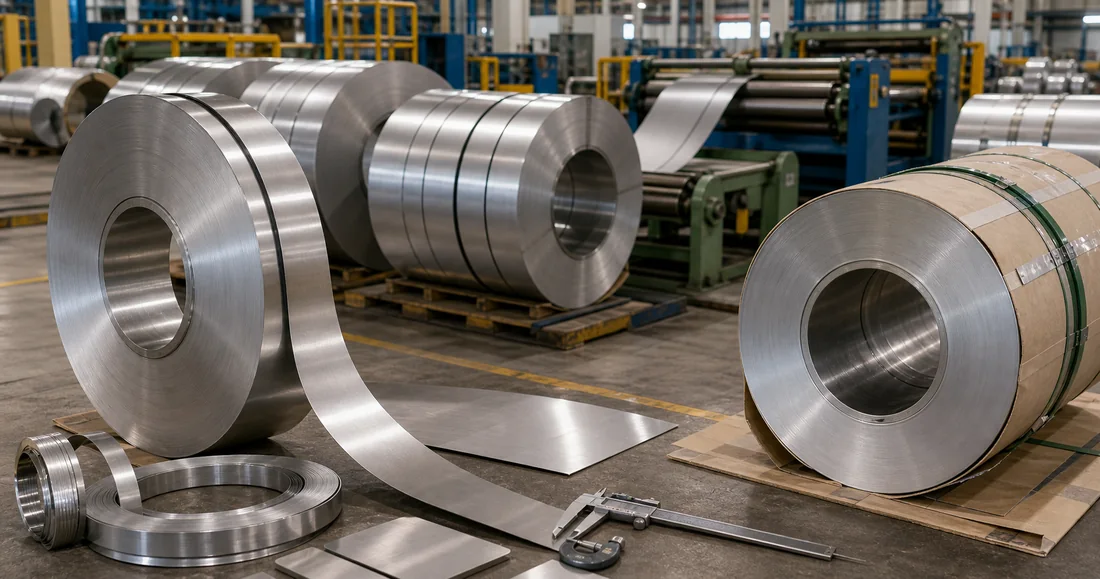
Kovar coil for glass to metal sealing parts is a practical long-tail search term for buyers who already know the alloy family, the product form, and the service problem they need to solve. Instead of asking only for “Kovar price,” this kind of RFQ usually comes from a real drawing, maintenance plan, or material substitution review.
28Nickel focuses on nickel alloy plate, pipe and tube, bar, and coil. For Kovar coil for glass to metal sealing parts, send the grade, form, size, standard, quantity, certificate requirement, and destination so stock, production route, and packing can be checked before quotation.
Contact us for a free quote if your project needs Kovar coil for glass to metal sealing parts, urgent replacement material, or document-controlled nickel alloy supply.
What Buyers Need to Know First
The first check is whether the requested material is truly Kovar in coil form, not a similar alloy or a different product form. A quote for plate cannot be compared directly with coil. A quote for bar cannot replace pipe. Each form has its own ASTM reference, dimensional tolerance, inspection route, and packing method.
For glass to metal sealing parts, the purchase decision should connect the alloy to the real operating condition. Key factors include process medium, temperature, pressure, flow, chloride level, thermal cycling, mechanical load, weld plan, and cleaning chemicals. If any of these conditions are uncertain, include the available service data in the inquiry so the material route can be discussed early.
Why This Alloy Is Selected
Kovar is used where controlled thermal expansion helps match hard glass or ceramic materials during sealing and service.
The strongest RFQs explain the reason behind the alloy choice. If the project has previous corrosion failure, high-temperature distortion, fastener breakage, weld cracking, or a customer-approved material list, include that context. It helps the supplier avoid offering material that is technically similar on paper but unsuitable for the actual job.
| Factor | Project Detail | Buying Note |
|---|---|---|
| Corrosion or heat-resistance driver | electronic packages, hermetic seals, lead frames, stamped sealing rings, and controlled-expansion components | This is the reason the alloy is being considered instead of a lower-cost stainless grade. |
| Grade identity | Kovar / UNS K94610 | The offer and MTC should show the same alloy identity requested by the drawing or purchase specification. |
| Product form | nickel alloy coil | Plate, pipe, bar, and coil have different standards, tolerances, stock routes, and inspection concerns. |
| Application fit | glass to metal sealing parts | The final selection should match the process medium, temperature, fabrication plan, and owner specification. |
ASTM Standard and Product Form
For Kovar coil for glass to metal sealing parts, the key ASTM reference to mention is ASTM F15. The standard should be written together with the UNS number UNS K94610, product form, dimensions, and certificate scope. Do not rely on trade name alone, because trade names can be written differently by mills, traders, and end users.
| Item | What to Confirm | Why It Matters |
|---|---|---|
| Material standard | ASTM F15 | Use this as the primary ASTM reference when checking product form and certificate language. |
| UNS number | UNS K94610 | UNS identity helps avoid confusion between similar trade names and substitute alloys. |
| Purchase condition | As specified by ASTM standard and project drawing | Condition affects mechanical properties, fabrication behavior, and corrosion performance. |
| Certificate | MTC 3.1, chemical analysis, mechanical properties, heat number | Document traceability is essential for industrial buyers and fabricators. |
Size Range, Stock, and Processing Options
Typical RFQs include thin strip coil, slit width, edge burr control, temper, surface condition, and stamping yield requirements. If the exact size is not in stock, an alternate width, length, wall, diameter, or coil weight may reduce lead time. For urgent projects, tell us whether partial shipment, substitute stock size, or cutting from a larger item is acceptable.
| Item | What to Confirm | Why It Matters |
|---|---|---|
| Dimensions | thickness, width, coil ID, coil weight, edge condition, and slit tolerance | Correct dimensions prevent quoting the right grade in the wrong usable form. |
| Stock check | Typical RFQs include thin strip coil, slit width, edge burr control, temper, surface condition, and stamping yield requirements. | Stock sizes can shorten delivery time, while special sizes may need mill production. |
| Processing | Cutting, slitting, beveling, straightening, surface protection, or packing | Processing should be confirmed before order release, not after shipment. |
| Delivery | Destination, Incoterms, required date, and partial shipment preference | Logistics can decide whether stock material is actually useful for the project schedule. |
Application and Service Notes
In glass to metal sealing parts, the material may face electronic packages, hermetic seals, lead frames, stamped sealing rings, and controlled-expansion components. This is why the RFQ should include more than grade and quantity. The same alloy can perform differently when temperature, contaminants, mechanical stress, surface condition, or crevice geometry changes.
If the material will be welded, formed, stamped, machined, or exposed to aggressive cleaning chemicals, those details should be stated before order confirmation. The supplier can then check whether the requested coil condition, cutting plan, and certificate package are aligned with fabrication needs.
Inspection and Document Package
Industrial nickel alloy orders usually need traceability. The document package should be agreed before payment or production, especially when the material is going into chemical processing, marine service, furnace equipment, pressure equipment, or critical machined parts.
- EN 10204 3.1 or equivalent mill test certificate if required by the buyer
- Chemical composition and mechanical property report linked to heat number
- Heat number marking or tagging for each bundle, coil, plate, bar, or pipe lot
- PMI report when the project needs alloy verification before shipment
- Dimensional inspection report for critical sizes or machined blanks
- Packing list and export documents for international delivery
Price Factors and Lead Time
The price of Kovar coil for glass to metal sealing parts changes with alloy content, size, product form, available stock, processing, inspection, and freight. A very cheap offer may omit the test documents, condition, or tolerance needed by the project. A useful quote should make these assumptions visible.
- Alloy market movement, especially nickel, molybdenum, chromium, cobalt, and copper content where applicable
- Product form, size, thickness, wall, diameter, width, and usable yield
- Stock versus mill production route and the urgency of the delivery schedule
- Testing scope, third-party inspection, and special documentation requirements
- Cutting, slitting, machining allowance, surface protection, and export packing
How to Compare This Material With Alternatives
Buyers often compare Kovar coil for glass to metal sealing parts with stainless steel, another nickel alloy, or a different product form. That comparison is useful only when the service condition and fabrication route are the same. A lower alloy may look attractive in a spreadsheet, but if it fails in glass to metal sealing parts, downtime and replacement cost can exceed the material saving.
| Alternative | When It May Be Considered | Buying Caution |
|---|---|---|
| Lower-cost stainless steel | May be acceptable in mild service with lower corrosion, temperature, or stress risk | Kovar is usually reviewed when the application needs a larger safety margin than common stainless grades. |
| Same alloy in another form | Useful when the project also needs matching weld coupons, machined parts, or spares | Keep the coil requirement clear so plate, pipe, bar, and coil offers are not mixed together. |
| Higher nickel alloy | May be needed for stronger acids, hotter service, or more severe chloride conditions | Ask the project engineer before substituting upward or downward, because cost and availability are not the only design factors. |
| Local stock substitute | Can shorten delivery time when dimensions are flexible | Only accept substitute sizes if the fabricator confirms yield, tolerance, and documentation will still work. |
Common RFQ Mistakes to Avoid
Most quotation delays come from missing technical details rather than the alloy itself. Nickel alloy suppliers can often check stock quickly, but they cannot confirm a reliable offer when the size, form, standard, certificate, or processing requirement is unclear.
- Requesting only the grade name without UNS number, ASTM standard, and product form
- Comparing offers with different certificate scope, heat treatment condition, or inspection assumptions
- Forgetting to state whether cutting, slitting, machining allowance, or end preparation is required
- Leaving the service condition out of the RFQ even though the material is being selected for corrosion or heat resistance
- Approving the cheapest offer before checking traceability, marking, packing, and delivery schedule
- Treating plate, pipe, bar, and coil as interchangeable because they share the same alloy name
Stock Route, Production Route, and Packing
If Kovar coil for glass to metal sealing parts is available from stock, the next steps are usually certificate review, size confirmation, cutting or packing, and freight planning. If production is required, lead time depends on mill schedule, minimum quantity, processing route, and inspection hold points. For urgent maintenance work, state whether a close stock size can be accepted after fabricator approval.
Packing should protect the coil surface, dimensions, and identification marks. Export shipments may need wooden cases, pallets, waterproof wrapping, end caps, coil eye protection, bar bundling, or plate separation depending on form and route. These details sound simple, but they help prevent surface damage, mixed heat numbers, and handling problems at the job site.
RFQ Checklist
Use this checklist when sending an inquiry. Clear RFQ data reduces back-and-forth and makes it easier to compare offers from different suppliers.
- Material grade: Kovar / UNS K94610
- Product form: nickel alloy coil
- ASTM reference: ASTM F15
- Application: glass to metal sealing parts
- Dimensions: thickness, width, coil ID, coil weight, edge type, slitting tolerance
- Quantity by size and required delivery date
- Required certificate, PMI, UT, dimensional report, or third-party inspection
- Surface condition, packing method, marking requirement, and destination
Frequently Asked Questions
Is Kovar suitable for glass to metal sealing parts?
Kovar is commonly considered for glass to metal sealing parts when the service conditions fit the alloy’s corrosion or heat-resistance profile. The final decision should review temperature, medium, stress, fabrication route, and owner specification.
What ASTM standard should I mention for Kovar coil for glass to metal sealing parts?
For this product form, ASTM F15 is the key ASTM reference to list in the RFQ. If your drawing uses another edition or an ASME equivalent, include that exact requirement.
What information is needed for a reliable quote?
Send grade, UNS number, thickness, width, coil ID, coil weight, edge condition, and slit tolerance, quantity, application, certificate scope, destination, and delivery date. A clear RFQ avoids a generic quote that later needs revision.
Can 28Nickel supply cut or processed material?
Yes. Depending on the form, 28Nickel can review cut plate, cut bar, cut pipe, slit coil, sheet coil, and other processing needs before confirming availability and lead time.
Should I request PMI testing?
PMI is useful when multiple nickel alloys or stainless grades are handled in the same project. If the owner requires PMI, include it in the RFQ so it can be planned before shipment.
ASTM Reference
- ASTM International – search for ASTM F15 and confirm the latest product-form requirements before final purchase.
Request a Quote
For Kovar coil for glass to metal sealing parts, send your material standard, dimensions, quantity, certificate requirement, delivery destination, and required date. 28Nickel can review nickel alloy coil availability, processing, packing, and shipping so your purchasing team receives a practical technical quotation.