











Waspaloy bar for turbine components is not a casual stock purchase. It is specified because the application involves high-temperature turbine duty where creep strength, fatigue margin, and stable heat-treatment condition matter. In that environment, a familiar alloy name does not automatically prove that the delivered material is suitable. Engineers need evidence that the chemistry, product form, condition, and traceability all match the way the material will be converted into turbine disks, shafts, fastener blanks, and other high-temperature rotating components. When this control is weak, a vague stock route can create machining waste, heat-treatment questions, and approval delays after value has already been added. That is why experienced buyers treat the order as a technical release decision, not simply a line item on a purchase order.
The practical issue is that bar stock usually gains value very quickly after it reaches the fabricator. Cutting, machining, forming, cleaning, packaging, or assembly can turn a relatively straightforward stock item into a high-value component path. If the material route is unclear at that stage, the buyer has fewer low-cost options. A disciplined approach to waspaloy bar for turbine components asks the supplier to show how identity is preserved from the mill certificate to the final production lot, and how the supplied condition supports the real service rather than just the quotation description.
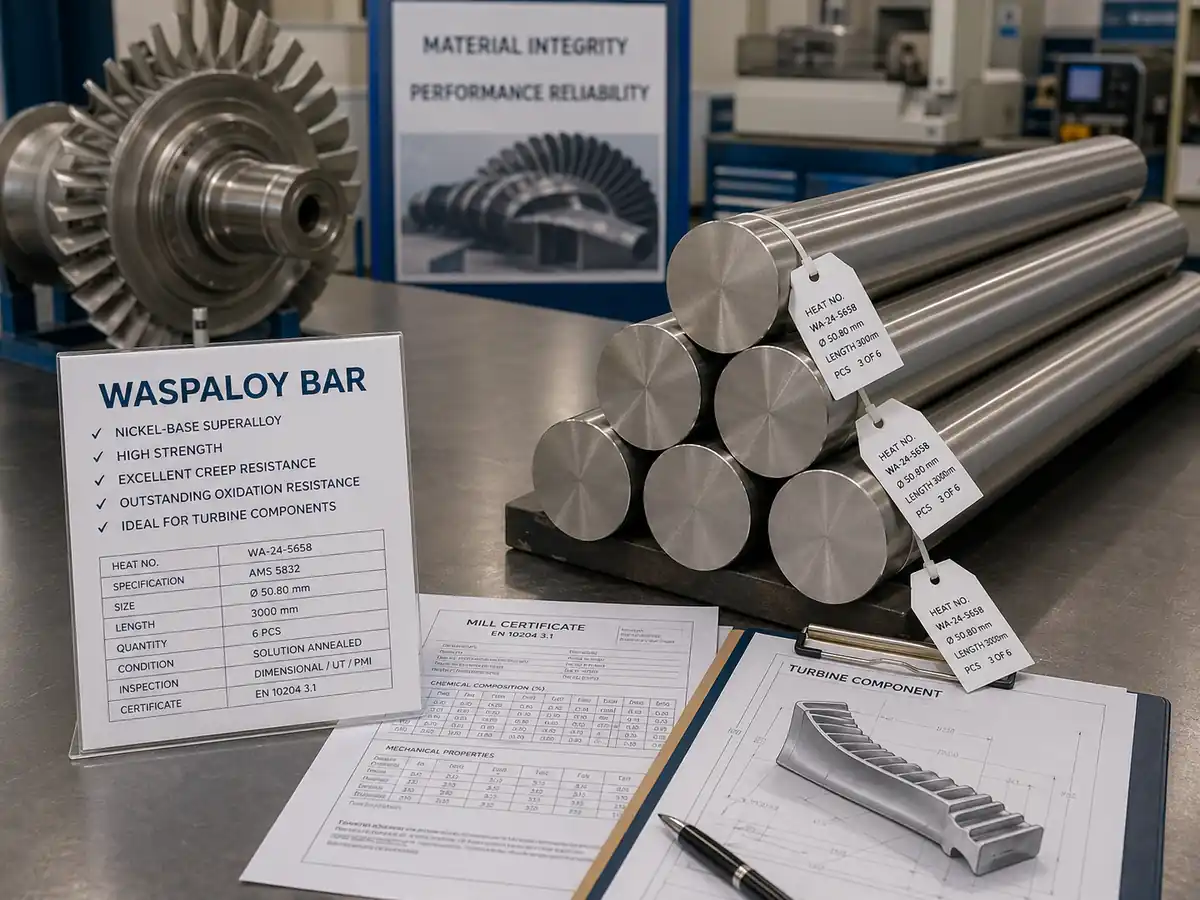
Why Waspaloy bar stock Needs More Than a Generic Claim
The first reason is application sensitivity. Waspaloy bar for turbine components is chosen because the end use is sensitive to material condition, lot control, and processing history. A generic statement that the alloy is available does not answer the engineering question. Buyers should know which standard or internal route applies, what condition is supplied, which heat or lot is involved, and how the product will remain identifiable after it is cut, repacked, or transferred into production. Without that evidence, a buyer is relying on confidence rather than control.
The second reason is downstream cost. Once Waspaloy bar stock enters production, doubts become expensive. The supplier should therefore be able to discuss heat-specific chemistry, heat-treatment and condition evidence, cut-length traceability, pre-shipment certificate review before shipment. This does not mean adding paperwork for its own sake. It means building a document and handling route that matches the way the material will actually be used. In serious B2B projects, the best supplier is often the one that removes questions early enough that engineering, quality, and procurement can move together without rework.
| Control point | Why it matters | What buyers should verify |
| Chemistry and heat identity | Confirms the supplied bar is the intended superalloy route | Heat-specific MTCs and clear grade callout |
| Condition control | Turbine parts depend on strength and metallurgical state | Heat-treatment route, hardness or mechanical data where required |
| Cut-length traceability | Bar is often split into high-value blanks | Durable marking plan for remnants and machined lengths |
| Release documentation | Aerospace or power projects review evidence closely | Advance certificate and inspection dossier review |
How to Buy the Material More Safely
The safest purchasing route begins with service definition. Buyers should explain whether the material will be used for turbine disks, shafts, fastener blanks, and other high-temperature rotating components, what operating stresses are expected, and whether any owner, medical, aerospace, electronic, or furnace-related approval rules apply. Those details help determine whether the proposed route is truly correct and whether additional controls such as PMI, third-party inspection, dimensional checks, mechanical testing, or special packaging should be added before release.
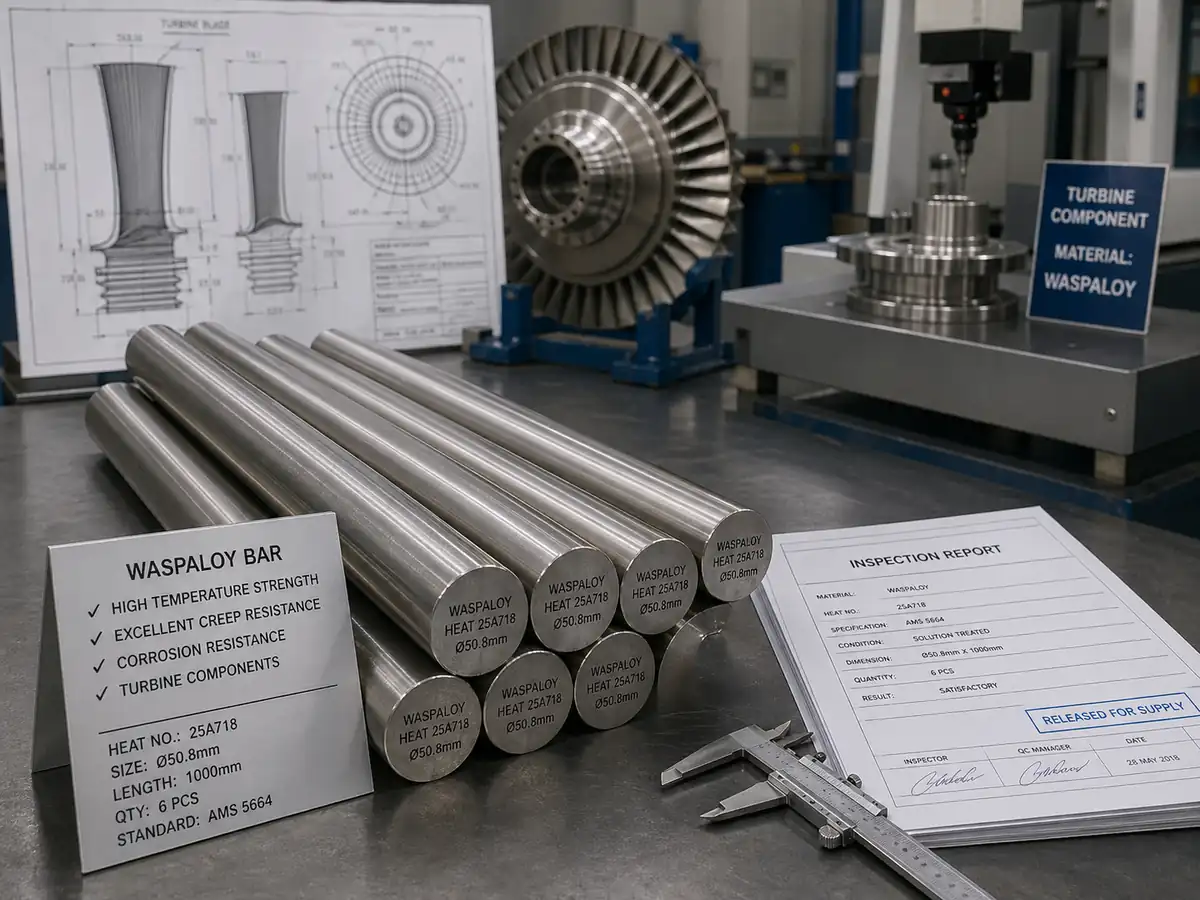
At 28Nickel, we usually recommend screening suppliers by the amount of uncertainty they remove before the material ships. Ask for certificates in advance, clarify the marking method, confirm how split lots or cut lengths remain traceable, and ask whether the supplier has supported similar service conditions before. A strong supplier can answer these questions in practical terms. A weak one usually returns to broad quality language. For this purchase, that difference matters because the expensive problems usually appear after manufacturing has already started.
Buyers should also think about how the order will be consumed after delivery. If one heat or lot will be divided across multiple parts, workstations, or shipments, the traceability plan must be simple enough for production teams to follow. This is where a supplier’s real competence becomes visible. Good control makes the material ordinary to use, even when the application is technically demanding. Poor control makes every later review harder than it needed to be.
Conclusion
For critical procurement, the material package should be judged by evidence, not by the comfort of a familiar alloy name. If you need help reviewing stock route, documents, inspection level, or application fit, 28Nickel can help check whether the proposed supply package is technically defensible before the material enters production.
Related Q&A
Q: Why is condition control so important?
Because Waspaloy performance depends not only on chemistry but also on the heat-treatment state that supports high-temperature strength.
Q: Should buyers request documents before shipment?
Yes. For waspaloy bar for turbine components, early document review is one of the easiest ways to catch route problems before machining starts.
Q: Can PMI replace full material documentation?
No. PMI can support alloy identity, but turbine-component work still needs heat-specific certificates and condition evidence.