











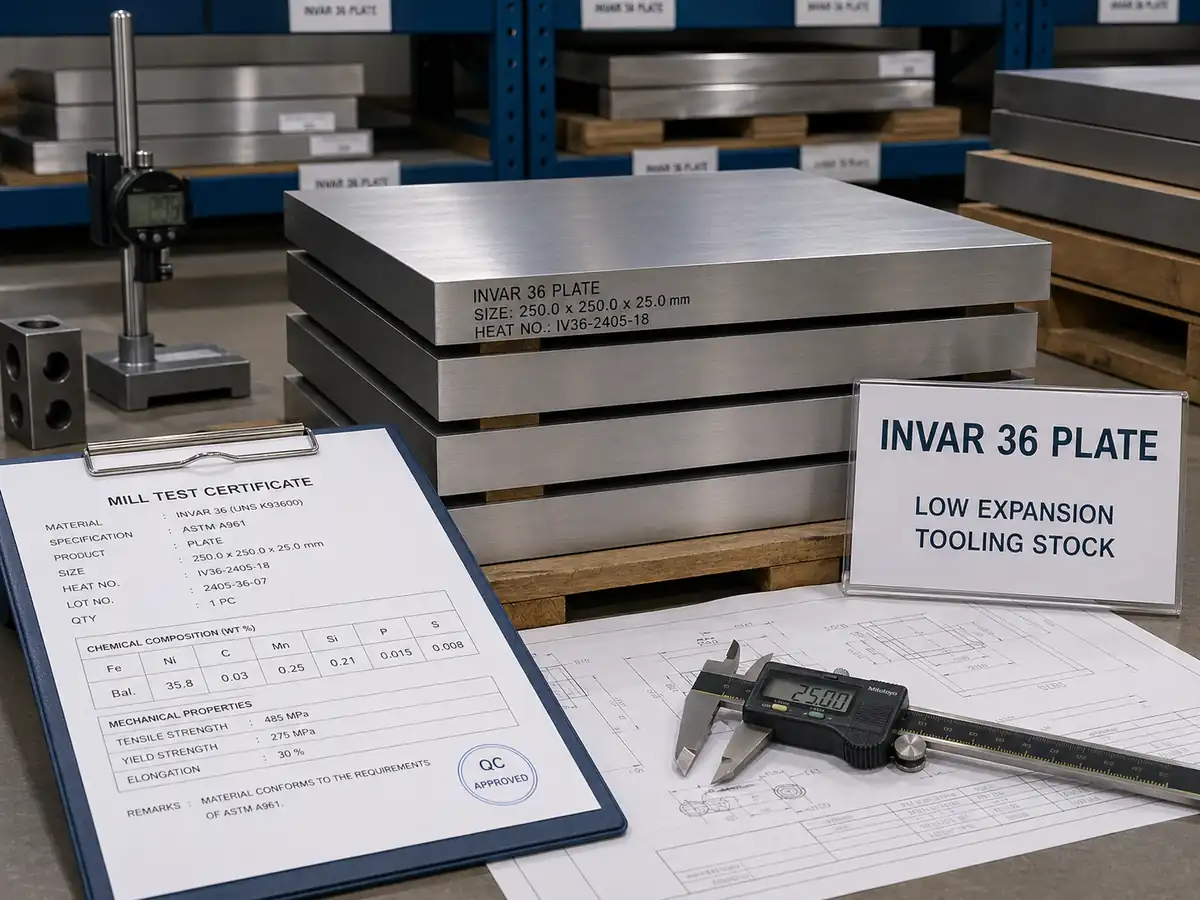
Invar 36 plate for low expansion tooling is selected because dimensional stability is not a decorative benefit in these projects. It is the whole reason the material is being bought. Tooling, fixtures, layup forms, and precision support structures often live in workflows where thermal movement translates directly into process error, repeatability loss, or rework. When the job depends on controlled thermal expansion, the buyer is not simply purchasing plate. The buyer is purchasing confidence that the supplied plate route will support stable geometry through fabrication and use. That is why engineers review invar 36 plate for low expansion tooling with a very different mindset from ordinary structural plate.
The supply challenge is practical as well as technical. Once plate is cut, machined, and built into a fixture or tooling body, the cost of replacing it is far higher than the initial stock value. Buyers therefore need more than the statement that the material is Invar. They need clear traceability, usable documentation, and enough dimensional and route confidence to justify committing the plate to precision tooling work. A controlled invar 36 plate for low expansion tooling route helps protect both tolerance confidence and schedule confidence at the same time.
Why Invar Tooling Plate Needs More Than Generic Plate Control
The first reason is functional sensitivity. Invar 36 plate for low expansion tooling is chosen specifically because dimensional drift matters. If the supplied plate route is vague, poorly documented, or inconsistent in form and condition, the buyer may discover the consequences only after machining or fixture alignment begins. Unlike commodity plate, this material is rarely forgiven for being merely close enough. It must support a process that depends on controlled movement over temperature changes.
The second reason is downstream value concentration. A tooling plate can accumulate value rapidly through machining, flattening, drilling, insert preparation, and final assembly. That means the supplier should be able to explain the plate route, traceability, and documentation before the first machining program starts. Buyers should also ask how plate identity remains visible after cutting. Invar 36 plate for low expansion tooling does not usually fail because the concept is wrong. It fails when precision work is built on a supply route that was never controlled carefully enough to begin with.
| Tooling concern | Why it matters | What buyers should verify |
| Dimensional confidence | Tooling value depends on stable geometry | Plate route and form appropriate for precision work |
| Traceability after cutting | Large plates become many machined sections | Marking continuity and document linkage |
| Fabrication readiness | Machining value rises quickly | Condition, flatness, and stock clarity before release |
| Application understanding | Low expansion is purchased for a specific reason | Actual tooling function and thermal exposure |
How to Buy Invar 36 Plate More Safely
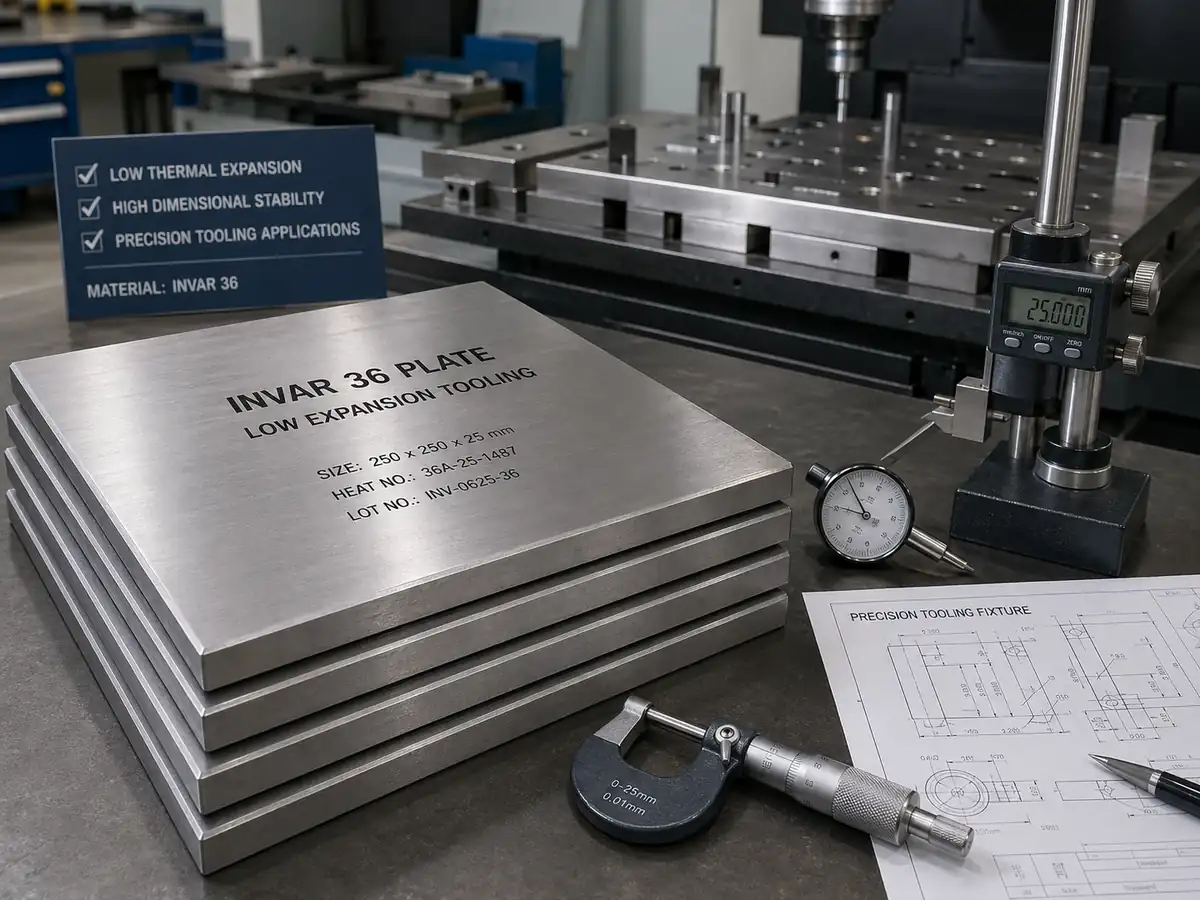
The safest way to buy invar 36 plate for low expansion tooling is to explain the tooling purpose before the order is finalized. Buyers should tell the supplier whether the plate will become layup tooling, support fixtures, alignment structures, molds, or other precision assemblies. These details help confirm whether invar 36 plate for low expansion tooling is the right form and whether extra attention to documentation, flatness, or cutting traceability is warranted.
At 28Nickel, we usually advise customers to judge the supplier by how well it reduces uncertainty before machining begins. Ask whether certificates are shared early, how cut sections will remain identifiable, and whether similar low-expansion tooling work has been supported before. The better the answers, the lower the risk that invar 36 plate for low expansion tooling will create dimensional doubt after high-value machining is already underway. In precision work, early material clarity is one of the cheapest forms of process control.
It is also worth asking how the plate will be packed and released if more than one tooling block will be machined from a single stock item. Once one large plate is divided into several assemblies, documentation can become harder to keep intuitive unless the supply route was designed with that outcome in mind. That practical detail often separates a merely acceptable invar 36 plate for low expansion tooling order from one that stays easy to manage all the way through final fixture build.
Conclusion
Low-expansion tooling only works when the stock route is as disciplined as the machining plan. If you need help screening plate route, documentation, or cut-piece traceability for a tooling order, 28Nickel can help review whether the proposed invar 36 plate for low expansion tooling package is solid before release.
Related Q&A
Q: Why should buyers explain the tooling function to the supplier?
Because invar 36 plate for low expansion tooling is selected for dimensional behavior in a real process, not just as a named alloy plate.
Q: Why is cut-piece traceability important on tooling plate?
Because the plate often becomes many machined sections, and identity becomes harder to reconstruct once the fixture is assembled.
Q: Is flatness or stock condition worth discussing early?
Yes. Precision tooling work accumulates value quickly, so buyers should clear stock questions before machining begins.