











Haynes 188 sheet for high temperature oxidation is usually considered when the operating environment pushes beyond what more familiar stainless or simpler heat-resistant alloys can comfortably manage. Components exposed to hot oxidizing atmospheres do not usually fail in one dramatic moment. They lose margin through scaling, distortion, local degradation, and cumulative service damage. That is why engineers who specify haynes 188 sheet for high temperature oxidation tend to think in terms of life, thermal exposure, fabrication, and service profile rather than in terms of sheet price alone.
The plate or sheet route matters because high-temperature components accumulate value long before they enter service. Cutting, forming, edge preparation, welding, and fit-up all add cost to the stock. If the material route was poorly defined at the beginning, the project may not discover the weakness until expensive fabrication is already committed. A buyer who wants haynes 188 sheet for high temperature oxidation should therefore ask not only whether stock exists, but whether the supply path is technically defensible for the actual temperature and atmosphere involved.
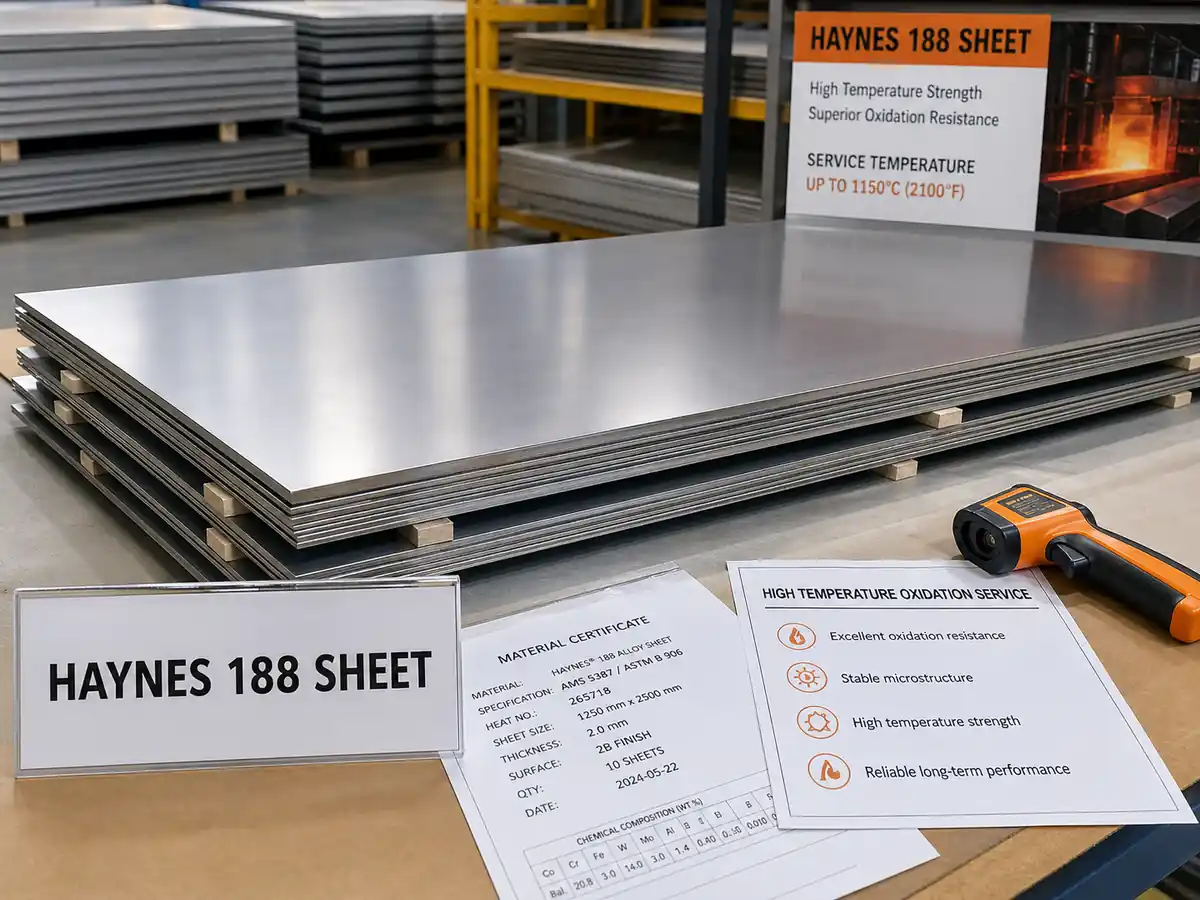
Why High-Temperature Oxidation Service Needs Better Sheet Control
The first reason is service consequence. Haynes 188 sheet for high temperature oxidation is chosen precisely because the environment is demanding enough that ordinary routes no longer provide enough confidence. That means the buyer should expect more than a generic promise of heat resistance. Real service-fit thinking should include temperature range, atmosphere type, cycling frequency, and how the finished component will be fabricated. A sheet route that is acceptable for one hot-duty application may not be equally sound for another if the exposure profile changes enough.
The second reason is fabrication sensitivity. Haynes 188 sheet for high temperature oxidation often becomes high-value hot-zone parts, liners, shields, or fabricated structures where service performance must survive forming and joining. Buyers should therefore confirm condition, documentation, sheet identity, and any practical fabrication notes before release. In thermal service, the cheapest time to question the route is before the sheet is no longer just sheet.
| High-temp concern | Why it matters | What buyers should verify |
| Temperature profile | Performance depends on real operating and upset conditions | Expected range, cycling, and exposure duration |
| Atmosphere type | Oxidation behavior changes with service environment | Actual hot-gas description, not only equipment name |
| Fabrication route | Forming and joining affect downstream reliability | Practical manufacturing intent before release |
| Traceable sheet identity | High-value hot-zone parts are costly to replace | Documented stock route and cut-piece awareness |
How to Buy Haynes 188 Sheet More Safely
The safest way to buy haynes 188 sheet for high temperature oxidation is to define the service first and the sheet offer second. Buyers should tell the supplier whether the material will become liners, shields, combustor-adjacent parts, furnace internals, or other hot-zone components. They should also share whether the service is steady or cyclic, and whether the atmosphere is mainly oxidizing or mixed. These details help confirm whether haynes 188 sheet for high temperature oxidation is the most sensible route and what documentation depth the order deserves.
At 28Nickel, we usually advise customers to treat high-temperature sheet sourcing as a combined materials-and-process discussion. Ask how the documents are shared, how cut pieces remain traceable after fabrication starts, and whether the supplier has supported similar oxidation-heavy service before. The better the answers, the lower the chance that haynes 188 sheet for high temperature oxidation will create doubt after expensive fabrication has already begun. In hot-zone work, uncertainty rarely becomes cheaper with time.
It is also worth deciding early whether the sheet will remain in simple flat geometry or be formed into more complex fabricated sections. That choice affects how quickly value accumulates and how painful it would be to discover a material-route problem late. Haynes 188 sheet for high temperature oxidation is most commercially efficient when the supply path and fabrication path are already aligned before the first high-value hot-zone part is started.
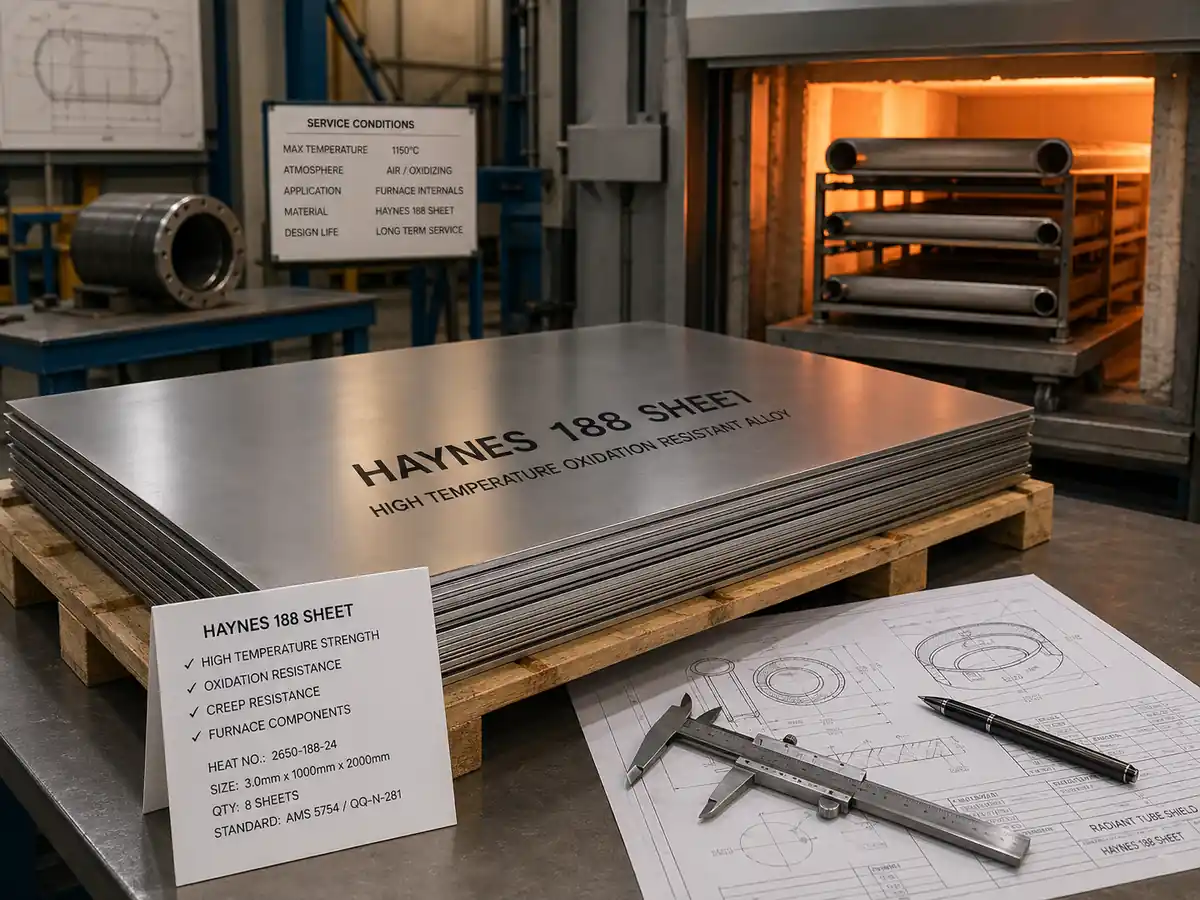
Conclusion
High-temperature sheet should be judged by service-fit logic before it is judged by purchase convenience. The real savings usually come from avoiding late doubt after forming and welding have already started. If you need help screening route, documents, or application clarity for a hot-zone order, 28Nickel can help review whether the proposed haynes 188 sheet for high temperature oxidation package is solid before release.
Related Q&A
Q: Why should buyers describe the actual hot-zone environment?
Because haynes 188 sheet for high temperature oxidation must be judged against real temperature, atmosphere, and cycling conditions rather than by reputation alone.
Q: Why does fabrication matter so much on heat-resistant sheet?
Because hot-zone parts gain value quickly through forming and welding, so early material doubt is far cheaper to resolve than late doubt.
Q: Should buyers ask about prior similar service experience?
Yes. Past experience with oxidation-heavy service often helps reveal whether the supplier understands the real practical demands of the route.