











Nickel alloy hex bar for cnc machining is usually purchased when the component is too critical for generic stock language. The material has to satisfy corrosion service, fabrication behavior, dimensional control, inspection evidence, and documentation release at the same time. A low price is not useful if the material cannot be defended during drawing review or incoming inspection.
In export work, the late problems are often predictable. The customer may receive the correct alloy but still reject the package because the heat number is unclear, the manufacturing route is not stated, or the inspection report does not match the physical marks. For 28Nickel, the purpose of supplying nickel alloy hex bar for CNC machining is to make the engineer’s approval process easier, not merely to ship metal.
Specifying nickel alloy hex bar for CNC machining
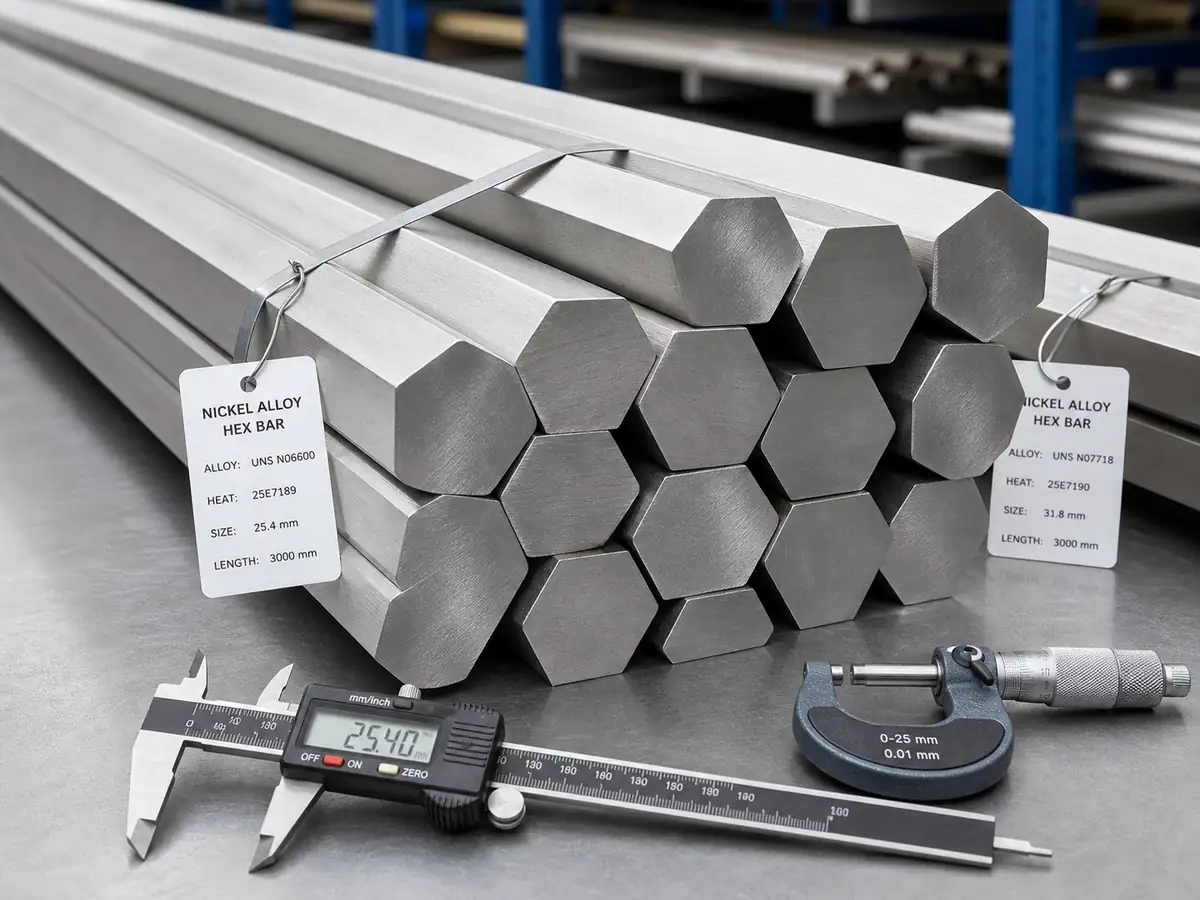
Hex bar is often chosen because it reduces machining time for nuts, fittings, valve components, and precision fastener blanks. The saving is real, but only when the bar is dimensionally stable and the alloy is appropriate for the service. Nickel alloy hex bar for CNC machining may be ordered in Alloy 625, 718, 825, 400, K500, 600, or specialty controlled-expansion alloys. Each grade changes tool wear, work-hardening rate, chip formation, and heat management at the cutting edge.
The bar route matters. Cold-drawn hex bar gives tighter dimensions and better surface condition, but it may carry residual stress. Hot-finished bar can be more forgiving in some sections but may need larger machining allowance. Nickel alloy hex bar for CNC machining should be specified by across-flats dimension, corner condition, straightness, surface finish, heat treatment, and whether the shop expects automatic bar feeding. If the stock will run through a bar feeder, straightness and end preparation are not optional.
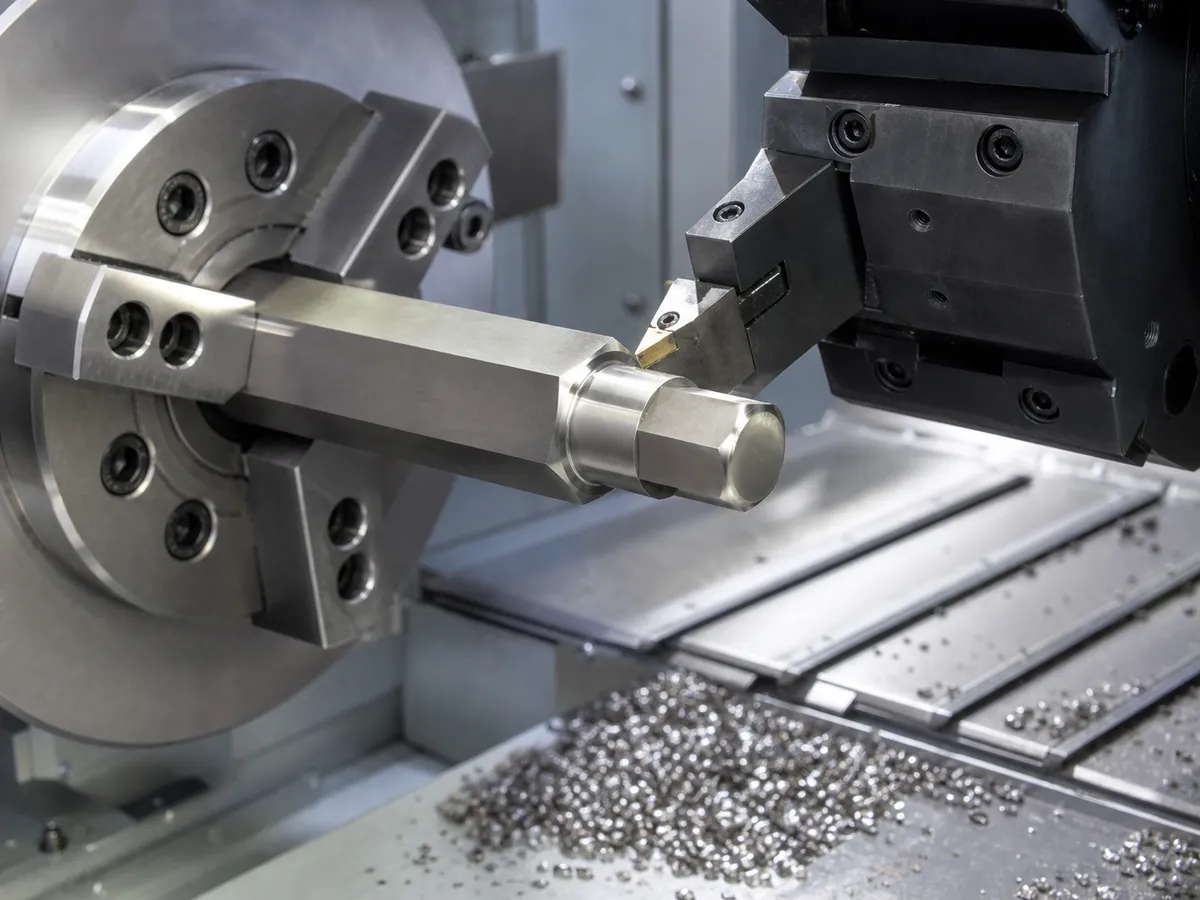
Machining nickel alloys is a quiet battle against work hardening. A small delay, rubbing tool, or interrupted cut can harden the surface and shorten insert life. For hex bar, poor corner quality and dimensional drift also disturb clamping and indexing. Buyers should not treat across-flats tolerance as the only dimension. Twist, straightness, decarb or scale, end squareness, and bundle protection all influence CNC productivity, especially on long production runs.
| Control point | Why it matters | What 28Nickel should verify |
| Across-flats tolerance | Controls clamping, indexing, and finished part allowance | AF size, tolerance class, corner condition, and gauge checks |
| Straightness | Affects bar feeding and turning stability | Straightness value, end squareness, and bundle protection |
| Delivery condition | Changes hardness, stress, and cutting response | Annealed, solution treated, aged, cold drawn, or hot finished state |
| Alloy chemistry | Determines corrosion service and machinability | MTC, chemical analysis, PMI if mixed alloy shipment |
| Surface condition | Reduces tool damage and start-up adjustment | Scale, scratches, seams, pickling, and visual inspection photos |
Inspection Evidence for hex bar
For nickel alloy hex bar for CNC machining, inspection starts with identity control. The purchase order, drawing, alloy grade, heat number, production lot, and certificate must be compared before the material is cut, packed, or issued to fabrication. This sounds basic, but it is exactly where many nickel alloy disputes begin.
The documentation package should list alloy grade, heat number, chemical analysis, mechanical properties, delivery condition, hardness when required, and dimensional report. For precipitation-hardened grades such as Alloy 718 or K500, heat treatment status must be unambiguous. Nickel alloy hex bar for CNC machining can look similar across grades, so PMI or clear color coding is useful when several alloys are shipped together.
A capable supplier should ask what part is being machined. Nickel alloy hex bar for CNC machining used for nuts has different priorities than bar used for instrumentation fittings, marine hardware, or aerospace fastener blanks. If the part has tight thread quality or sealing-face requirements, the supplier should discuss surface condition, grain size expectations, and whether trial lengths are needed before the buyer commits to full production quantity.
Conclusion
The right nickel alloy hex bar for CNC machining is defined by engineering evidence, not by a short material name. Buyers should review service chemistry, manufacturing route, dimensional tolerance, inspection scope, and document release as one package. When these details are aligned before production, 28Nickel can help reduce approval delay and give procurement teams a cleaner path to technical acceptance.
Related Q&A
Q1: Which nickel alloy hex bar machines best?
It depends on strength and corrosion requirements. Nickel alloy hex bar for CNC machining in annealed Alloy 400 may cut more easily than high-strength Alloy 718 or K500, but service conditions decide the grade.
Q2: Why is straightness important for hex bar?
Poor straightness causes vibration, bar feeder trouble, and inconsistent tool load. It is especially important for long bars used in automated CNC production.
Q3: Should I request trial material before a large order?
Yes, when the part has tight tolerances, difficult threads, or high production volume. A short trial confirms tool life and surface finish before full procurement.