










Nickel alloy coated electrodes for superalloy welding is usually purchased when the component is too critical for generic stock language. The material has to satisfy corrosion service, fabrication behavior, dimensional control, inspection evidence, and documentation release at the same time. A low price is not useful if the material cannot be defended during drawing review or incoming inspection.
In export work, the late problems are often predictable. The customer may receive the correct alloy but still reject the package because the heat number is unclear, the manufacturing route is not stated, or the inspection report does not match the physical marks. For 28Nickel, the purpose of supplying nickel alloy coated electrodes for superalloy welding is to make the engineer’s approval process easier, not merely to ship metal.
Specifying nickel alloy coated electrodes for superalloy welding
Electrode choice must start with base alloy metallurgy. Superalloys may be nickel-chromium, nickel-chromium-molybdenum, precipitation-hardened, or cobalt-strengthened systems, and they react differently to dilution, restraint, and heat input. Nickel alloy coated electrodes for superalloy welding should be matched to the repair objective: strength restoration, oxidation resistance, hot corrosion resistance, or dissimilar-metal joining. A convenient electrode is not acceptable if it creates a brittle dilution zone or undermines the service corrosion envelope.
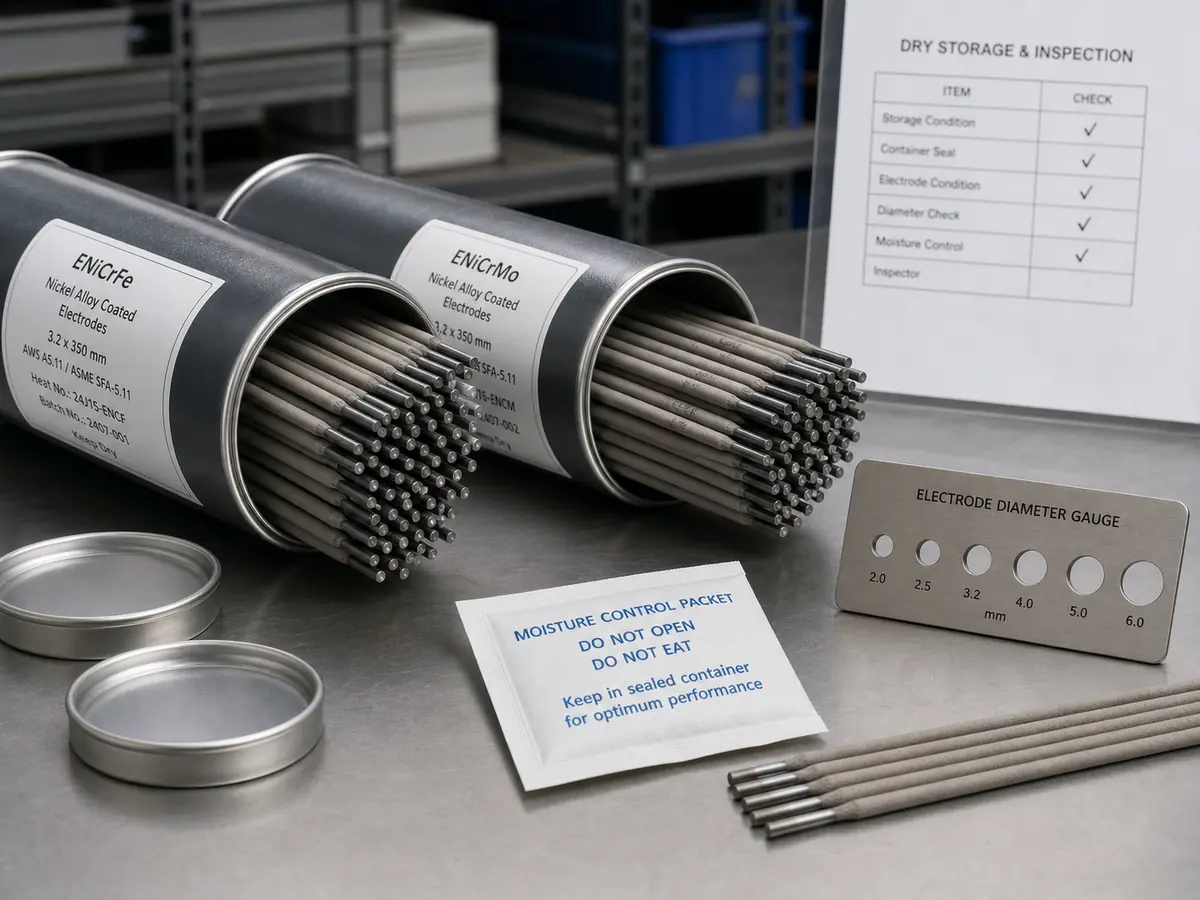
Coated electrodes add another variable: flux chemistry. The coating controls slag behavior, arc stability, deoxidation, hydrogen potential, and bead profile. Moisture pickup can increase porosity and cracking risk, especially when welding restrained superalloy castings or heat-resistant fabricated parts. Nickel alloy coated electrodes for superalloy welding should therefore be handled with drying, holding, and exposure limits that fit the electrode manufacturer’s recommendations and the project welding procedure.
Diameter selection is not a minor detail. Large electrodes increase deposition rate but also raise heat input and residual stress. Small electrodes improve access and control, yet they slow production and may require more starts and stops. For repair welding, the electrode diameter, amperage range, polarity, preheat, interpass temperature, and bead sequence must be coordinated. That is where engineering control separates a reliable repair from a cosmetic bead.
| Control point | Why it matters | What 28Nickel should verify |
| Base alloy match | Controls dilution behavior and service performance | Base grade, electrode class, and welding objective |
| Flux and moisture control | Reduces porosity, hydrogen risk, and unstable slag | Drying temperature, holding practice, and exposure time |
| Diameter selection | Balances access, heat input, and deposition rate | Electrode diameter, amperage range, polarity, and WPS limits |
| Repair conditions | Superalloys are sensitive to restraint and thermal cycling | Preheat, interpass temperature, bead sequence, and inspection plan |
| Lot documentation | Keeps qualification and production on the same consumable route | Lot certificate, labels, packing photos, and reserved stock |
Inspection Evidence for coated electrodes
For nickel alloy coated electrodes for superalloy welding, inspection starts with identity control. The purchase order, drawing, alloy grade, heat number, production lot, and certificate must be compared before the material is cut, packed, or issued to fabrication. This sounds basic, but it is exactly where many nickel alloy disputes begin.
The documentation pack should identify electrode classification, lot number, diameter, coating type, recommended drying conditions, chemical analysis, and conformance standard. If the electrodes are used on pressure equipment, turbine tooling, furnace hardware, or chemical plant components, the buyer may also need batch certificates and weld procedure support. Nickel alloy coated electrodes for superalloy welding are consumables, but their paperwork should be treated like a critical material input.
A useful supplier will not only sell boxes. It will help confirm whether SMAW is suitable for the joint geometry and service severity. Nickel alloy coated electrodes for superalloy welding should be supplied with clear storage instructions and enough lot-controlled quantity for qualification, production, and repair. When the job is remote or urgent, reserve extra electrodes from the same lot; changing lot or classification mid-repair is an avoidable risk.

Conclusion
The right nickel alloy coated electrodes for superalloy welding is defined by engineering evidence, not by a short material name. Buyers should review service chemistry, manufacturing route, dimensional tolerance, inspection scope, and document release as one package. When these details are aligned before production, 28Nickel can help reduce approval delay and give procurement teams a cleaner path to technical acceptance.
Related Q&A
Q1: Are coated electrodes suitable for all superalloy repairs?
No. Nickel alloy coated electrodes for superalloy welding are useful in many repair and field situations, but joint restraint, alloy hardening mechanism, and service temperature must be reviewed first.
Q2: Why is electrode drying important?
Moisture in the coating can contribute to porosity, hydrogen-related cracking risk, and unstable arc behavior. Dry storage is part of the welding quality system, not a warehouse preference.
Q3: What should be checked before field welding?
Confirm electrode class, lot number, drying procedure, WPS range, base metal condition, preheat/interpass control, and post-weld inspection requirements.