







A ニッケル 201 溶接手順品質チェックリスト is not just a shop-floor form. In practice, it is the control point between a sound weld and a failure that only shows up after pickling, leak testing, or early service exposure. Engineers who work with 純ニッケル know the problem well: Nickel 201 is weldable, but it is also unforgiving when surface contamination, poor fit-up, or loose parameter control are allowed into the job. A useful Nickel 201 welding procedure quality checklist must therefore do more than confirm that the arc was struck. It has to verify cleanliness, consumable discipline, shielding quality, heat input control, and post-weld acceptance in a way that actually prevents rework.
Nickel 201 is selected because its low carbon chemistry gives it better resistance to embrittlement in elevated-temperature service than ニッケル200. That advantage can be wasted quickly if the weld area is contaminated by sulfur-bearing compounds, free iron, oil, paint, zinc, lead, or shop dirt. When I review a Nickel 201 welding procedure quality checklist, I want to see whether it can catch the small causes of big defects before they become expensive NCRs.

Why a Nickel 201 Welding Procedure Quality Checklist Matters
The reason a Nickel 201 welding procedure quality checklist matters is simple: most weld defects in pure nickel are process-discipline failures, not mysterious metallurgical events. Nickel 201 is susceptible to porosity if cleaning is poor. It can show lack of fusion when operators try to run too cold on thicker sections. It can also suffer from hot-short behavior if low-melting contaminants are present at the weld interface. In other words, weld quality is often decided before the torch is even started.
From a QA standpoint, the checklist should force the team to verify five things. First, the base metal must be correct and traceable. Second, the joint preparation must be dimensionally right and free from smear, burrs, and embedded foreign material. Third, the cleaning method must be compatible with nickel service; chlorinated solvents, dirty abrasives, or brushes previously used on carbon steel are unacceptable. Fourth, the filler metal and shielding gas must match the approved WPS. Fifth, the inspection criteria must be defined clearly enough that “acceptable appearance” does not become a subjective argument after welding.
Pre-Weld Controls in a Nickel 201 Welding Procedure Quality Checklist
堅牢な Nickel 201 welding procedure quality checklist starts before fit-up. Material identification is the first gate. Heat number, grade, thickness, and drawing revision should all be checked against the job traveler. If the project involves corrosion-sensitive chemical service, I would also confirm whether any special surface finish, cleaning standard, or post-fabrication handling instruction applies.
Joint preparation is the next critical control. Nickel 201 benefits from accurate edge preparation and consistent root opening. Wide fit-up variation invites unstable penetration and inconsistent bead shape. Mechanically prepared bevels should be free from rolled-over metal and should not be touched up casually with contaminated grinding wheels. Dedicated abrasives are a small cost compared with the cost of scrapping a pure nickel assembly.
Cleaning deserves even more attention than many teams give it. The Nickel 201 welding procedure quality checklist should explicitly require removal of oil, grease, marker ink, paint, moisture, oxide, and shop debris from both the groove faces and the adjacent weld zone. On nickel, I prefer to see a defined cleaning width on both sides of the joint rather than a vague instruction such as “clean as required.” Good checklists are specific. They state the tool type, solvent type if used, lint-free wiping requirement, and whether fresh stainless-only wire brushes or dedicated non-metallic pads are mandatory.
Practical QA Table for Shop Use
| チェックポイント | What QA Should Verify | Typical Acceptance Standard | Why It Matters on Nickel 201 |
|---|---|---|---|
| Material identity | Heat number, alloy grade, thickness, traceability | Matches PO, drawing, and WPS | Prevents grade mix-up and wrong service performance |
| 共同準備 | Bevel angle, land, root gap, edge condition | Within WPS tolerance; no burrs or smeared edges | Stable penetration and consistent fusion |
| 表面の清浄度 | Oil, grease, paint, oxide, marker, moisture removed | Bright, dry, contamination-free weld zone | Reduces porosity and contamination cracking risk |
| Tool segregation | Brushes, abrasives, clamps, benches dedicated or protected | No carbon steel contamination source | Avoids embedded iron and downstream corrosion issues |
| フィラーメタル・コントロール | Correct filler classification, storage, condition | Approved filler; clean, dry, undamaged | Supports weld integrity and chemistry control |
| Shielding gas | Gas type, purity, flow rate, hose condition | Per WPS; stable shielding without turbulence | Prevents oxidation and porosity |
| Parameter readiness | Current, polarity, travel approach, interpass control | Set to qualified WPS range | Controls bead profile, fusion, and distortion |
| Fit-up and tacking | Alignment, tack quality, tack cleaning | No cracked/dirty tacks; alignment acceptable | Poor tacks often become hidden defect origins |
In-Process and Post-Weld Controls in a Nickel 201 Welding Procedure Quality Checklist
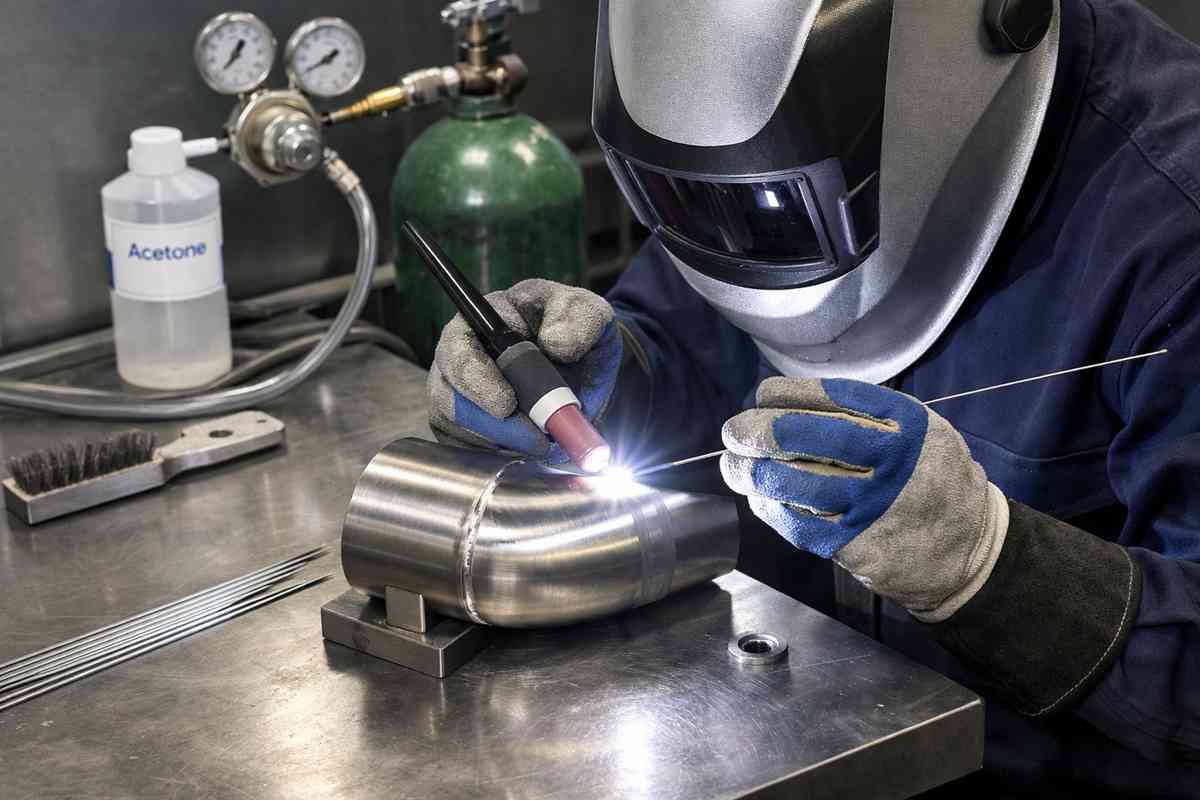
Once welding starts, the Nickel 201 welding procedure quality checklist should shift from preparation control to process stability. GTAW is often preferred for root control and clean bead appearance, especially on thinner gauges or high-purity service fabrications. Whatever process is used, the operator should avoid unnecessary weaving, erratic arc length, and excessive heat concentration. Nickel 201 does not reward sloppy torch handling. A smooth bead sequence, steady shielding, and disciplined interpass practice usually give better results than trying to “wash out” defects with extra heat.
Interpass cleanliness is not optional. Slag, tint, spatter, and handling contamination between passes must be removed before the next pass is deposited. If a tack is oxidized or contaminated, it should be dressed properly rather than simply buried under the weld metal. The Nickel 201 welding procedure quality checklist should also require monitoring for arc strikes outside the joint, since those become avoidable repair points on high-specification equipment.
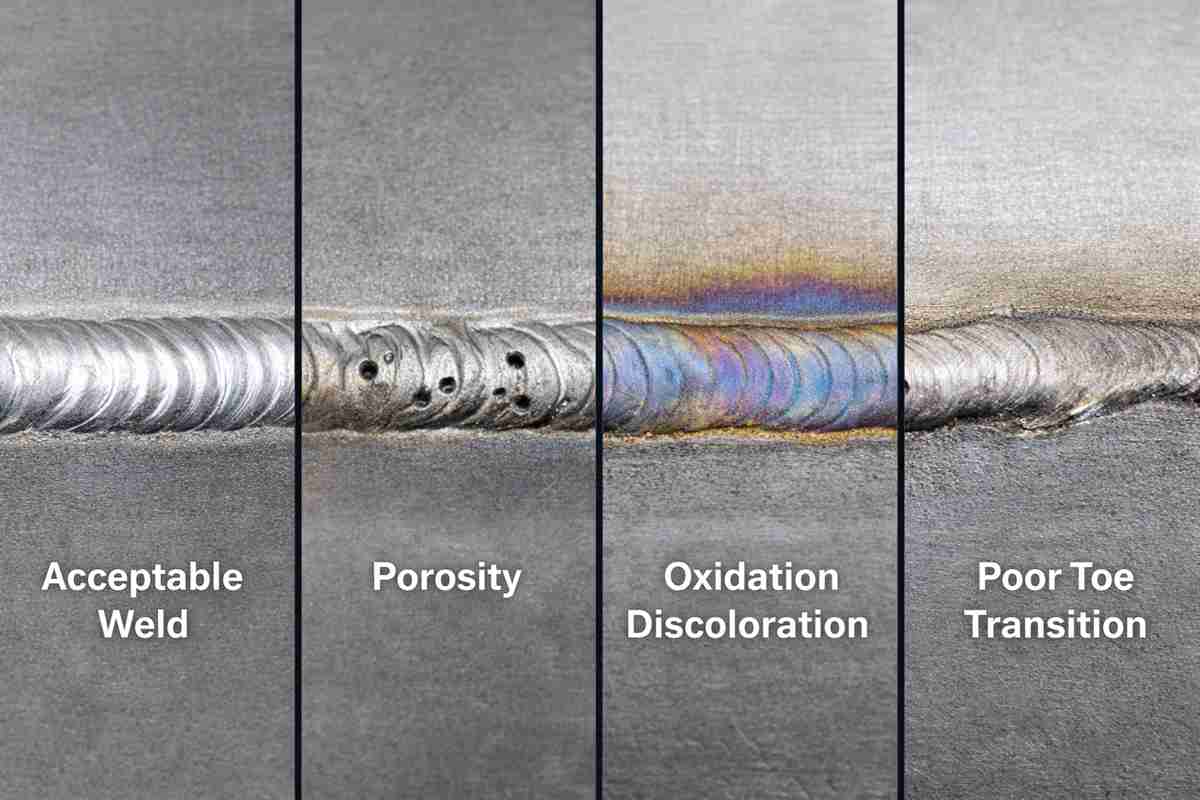
After welding, visual inspection is the first screen, but it should be an engineering inspection, not a cosmetic one. I look at bead continuity, toe transition, reinforcement, undercut, crater condition, arc strike evidence, oxidation color, and any sign of surface porosity. For critical fabrications, PT, leak testing, or dimensional verification may follow. Where the service is severe, documentation quality matters almost as much as weld appearance. A weak Nickel 201 welding procedure quality checklist often fails at this stage because it records only “OK” instead of recording actual observations, repair locations, filler batch, gas batch if relevant, and inspector sign-off.
One more point deserves emphasis: post-weld cleaning and handling. Freshly completed nickel weldments should not be dragged across dirty benches or stored next to carbon steel grinding operations. If your shop has good welders but poor post-weld discipline, your rejection rate will still stay too high. The best Nickel 201 welding procedure quality checklist closes that gap by extending control beyond the last pass.

Final Engineering Takeaway
良い Nickel 201 welding procedure quality checklist is practical, not decorative. It tells the welder, inspector, and production engineer exactly what must be controlled before, during, and after welding. On this alloy, cleanliness is not a housekeeping issue; it is a metallurgical requirement. Tool segregation is not bureaucracy; it is defect prevention. Parameter control is not only about appearance; it is about fusion, porosity resistance, and service reliability.
If you are qualifying a new WPS, troubleshooting repeat repairs, or auditing a fabricator, start with the checklist. In many shops, that is where the real root cause is hiding. And if your team needs a more application-specific Nickel 201 welding procedure quality checklist for pressure parts, heat exchanger fabrications, or corrosive chemical service, sending the joint design, thickness, filler selection, and service condition to 28ニッケル for technical review is often the fastest way to reduce risk before production begins.
関連Q&A
Q1: Does Nickel 201 normally require preheat before welding?
In most cases, no substantial preheat is required. What matters more is that the joint is dry, clean, and free from condensation. Excessive preheat can work against good control by increasing oxidation risk and making fit-up handling less stable.
Q2: What is the biggest quality risk when welding Nickel 201?
Surface contamination is usually the leading risk. Sulfur, oil, paint, zinc, lead, free iron, and even dirty gloves can trigger porosity, poor wetting, or cracking-related problems that are expensive to diagnose after the fact.
Q3: Should a Nickel 201 welding procedure quality checklist include post-weld NDT?
For critical service, yes. The checklist should define when visual inspection is sufficient and when PT, leak testing, dimensional checks, or additional project-specific examination is required. The correct answer depends on service severity, code requirements, and customer specification.